

Bentley, Australia · Private college & institute
Engineering Institute of Technology (EIT)
- Location
- Bentley, Western Australia
- Institution
- Private College & Institute
- Founded
- 2008
- Campuses
- 3
- Courses listed
- 13
Overview
About Engineering Institute of Technology (EIT)
The Engineering Institute of Technology (EIT) is one of few training institutes in the world which specializes in engineering. EIT provides industry focused programs to students from over 140 countries, including diplomas, undergraduate certificates, bachelor’s degrees, graduate certificates, and master’s degrees.
EIT’s vocational programs and higher education degrees are registered and accredited by the Australian Government. EIT delivered programs both on-campus and online, via a unique methodology that makes use of industry-based expert lecturers and state-of-the-art online technologies. These include hands-on remote and virtual labs, simulation software and live stream web and video conferencing.
Why Engineering Institute of Technology
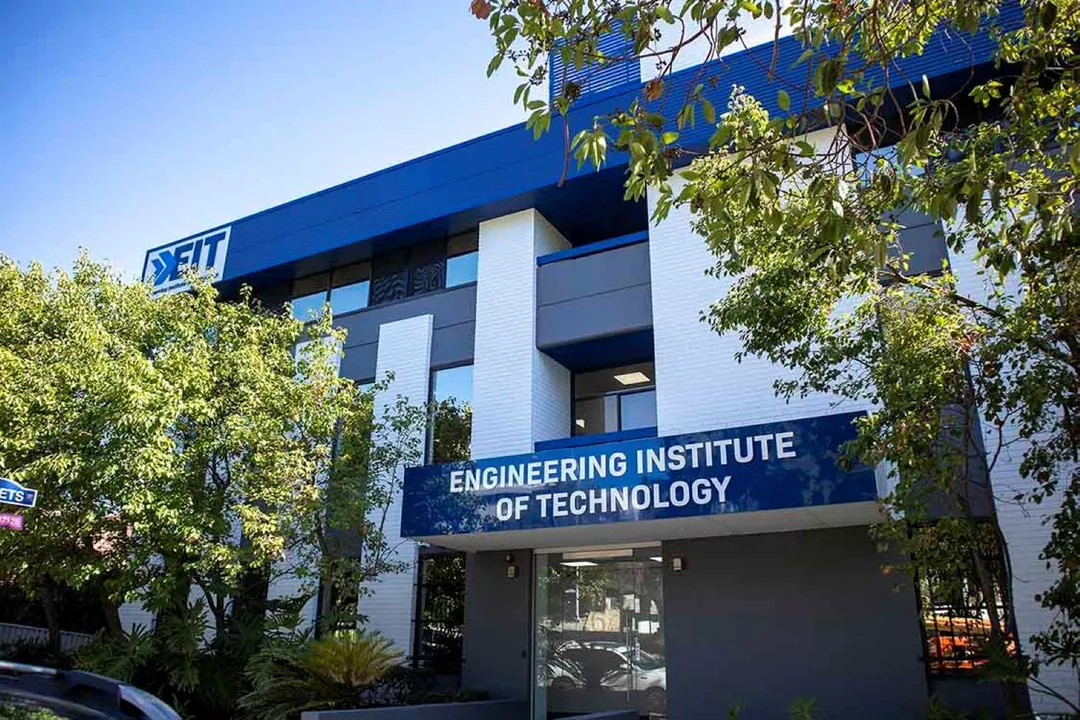
- Top 10 most liveable city in the world: Western Australia’s capital city of Perth has been ranked in the top ten most liveable cities in the world and is consistently rated in the top 50 international student cities. EIT’s Perth campus is located in leafy, green Bentley, approximately eight kilometers from Perth's city centre. This area is known as an academic, innovation, enterprise, and technology hub.
- EIT facilities: EIT's Perth campus offers students classrooms with computer and internet access, the student support team, dedicated student breakout areas, library, and free parking.
- Unique program delivery: EIT delivers on-campus degrees via a unique methodology that makes use of an international pool of expert lecturers, dedicated learning support officers, and provides students access to cutting-edge simulation software alongside physical and virtual laboratories to test concepts and deepens students' understanding of program content.
- Industry experienced lecturers: Lecturers are highly experienced engineers and subject specialists with applied knowledge. One of these practitioners has most likely tackled challenges similar to those that graduates might face in the workplace.
Campus life



Programs
Courses at Engineering Institute of Technology (EIT)
Bachelor's · Engineering & Construction
On-Campus – Bachelor of Science (Civil & Structural Engineering)
3 years
Next intake: Feb 2027
Apply by 1 Feb 2027
Bachelor's · Engineering & Construction
On-Campus – Bachelor of Science (Civil & Structural Engineering)
3 years Next intake: Feb 2027 Apply by 1 Feb 2027
Civil engineers are responsible for ensuring that the infrastructure around us gets developed, is safe, meets Engineering Institute of Technology needs, and improves Engineering Institute of Technology quality of life. This includes buildings, bridges, railways, tunnels, water distribution, and waste management networks. This practical qualification will ensure graduates are job-ready as a civil and structural engineering technologist. Upon completion of this program, they will gain skills and knowledge in the latest and developing technologies in civil and structural engineering.
Civil and structural engineering is one of the oldest forms of engineering which involves the design, construction, and maintenance of the built environment. This includes buildings, bridges, railways, tunnels, water distribution, and waste management networks. Civil engineers could be involved in sustainable urban development, environmental protection, conservation of energy and water resources, or even geotechnical, hydraulic, or transport engineering. They could even specialize in fields such as earthquake and blast-resistant technologies.
Upcoming intakes: Feb 2027 · Jul 2027 · Aug 2027
Bachelor's · Engineering & Construction
On-Campus – Bachelor of Science (Electrical Engineering)
3 years
Next intake: Feb 2027
Apply by 21 Jan 2027
Bachelor's · Engineering & Construction
On-Campus – Bachelor of Science (Electrical Engineering)
3 years Next intake: Feb 2027 Apply by 21 Jan 2027
Electrical engineers are responsible for designing new systems, solving problems, testing equipment, and working on a wide range of components and systems, including communications systems, power plants, electrical machines, navigation systems, and electrical systems for automobiles and aircraft. This practical qualification will ensure graduates are job-ready as an electrical engineering technologist in many industries such as power generation and supply, communications and media, computer systems, and robotics. Upon completion of this program, they will gain skills and knowledge in the latest electrical engineering technologies.
The field of engineering concerned with the study and application of electricity and electromagnetism is electrical engineering. Essential to Engineering Institute of Technology (EIT) - Perth modern infrastructure and conveniences, electrical engineers employ their skills across a large number of specializations, including the design of household appliances, lighting, building wiring, telecommunication systems, robots, power generation, transmission, distribution, and utilization.
With this qualification, graduates will have acquired the essential knowledge which underpins both this and other fields of engineering. More importantly, they will have become an electrical engineering technologist.
Upcoming intakes: Feb 2027 · Aug 2027 · Feb 2028
Bachelor's · Engineering & Construction
On-Campus – Bachelor of Science (Industrial Automation Engineering)
3 years
Next intake: Feb 2027
Apply by 21 Jan 2027
Bachelor's · Engineering & Construction
On-Campus – Bachelor of Science (Industrial Automation Engineering)
3 years Next intake: Feb 2027 Apply by 21 Jan 2027
Industrial automation is an expanding stream of engineering, with an increasingly profound influence on most industries and enterprises. This practical qualification will ensure graduates are job-ready as an industrial automation engineering technologist in many industries such as manufacturing, power generation, mechatronics, mechanical, mining, and chemical. Upon completion of this program, graduates will gain skills and knowledge in the latest developing technologies in instrumentation, process control, and industrial automation.
Due to rapidly evolving technology, industrial processes are becoming increasingly automated. Previously mechanized systems, which required human intervention, now use computerized control systems for higher accuracy, precision, and cost-effectiveness. As industrial automation continues to develop with technological advancements, it is essential that prospective engineers graduate with skills that can be applied within the industry. EIT's Bachelor of Science (Industrial Automation Engineering) provides students with cutting-edge skills that are valuable in the workplace.
With this qualification, they will have acquired the essential knowledge which underpins both this and other fields of engineering. More importantly, they will have become an industrial automation technologist.
Upcoming intakes: Feb 2027 · Aug 2027 · Feb 2028
Bachelor's · Engineering & Construction
On-Campus – Bachelor of Science (Mechanical Engineering)
3 years
Next intake: Feb 2027
Apply by 21 Jan 2027
Bachelor's · Engineering & Construction
On-Campus – Bachelor of Science (Mechanical Engineering)
3 years Next intake: Feb 2027 Apply by 21 Jan 2027
Mechanical engineers are responsible for the design, manufacture, and operational processes of anything that moves, from the tiniest, simplest micro-particles to the largest, most complex spacecraft and everything in between. Mechanical engineers have a skill set that is applicable to many industries in the world, including automotive, transport, manufacturing, power generation, medical, consumer goods, and more. This practical qualification will ensure graduates are job-ready as a mechanical engineering technologist. Upon completion of this program, graduates will gain skills and knowledge in the latest mechanical engineering technologies.
Mechanical engineering is the field of engineering that applies physics and the material sciences to develop machinery. Mechanical engineers use the principles of force, energy, and motion to improve the safety, efficiency, and technological advancement of the world around us.
With this qualification, students will have acquired the essential knowledge which underpins both this and other fields of engineering. More importantly, they will have become a mechanical engineering technologist.
Upcoming intakes: Feb 2027 · Jul 2027 · Aug 2027
Master's · Engineering & Construction
On Campus – Master of Engineering (Electrical Systems)
2 years
Next intake: Feb 2027
Apply by 20 Jan 2027
Master's · Engineering & Construction
On Campus – Master of Engineering (Electrical Systems)
2 years Next intake: Feb 2027 Apply by 20 Jan 2027
+The Master of Engineering (Electrical Systems) is designed to provide advanced theoretical knowledge and practical skills in electrical engineering. The program focuses on the design, analysis, and management of electrical systems, preparing students to address complex challenges in modern engineering environments.
The curriculum covers key areas such as power systems, control systems, electrical machines, renewable energy technologies, and electrical network design. Students gain hands-on experience through the use of advanced simulation tools, laboratory work, and industry-relevant case studies.
The program also emphasizes critical thinking, problem-solving, and project management skills, enabling graduates to work effectively in multidisciplinary teams and professional engineering settings. Graduates are well-prepared for careers in power generation, transmission and distribution, renewable energy, automation, and electrical engineering consultancy, or for further research and professional development.
Upcoming intakes: Feb 2027 · Sep 2027 · Feb 2028
Master's · Engineering & Construction
On-Campus – Master of Engineering (Civil – Structural)
2 years
Next intake: Feb 2027
Apply by 20 Jan 2027
Master's · Engineering & Construction
On-Campus – Master of Engineering (Civil – Structural)
2 years Next intake: Feb 2027 Apply by 20 Jan 2027
The Master of Engineering (Civil: Structural) is designed to provide advanced theoretical knowledge and practical skills in structural engineering. The program focuses on the analysis, design, and construction of safe and sustainable structures, preparing students to address complex challenges in the civil engineering sector.
The curriculum covers key areas such as structural analysis, reinforced concrete and steel design, geotechnical engineering, construction methods, and infrastructure development. Students gain hands-on experience through the use of modern engineering tools, simulation software, and industry-relevant case studies.
The program also emphasizes critical thinking, problem-solving, and project management skills, enabling graduates to work effectively in multidisciplinary teams and professional engineering environments. Graduates are well-equipped for careers in structural design, construction, infrastructure projects, and consultancy, or for further professional development and research in civil engineering.
Upcoming intakes: Feb 2027 · Sep 2027 · Feb 2028
Master's · Engineering & Construction
On-Campus – Master of Engineering (Civil: Structural)
2 years
Next intake: Feb 2027
Apply by 21 Jan 2027
Master's · Engineering & Construction
On-Campus – Master of Engineering (Civil: Structural)
2 years Next intake: Feb 2027 Apply by 21 Jan 2027
The Master of Engineering (Civil: Structural) will equip students with the necessary skills to address the demands of the structural engineering industry. Students with a background in civil, construction, transport, and systems engineering will especially benefit from this program as it prepares them for further career development in the structural engineering industry. Upon completion of this program, students will gain skills and knowledge in the latest and developing technologies in civil and structural engineering.
Upcoming intakes: Feb 2027 · Jul 2027 · Aug 2027 · Feb 2028
Master's · Engineering & Construction
On-Campus – Master Of Engineering (Electrical Systems)
2 years
Next intake: Feb 2027
Apply by 21 Jan 2027
Master's · Engineering & Construction
On-Campus – Master Of Engineering (Electrical Systems)
2 years Next intake: Feb 2027 Apply by 21 Jan 2027
dThe Master of Engineering (Electrical Systems), developed by electrical and renewable energy experts, will equip students with the necessary skills and knowledge to address the demands of the modern power industry. They will learn how to design the components of a power system including generation, transmission, distribution and the associated systems. The program will also cover the automation, protection and control components that contribute to the high level of reliability expected from modern power systems.
The rapid development of the renewable field has led to a shortage of fully skilled electrical engineers who are competent in both classic power system operation and renewable system integration.
The program presents the widely used wind and solar energy as centralized and distributed power sources as well as the effects of renewable integration on classic power issues. Students will also learn energy storage as an integral part of a microgrid or at a larger utility level. They will get the opportunity to understand the use of artificial intelligence and machine learning as data-driven approaches in smart grids with the application of smart meters. The section on project management provides the skills required for effective management of power generation, transmission, and distribution projects.
The Project Thesis, the capstone of the program, requires a high level of personal autonomy and accountability, as it reinforces the knowledge and skill base developed in the previous units. As a significant research component of the program, this project will facilitate research, critical evaluation, and the application of knowledge and skills with creativity and initiative, enabling students to critique current professional practice in the electrical engineering industry.
Upcoming intakes: Feb 2027 · Jul 2027 · Aug 2027 · Feb 2028
Master's · Engineering & Construction
On-Campus – Master Of Engineering (Industrial Automation)
2 years
Next intake: Feb 2027
Apply by 21 Jan 2027
Master's · Engineering & Construction
On-Campus – Master Of Engineering (Industrial Automation)
2 years Next intake: Feb 2027 Apply by 21 Jan 2027
This master’s qualification is inspired and driven by industry, with a strong theoretical underpinning. Concept relevance and knowledge that is critical in this fast-moving work environment has propelled the program design process. Upon completion of this program, graduates will gain skills and expertise in the latest developing technologies in instrumentation, process control, and industrial automation.
There is a global shortage of automation, instrumentation, and control engineers due mainly to restructuring and rapid growth of new industries and technologies.
EIT's Master of Engineering (Industrial Automation) perfectly addresses this gap in the industrial automation industry. The program’s twelve core units and project thesis provide students with the practical knowledge and skills required. Students with a background in electrical, mechanical, instrumentation and control, or industrial computer systems engineering can benefit from this program.
The content has been carefully designed to provide graduates with relevant concepts and the tools required in today’s fast-moving work environment. For example, the unit on power engineering covers major equipment and technologies used in power systems, including power generation, transmission, and distribution networks.
Upcoming intakes: Feb 2027 · Aug 2027 · Feb 2028
Master's · Engineering & Construction
On-Campus – Master of Engineering (Mechanical)
2 years
Next intake: Feb 2027
Apply by 21 Jan 2027
Master's · Engineering & Construction
On-Campus – Master of Engineering (Mechanical)
2 years Next intake: Feb 2027 Apply by 21 Jan 2027
This master’s qualification will equip students with the necessary skills to address the demands of the modern mechanical engineering industry. Students with a background in mechanical, instrumentation & control, electrical, or industrial plant and systems engineering will be particularly well-placed to benefit from this program as it is designed to prepare students for further career development in the mechanical design and maintenance industries. Upon completion of this program, graduates will gain skills and knowledge in the latest and developing technologies in mechanical engineering.
The Master of Engineering (Mechanical) addresses the specific core competencies and associated knowledge and aptitudes required of mechanical engineers. The program will provide students with the requisite skills in mechanical engineering technology and maintenance to take advantage of these growing needs in the industry. Ultimately the degree will imbue graduates with the confidence required of professional and proficient mechanical engineers.
The learning journey culminates with a project which integrates the knowledge acquired during the program. Students will gain an accurate understanding of the content, and the process will exercise their creativity and design-thinking capabilities. Employers hold those who possess these skills in high regard, and graduates can expect a significant advantage when interacting with employers, clients, consultants, and fellow engineering peers.
Upcoming intakes: Feb 2027 · Aug 2027 · Sep 2027 · Feb 2028
Master's · Engineering & Construction
On-Campus Master of Engineering – Applied Research (Civil – Structural)
2 years
Next intake: Feb 2027
Apply by 20 Jan 2027
Master's · Engineering & Construction
On-Campus Master of Engineering – Applied Research (Civil – Structural)
2 years Next intake: Feb 2027 Apply by 20 Jan 2027
The Master of Engineering – Applied Research (Civil: Structural) is designed to provide advanced knowledge and applied research skills in structural engineering. The program focuses on the analysis, design, and assessment of structures, preparing students to address complex challenges in the built environment.
The curriculum emphasizes practical, industry-relevant learning through applied research projects. Students explore key areas such as structural analysis, construction materials, geotechnical considerations, and design of steel and reinforced concrete structures. The program incorporates the use of modern engineering tools, simulation software, and case studies to enhance technical expertise.
Students also develop critical thinking, problem-solving, and project management skills, enabling them to design safe, efficient, and sustainable structures. Graduates are well-prepared for advanced roles in construction, infrastructure development, and structural engineering consultancy, or for further research and professional advancement in the civil engineering field.
Upcoming intakes: Feb 2027 · Sep 2027 · Feb 2028
Master's · Engineering & Construction
On-Campus Master of Engineering – Applied Research (Electrical Systems)
2 years
Next intake: Feb 2027
Apply by 20 Jan 2027
Master's · Engineering & Construction
On-Campus Master of Engineering – Applied Research (Electrical Systems)
2 years Next intake: Feb 2027 Apply by 20 Jan 2027
The Master of Engineering – Applied Research (Electrical Systems) is designed to provide advanced knowledge and practical research skills in electrical engineering. The program focuses on the analysis, design, and optimization of electrical systems, preparing students to address complex engineering challenges in modern industries.
The curriculum emphasizes applied research, allowing students to engage in real-world projects and develop innovative solutions in areas such as power systems, renewable energy, control systems, and electrical infrastructure. Students gain hands-on experience through the use of simulation tools, laboratory work, and industry-relevant case studies.
The program also develops critical thinking, problem-solving, and technical communication skills, enabling graduates to work effectively in professional engineering environments or pursue further research opportunities. It is particularly suited for those seeking to advance their careers in electrical engineering, research, or specialized technical roles in the energy and technology sectors.
Upcoming intakes: Feb 2027 · Sep 2027 · Feb 2028
Master's · Engineering & Construction
On-Campus Master of Engineering – Applied Research (Mechanical)
2 years
Next intake: Feb 2027
Apply by 20 Jan 2027
Master's · Engineering & Construction
On-Campus Master of Engineering – Applied Research (Mechanical)
2 years Next intake: Feb 2027 Apply by 20 Jan 2027
The Master of Engineering – Applied Research (Mechanical) is designed to provide advanced knowledge and applied research skills in mechanical engineering. The program focuses on the design, analysis, and optimization of mechanical systems, preparing students to solve complex engineering problems across a range of industries.
The curriculum emphasizes practical, industry-relevant learning through applied research projects. Students explore key areas such as thermodynamics, fluid mechanics, materials engineering, manufacturing processes, and mechanical system design. The program integrates the use of modern engineering tools, simulation software, and laboratory work to enhance technical competencies.
Students also develop critical thinking, problem-solving, and project management skills, enabling them to undertake innovative engineering solutions and contribute effectively in professional environments. Graduates are well-prepared for advanced roles in industries such as manufacturing, energy, aerospace, and automotive engineering, or for further research and development opportunities.
Upcoming intakes: Feb 2027 · Sep 2027 · Feb 2028
No courses match your search.
Student life & support
Work while studying
International students can work part-time alongside their studies (subject to visa conditions).
Co-op & placements
Offers co-op or work-placement options in selected programs.
On-campus housing
Students typically arrange off-campus or homestay accommodation.
Accommodation options
Students need to plan their accommodations well in advance of their arrival as all accommodation options fill up quickly, well before the start of the semester.
On-Campus Residence Accommodations
On-Campus residence accommodations are provided per discretion by the school.
Off-Campus Accommodations
The local area has a variety of off-campus rental housing options including single homes, duplexes, apartments and rooms for rent. Students wishing to live off-campus need to research availability on their own and should arrive well before the start of term to do so.
Homestay
There are a wide variety of homestay options available, and our partners do their best to match students and hosts according to their interests and preferences. Homestay hosts include single people, young couples with children and pets, and older couples. All homestay accommodations have been inspected, and all adults in the home have completed a required criminal reference check.