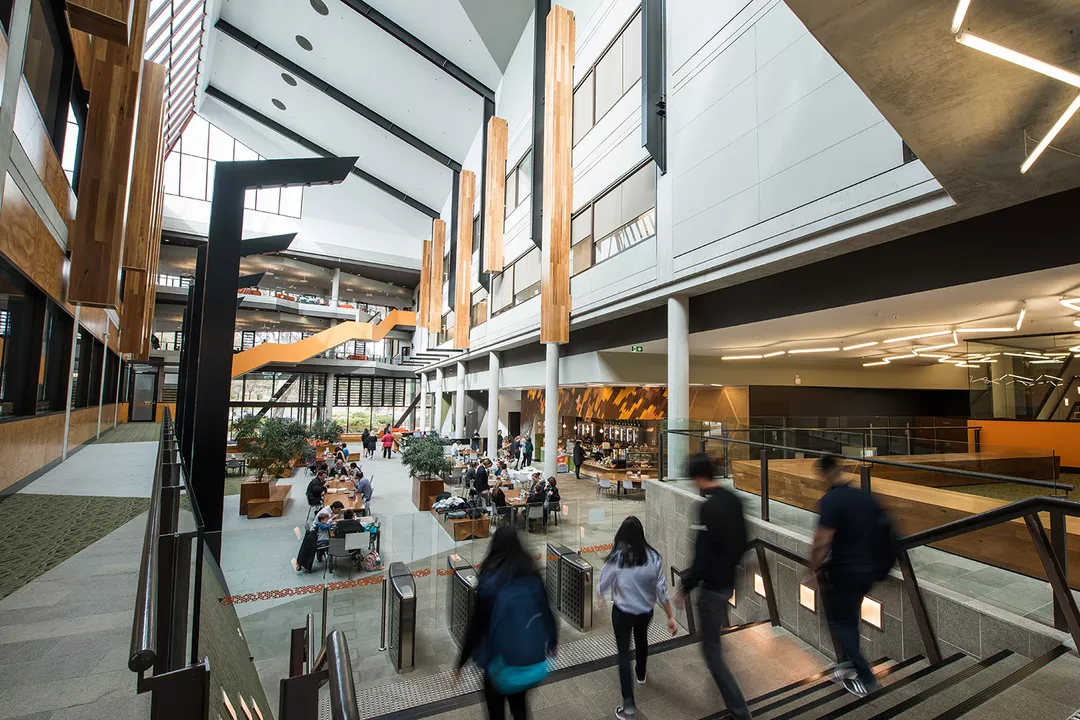

Bundoora, Australia · Public college & institute
La Trobe College (LTU)
- Location
- Bundoora, Victoria
- Institution
- Public College & Institute
- Founded
- 1974
- Courses listed
- 14
Overview
About La Trobe College (LTU)
La Trobe College Australia is a pathway institution located on campus at La Trobe University in Melbourne. It delivers courses to help students’ pathway to La Trobe University if they are not able to gain direct entry into a bachelor or master course of their choice. Courses are available to both domestic and international students and taught in a nurturing environment. Best of all, diploma students receive credit for their studies and enter the second year of their preferred degree.
Why La Trobe College - Melbourne
- Pathway to a Highly-ranked University: La Trobe College is students' pathway to entry in La Trobe University, and becoming one of the most highly regarded graduates in Victoria - La Trobe University is ranked second in the state for employer satisfaction (QILT Employer Satisfaction Survey (ESS) 2021).
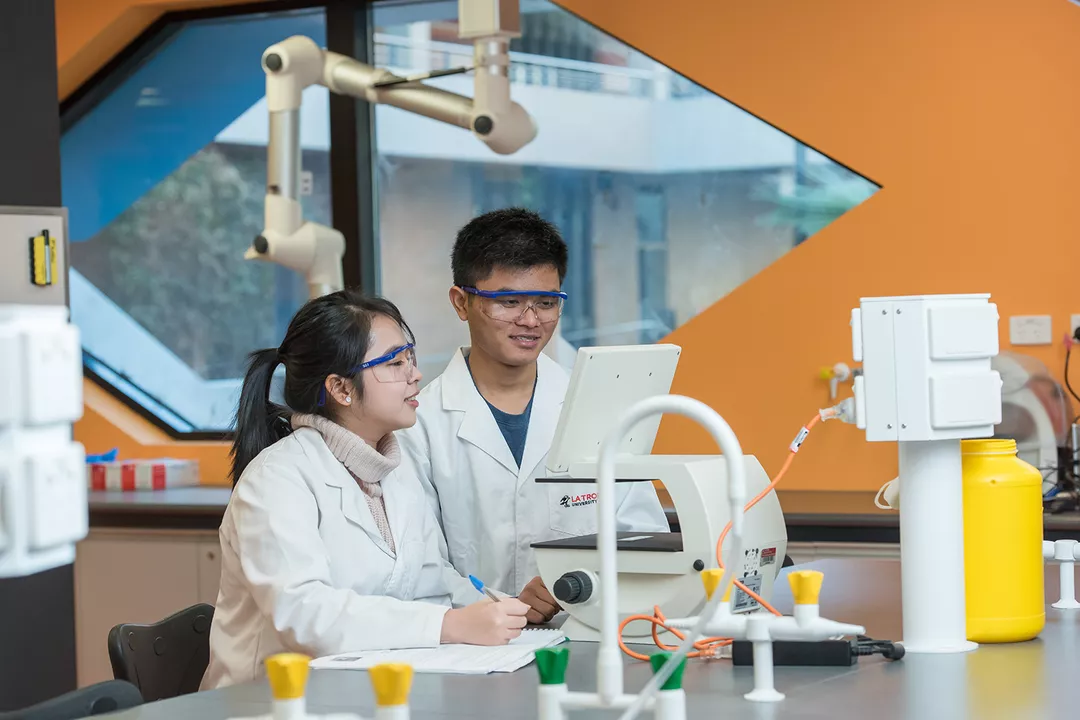
- Tailored Learning Environment: La Trobe College's' staff are here to support students! The teaching setting is designed to enable students' success. It includes excellent facilities, modern technology, support services, and small class sizes for personalised learning. From one-on-one tutoring sessions, English language improvement or study skills workshops, students at La Trobe College will always find the support they need.
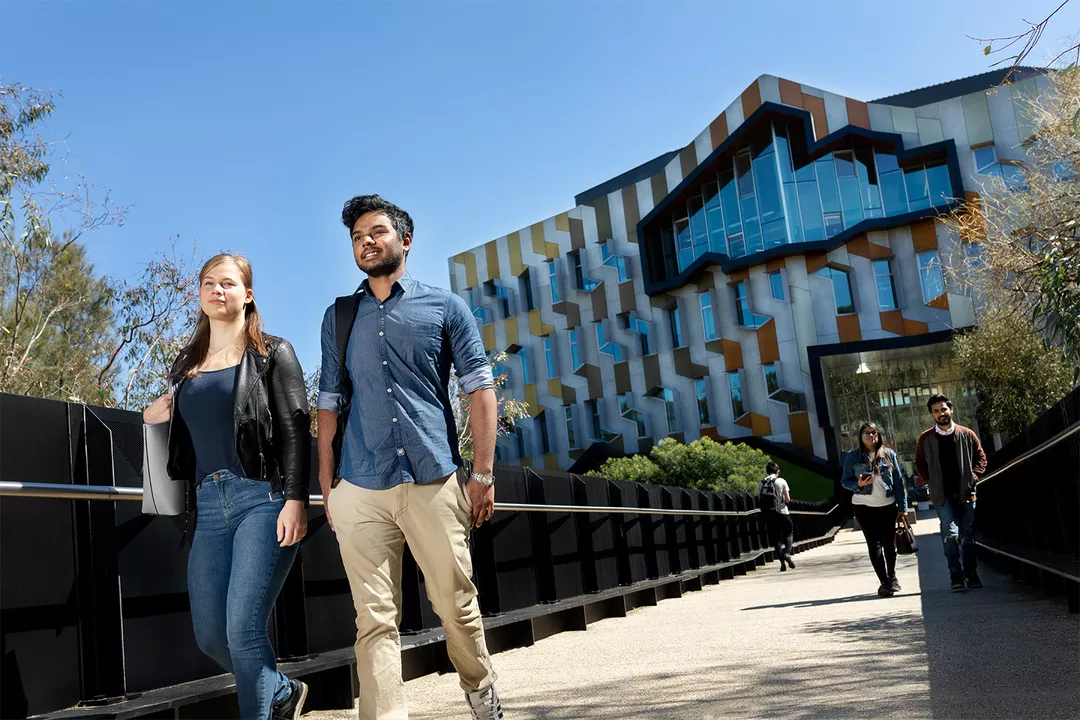
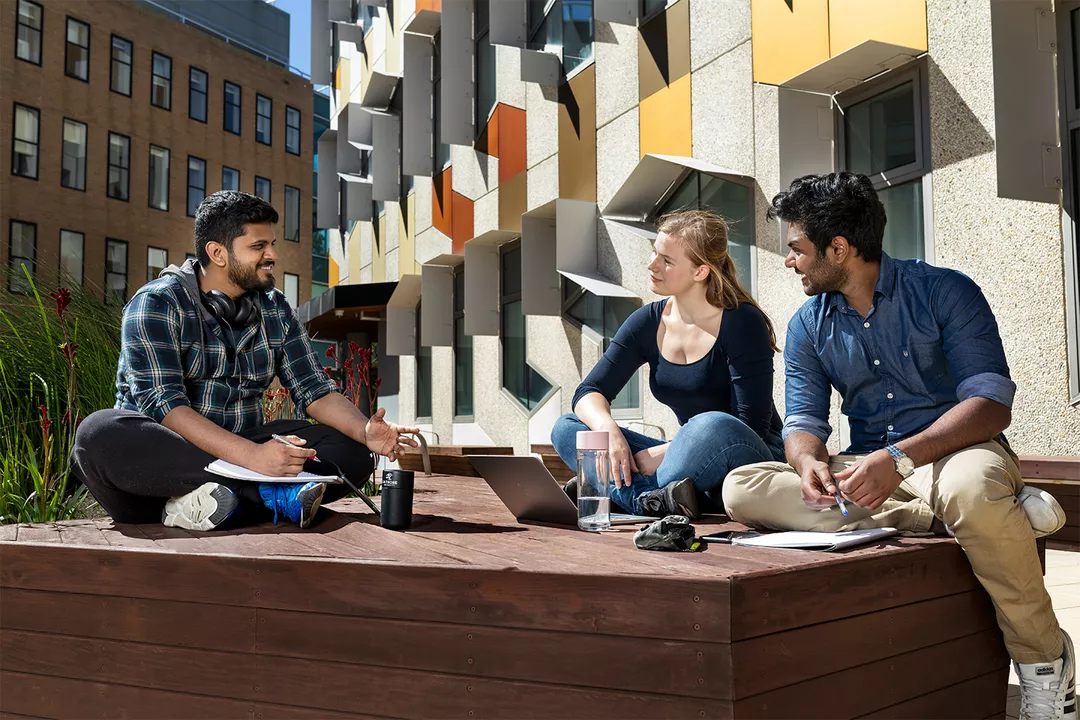
- Get the university experience from day one: Whether studying on campus in Melbourne or Sydney, students get the full university experience. That means access to all the same world-class facilities, activities and events as La Trobe University students.
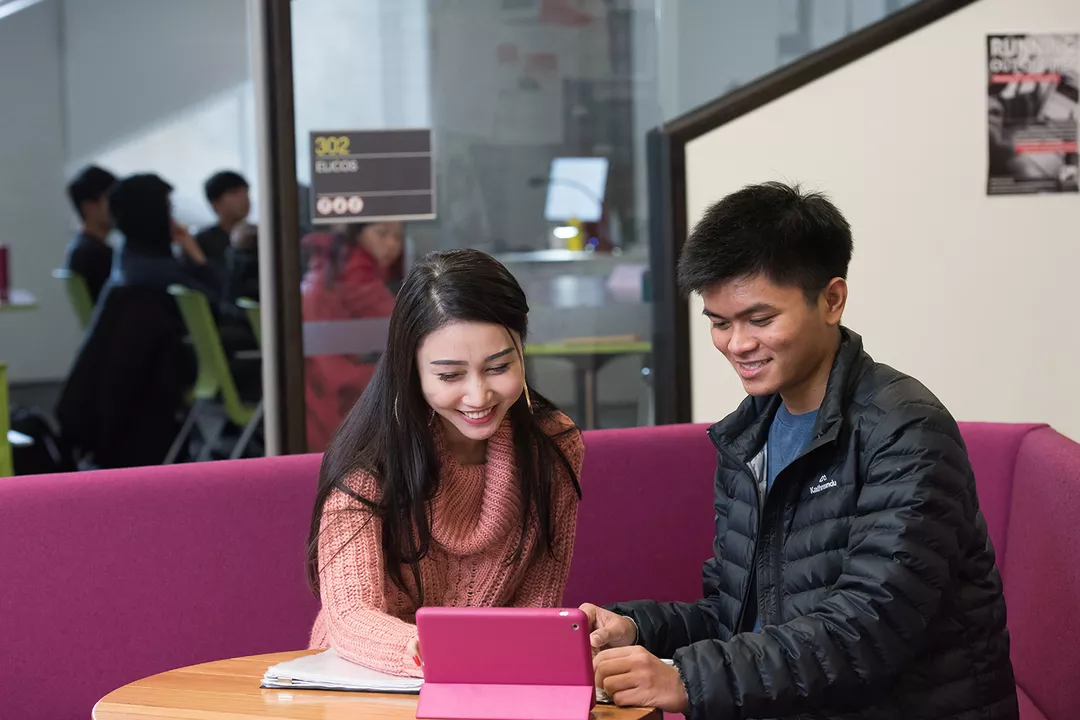
Campus life
Programs
Courses at La Trobe College (LTU)
Bachelor's · Business & Management
Diploma of Business + Bachelor of Business
32 months – 3 years
Next intake: Mar 2027
Apply by 1 Mar 2027
Bachelor's · Business & Management
Diploma of Business + Bachelor of Business
32 months – 3 years Next intake: Mar 2027 Apply by 1 Mar 2027
Start to build the knowledge and skills necessary for students career in a wide range of areas within the business sector. The diploma provides an introduction to a range of business disciplines prior to choosing the business area in which they will specialise once they move to La Trobe University.
They will study the big issues affecting all businesses globally, trade barriers, sustainability and the environment, as well as begin to gain the skills to design and evaluate innovative solutions for the future.
Throughout their Diploma of Business, they will study a total of eight units before graduation. Core and elective subjects will depend upon their preferred bachelor degree.
Depending on the subjects students choose to study, they can pursue a career in a range of industries, including government, corporate, finance, retail, IT and not-for-profit.
Previously, La Trobe business students have gone on to work in sport, agribusiness, finance, economics and more, as well as founding their own businesses, but some other roles they can step into include management, marketing, consulting and analysis.
Upcoming intakes: Mar 2027 · Jun 2027 · Oct 2027
Bachelor's · Business & Management
Foundation Studies for Business, IT and Humanities + Bachelor of Business
44 months
Next intake: Feb 2027
Apply by 1 Feb 2027
Bachelor's · Business & Management
Foundation Studies for Business, IT and Humanities + Bachelor of Business
44 months Next intake: Feb 2027 Apply by 1 Feb 2027
This Foundation Studies program will allow students to gain direct access into the 1st year of a range of La Trobe Bachelor degrees.
Designed to help them to build there digital future, La Trobe's Bachelor of Information Technology equips them with skills across programming, networking, databases, systems analysis and design, and project management.
Along with building a strong set of core IT skills so they can choose to major in one of several areas aligned to future industry growth including artificial intelligence, cloud analytics, cybersecurity, network engineering or information systems.
Broaden their knowledge and capabilities further through a wide range of electives. Combine there core IT skills with business, social sciences, humanities, web engineering, computer technology, security and information systems analysis subjects. Plus they could develop a software program of their own, which they could present at the annual Engineering and IT Showcase to potential employers.
With industry-based projects and CISCO certification embedded in the course, students will receive professional mentoring opportunities as they build career ready skills. They will also gain access to there expert research centres, including the Centre for Technology Infusion and our state-of-the-art Technology Innovation Lab for the Internet of Things – developed in collaboration with Microsoft and CISCO.
Upcoming intakes: Feb 2027 · Jun 2027 · Oct 2027
Bachelor's · Computing & IT
Foundation Studies for Business, IT and Humanities + Bachelor of Information Technology
44 months
Next intake: Feb 2027
Apply by 1 Feb 2027
Bachelor's · Computing & IT
Foundation Studies for Business, IT and Humanities + Bachelor of Information Technology
44 months Next intake: Feb 2027 Apply by 1 Feb 2027
This Foundation Studies program will allow students to gain direct access into the 1st year of a range of La Trobe Bachelor degrees.
Designed to help them to build there digital future, La Trobe's Bachelor of Information Technology equips them with skills across programming, networking, databases, systems analysis and design, and project management.
Along with building a strong set of core IT skills so they can choose to major in one of several areas aligned to future industry growth including artificial intelligence, cloud analytics, cybersecurity, network engineering or information systems.
Broaden their knowledge and capabilities further through a wide range of electives. Combine there core IT skills with business, social sciences, humanities, web engineering, computer technology, security and information systems analysis subjects. Plus they could develop a software program of their own, which they could present at the annual Engineering and IT Showcase to potential employers.
With industry-based projects and CISCO certification embedded in the course, students will receive professional mentoring opportunities as they build career ready skills. They will also gain access to there expert research centres, including the Centre for Technology Infusion and our state-of-the-art Technology Innovation Lab for the Internet of Things – developed in collaboration with Microsoft and CISCO.
Students will learn:
- Web and software development
Develop and build websites and software. Administer the front end, back end and server side of websites and IT systems.
IT systems analysis and design
Understand and analyse IT systems to deliver more efficient and effective IT solutions for your organisation.
- Design
Learn about software, system and network design so you can contribute to making better programs and infrastructure.
- Programming and networking
Learn the language of computers and how they communicate with one another to create working code and smarter systems.
- Project management, estimation, documentation and report evaluation
IT is more than just computers. Learning to manage projects and communicate effectively is a must in any organisational environment.
Upcoming intakes: Feb 2027 · Jun 2027 · Oct 2027
Bachelor's · Engineering & Construction
Foundation Studies for Engineering & Computer Science + BACHELOR OF CIVIL ENGINEERING
56 months
Next intake: Feb 2027
Apply by 1 Feb 2027
Bachelor's · Engineering & Construction
Foundation Studies for Engineering & Computer Science + BACHELOR OF CIVIL ENGINEERING
56 months Next intake: Feb 2027 Apply by 1 Feb 2027
Bachelor of Civil Engineering (Honours)
Become an expert as they can build there knowledge in a wide range of engineering specialties. Understand the technical aspects of geotechnics and hydraulic systems. Develop strong foundations in structural and electrical engineering. And explore the countless possibilities of mechanical engineering.
Students will also develop a specialised skillset that's focused on creating sustainable, efficient and durable systems. Understand the importance of high-quality infrastructure design, civil construction and computer-aided design.
Students will learn from leading academics in small classes, giving them an invaluable intimate learning experience. As they progress, they will have the opportunity to undertake research in sustainability, urban irrigation, and advances in concrete technologies.
Students will learn:
- Sustainable infrastructure
Learn the fundamentals of the design and production of renewable energy systems.
- Civil construction
Develop your knowledge of design, and explore both practical and project management perspectives.
- Water resources
Learn about fluid dynamics, hydraulic systems, hydrological cycles, water quality, water management and water treatment.
- Transport engineering
Analyse and design multimodal transport facilities, road and pavement structures.
- Computer-aided design
Use computers and software to design, improve and assess projects.
Upcoming intakes: Feb 2027 · Jun 2027 · Feb 2028
Bachelor's · Computing & IT
Foundation Studies for Engineering & Computer Science + Bachelor of Computer Science (SBCS)
44 months
Next intake: Feb 2027
Apply by 1 Feb 2027
Bachelor's · Computing & IT
Foundation Studies for Engineering & Computer Science + Bachelor of Computer Science (SBCS)
44 months Next intake: Feb 2027 Apply by 1 Feb 2027
Bachelor of Computer Science will help them to gain the technical skills to adapt to emerging technologies across an increasingly digital world. Students will choose from three majors – artificial intelligence, software engineering or cloud analytics – so they can prepare for a specialised career in computer science.
As well as their technical subjects, They will also build the human skills they need for the workplace. Think project management, critical thinking, problem-solving and communication. These are the transferable skills Students will need to be employable and carve a path of success throughout your career.
Access our expert research centres, including the Centre for Technology Infusion, the Optus Cyber Security Research Centre and a state-of-the-art research lab for the Internet of Things – one of the largest in Victoria, proudly developed in collaboration with Microsoft and CISCO.
They will use their computer science know-how to solve real-world problems with industry-based learning and mentoring opportunities with major corporations. They could take on an industry-based project with leading organisations like Microsoft, Coles, the Australian Ballet and Incitec Pivot Limited – as students have done in the past.
Show off their work at the annual IT and Engineering Showcase, where prospective employers will see what they've done. Or they could choose to undertake an applied research project, developing the skills they need to succeed in research.
Students will learn:
- Computer science
Gain essential skills in programming, mobile app development, logic and data structures, systems analysis and design, computer architecture and databases.
- Web development
Learn full-stack web development, including front end and software development using the latest applications.
- Cloud analytics
Gain proficiency across the latest technologies for analysing big data, including Apache Hadoop and Apache Spark, and learn how to use Amazon Web Services.
- Artificial intelligence (AI)
Understand the historical foundations and fundamentals of AI as they apply to machine learning, natural language processing and intelligent robotic systems.
- Software engineering
Develop expertise across algorithms and data structures, user interface design, measurement and testing principles, and cloud-based web and mobile applications.
Upcoming intakes: Feb 2027 · Jun 2027 · Feb 2028
Bachelor's · Engineering & Construction
Foundation Studies for Engineering & Computer Science + Bachelor of Engineering Honours (Industrial)
56 months
Next intake: Feb 2027
Apply by 1 Feb 2027
Bachelor's · Engineering & Construction
Foundation Studies for Engineering & Computer Science + Bachelor of Engineering Honours (Industrial)
56 months Next intake: Feb 2027 Apply by 1 Feb 2027
Bachelor of Engineering Honours (Industrial).
Develop strong foundations in the core elements of industrial engineering, while exploring areas such as advanced automation, artificial intelligence and data analytics.
Students will learn from leading academics in small classes, giving them an invaluable intimate learning experience. And they will benefit from our state-of-the-art teaching and research facilities, while developing there industry networks through work placements and networking events with major employers.
Students will learn:
- Engineering design
Understand how to rapidly solve problems using fundamental mathematical and scientific principles.
- Programming for engineers
Learn Python programming language and understand how to use algorithms to solve engineering challenges.
- Electrical and electronic engineering
Learn how to design, develop and test electrical and electronic equipment, such as electric vehicles or navigation systems.
- Robotic system design
Find out how to build robots and robotic systems and improve their efficiency and safety.
- Innovation in engineering
Build your creative problem-solving skills and learn the fundamentals of prototyping, building and analysis.
Upcoming intakes: Feb 2027 · Jun 2027 · Feb 2028
Bachelor's · Health & Nursing
Foundation Studies for Health & Life Science + Bachelor of Agriculture
44 months
Next intake: Feb 2027
Apply by 1 Feb 2027
Bachelor's · Health & Nursing
Foundation Studies for Health & Life Science + Bachelor of Agriculture
44 months Next intake: Feb 2027 Apply by 1 Feb 2027
Student will get a solid grounding in science fundamentals, including biology, chemistry and animal sciences, taught by our leading academics and industry experts. They will also delve deeper into discipline-specific topics such as plant and soil science, animal nutrition, pest control, animal health and biochemistry.
Throughout their degree, student will explore the issues that are set to dominate the future of agriculture, including unpredictable water supply, climate change, food security, environmental impacts of agriculture, and sustainable cropping and grazing systems. They will get a true, practical understanding of these challenges through real-world case studies.
Theory is good, but hands-on experience is even better. This degree includes a range of practical learning opportunities and industry experiences, so they can see first-hand how their skills and knowledge apply in real-world settings. These experiences will give you the opportunity to begin building there network of industry contacts – something be able to draw on throughout their career.
Their third and final year is all about applying the skills and knowledge they've learned in an agricultural context. Harness and hone all they've learned in La Trobe's laboratories and in-field work to prepare for your next step after graduation.
Upcoming intakes: Feb 2027 · Jun 2027 · Feb 2028
Bachelor's · Health & Nursing
Foundation Studies for Health & Life Science + Bachelor of Biomedicine
44 months
Next intake: Feb 2027
Apply by 1 Feb 2027
Bachelor's · Health & Nursing
Foundation Studies for Health & Life Science + Bachelor of Biomedicine
44 months Next intake: Feb 2027 Apply by 1 Feb 2027
This Foundation Studies program will help students to gain entry into a range of health and life science degrees at La Trobe University.
Start with how the body works as they build their fundamental knowledge of chemistry, bioscience and health. Students will take a close look at infectious diseases, including the factors that drive epidemics and pandemics.
Then take on more advanced topics in biochemistry, molecular and cell biology, and human physiology. Choose subjects in data analysis, disease prevention and control, and lab-based work that'll prepare them for careers in biomedicine. Our supportive staff are available to help them to tailor their degree with electives that align with the career they want. In their final year, Students will explore major health issues and how they affect people and society, including cancer, cardiovascular disease, infections and neurological conditions.
Look to the future when they hear from alumni and industry guest speakers currently working in biomedicine and related careers. Plus, have the opportunity to add a voluntary internship to your degree and get practical industry experience while they study.
An undergraduate degree in biomedicine from La Trobe gives them the option to exit early with a Diploma or Associate Degree in Biomedicine. They can also pursue further study, such as a specialist postgraduate degree in audiology, physiotherapy, dietetic practice, genetic counselling, medicine or dentistry.
Students will learn:
- Biochemistry, molecular and cell biology
Understand the function of various biological systems at the molecular and cellular levels and how they relate to medical research and biotechnology.
- Human physiology
Gain insight into how the nervous, muscular, endocrine, renal and gastrointestinal systems work and how the regulation of these impact health outcomes.
- Health data analysis and visualisation
Learn how to interpret and analyse complex health data to communicate insights to a range of stakeholders.
- Infectious and non-infectious disease
Discover how infectious and non-infectious diseases are caused and explore the latest understanding of how to prevent, diagnose and treat different types of disease.
- Biomedical science
Learn about the practical applications of biomedical science across drugs, clinical trials, ethics, and complementary medicines.
Upcoming intakes: Feb 2027 · Jun 2027 · Feb 2028
Bachelor's · Health & Nursing
Foundation Studies for Health & Life Science + Bachelor of Health Science
44 months
Next intake: Feb 2027
Apply by 1 Feb 2027
Bachelor's · Health & Nursing
Foundation Studies for Health & Life Science + Bachelor of Health Science
44 months Next intake: Feb 2027 Apply by 1 Feb 2027
Bachelor of Health Sciences will give them the skills and confidence to build a rewarding career in this diverse field. Whether they want to work with individual people or whole populations, students will have the opportunity to fine-tune there skills and get the real-world experience that'll set them apart
Look at health from every angle. While we often measure health through the body, we can also examine the way our minds, our society and our environment – not to mention our political structures – affect the health of every individual, family and community. Students will learn how to use data as a powerful tool to improve the health of everyday people and develop the research skills to make a real impact
Design your own study program and carve there unique path in the world of health. In this highly flexible degree, they can choose to major in a range of fascinating areas of health sciences, including human physiological sciences (Melbourne only), medical and exercise science (Bendigo only), psychological science, public health and more.
Delve deeper into subjects they were fascinated in, with the option to take up to two majors if they want to develop broad expertise and keep there career options open. They will also have the option to study an open access major or minor from across the university to gain extra skills and explore your passions.
Learn from expert academics with strong ties to the health industry. Be mentored in the areas there passionate about and take the opportunity to get real-world experience at leading organisations via internships at La Trobe's partners. Develop your professional networks when they connect with diverse industry leaders.
Gain deep knowledge of the most impactful areas of the health sciences and build a meaningful career. Through there studies, they can aspire to make positive differences at local, national and international levels. They will learn the skills employers are searching for. Hone there abilities in critical thinking, problem-solving, communication, research, leadership and teamwork, then use them to address the biggest issues in health and wellbeing.
Students will learn:
- Professional scientific thinking
Learn how science contributes new knowledge and finds solutions to problems in our society.
- Lab and fieldwork skills
Learn how to collect data and use specialist technical skills to develop new findings in the laboratory and in the field.
- Problem-solving
Learn to develop solutions to complex scientific problems.
- Collaboration
Collaborate and work effectively in teams to solve problems and achieve shared goals.
- Professional conduct
Learn about ethical conduct when working as a scientific professional and how to promote and communicate your professional identity to potential employers and peers.
- Communicating as a professional scientist
Gain experience communicating to a range of audiences, both in written and verbal formats.
Upcoming intakes: Feb 2027 · Jun 2027 · Feb 2028
Bachelor's · Social Sciences & Psychology
Foundation Studies for Health & Life Science + Bachelor of Psychological Science
44 months
Next intake: Mar 2027
Apply by 20 Jan 2027
Bachelor's · Social Sciences & Psychology
Foundation Studies for Health & Life Science + Bachelor of Psychological Science
44 months Next intake: Mar 2027 Apply by 20 Jan 2027
Bachelor of Psychological Science will prepare students for a career as a professional psychologist, or in a psychology-related field across industries from clinical psychology to human services and marketing.
Elective subjects with a choice of minor sequences in Human Relationships and Neuroscience gives them the flexibility to work towards the career they want.
Students will learn:
- Analytical, research and communication skills
Learn skills that are essential to your future career in psychology.
- Clinical and health psychology
Gain an understanding of how to help people cope with mental and physical disorders.
- Developmental and social psychology
Understand how environmental factors contribute to peoples' psychological makeup.
- Psychological assessment, intervention and research
Become familiar with methods to understand and measure people's psychological state.
Upcoming intakes: Mar 2027 · Jun 2027 · Mar 2028
Bachelor's · Science & Environment
Foundation Studies for Health & Life Science + Bachelor of Science
44 months
Next intake: Feb 2027
Apply by 1 Feb 2027
Bachelor's · Science & Environment
Foundation Studies for Health & Life Science + Bachelor of Science
44 months Next intake: Feb 2027 Apply by 1 Feb 2027
Bachelor of Science offers Students foundational skills in science and the freedom to delve into there passions. Whether it's protecting endangered animals, developing new ways to treat disease or fighting climate change, Students will be ready to pursue there dream journey in science by tailoring there degree with a mix of majors and minors.
As they learn from leading academics and researchers, students will take a deep dive into science – not only scientific concepts, but also how scientists think, work and share their findings.
Build skills in problem-solving, communication and collaboration – all highly sought after by employers – then use these skills to come up with innovative solutions to real-world problems.
Personalise there learning so they can spend time focusing on the areas that really interest them. Choose from majors in a range of fields, including botany, statistics, microbiology, genetics, data science and more, and learn from academics who are leaders in their fields.
Students will have opportunities to put theory into practice through work placements with our industry partners. Previous students have undertaken placements, Bayer Crop Science and various State and Federal Government departments.
Students will learn:
- Professional scientific thinking
Learn how science contributes new knowledge and finds solutions to problems in our society.
- Communicating as a professional scientist
Gain experience communicating to a range of audiences, both in written and verbal formats.
- Lab and fieldwork skills
Learn how to collect data and use specialist technical skills to develop new findings in the laboratory and in the field.
- Problem-solving and facing new challenges
Learn to develop solutions to complex scientific problems.
- Collaboration and working in teams
Collaborate and work effectively in teams to solve problems and achieve shared goals.
- Professional conduct and professional identity
Learn about ethical conduct when working as a scientific professional and how to promote and communicate your professional identity to potential employers and peers.
Upcoming intakes: Feb 2027 · Jun 2027 · Feb 2028
Bachelor's · Health & Nursing
Foundation Studies for Health & Life Science + Bachelor of Sport and Exercise Science
44 months
Next intake: Feb 2027
Apply by 1 Feb 2027
Bachelor's · Health & Nursing
Foundation Studies for Health & Life Science + Bachelor of Sport and Exercise Science
44 months Next intake: Feb 2027 Apply by 1 Feb 2027
Bachelor of Sport and Exercise Science gives them the scientific knowledge and practical skills to improve health and wellbeing.
Students will gain a detailed understanding of the science behind training. Explore the strengths and limitations of the human body while building strong foundations in physiology, anatomy and biomechanics. Then they will build industry placement with leading organisations such as Carlton Football Club, Melbourne City and Exercise Research Australia.
Experience sport and exercise science first-hand at La Trobe's $150 million Research and Innovation precinct and Sports Park. Equipped with world-class teaching and research facilities, elite athlete performance space, AFL oval, FIFA-1 accredited synthetic soccer pitch and more.
Students will learn:
- Physiology and biomechanics
Investigate the physiological response of the cardiovascular, respiratory, musculoskeletal and nervous systems to sport and exercise.
- Strength and conditioning
Learn scientific principles and techniques to enhance strength, endurance and speed qualities of athletes to meet the demands of various sports.
- Skill development in sport
Discover the science behind movement learning and execution and its relationship to athlete performance.
- Performance analysis
Explore the theoretical concepts and principles that underpin the field of sports analytics and performance analysis.
Upcoming intakes: Feb 2027 · Jun 2027 · Feb 2028
Bachelor's · Science & Environment
Foundation Studies for Health & Life Science + Bachelor of Wildlife and Conservation Biology
44 months
Next intake: Feb 2027
Apply by 1 Feb 2027
Bachelor's · Science & Environment
Foundation Studies for Health & Life Science + Bachelor of Wildlife and Conservation Biology
44 months Next intake: Feb 2027 Apply by 1 Feb 2027
Bachelor of Wildlife and Conservation Biology draws on many areas of science including botany, genetics and zoology. Students will learn to apply ecological concepts to the conservation of species and ecosystems and explore the legal framework for conservation.
There curriculum will cover biology fundamentals – including how organisms, the environment and human populations interact with each other – as well as climate change and sustainability. As they progress in their studies, students will advance there understanding of conservation issues, learn to use different technologies to collect and process data, and design there own detailed conservation management plan. Students will be taught by La Trobe experts involved in conservation projects, and who work with partners in state and federal government departments and non-government organisations such as Bush Heritage and Trust for Nature.
To truly understand wildlife and real-world conservation, they need to experience it first-hand. Throughout there degree they will spend plenty of time immersed in the environment – previous field trip destinations include Wilsons Promontory, Heron Island, Falls Creek, the Mallee, Buchan and the Ovens River. These trips will give them the opportunity to interact with a range of flora and fauna, apply there knowledge in real settings and get hands-on experience using remote sensing and geographic information system (GIS) technology to collect and analyse data.
The practical side of your degree isn't limited to off-campus experiences. Our on-campus Wildlife Sanctuary is very own 30-hectare laboratory, where they can study the behaviour of bat species and mosquito fish, and help preserve the natural habitats of species including the long-nosed potoroo, brolga, black wallaby and sugar glider.
With the Bachelor of Wildlife and Conservation Biology, they can study what there passionate about. In addition to there core biology, conservation and quantitative skills subjects, they can choose from a range of electives – including anthropology, Indigenous studies, and environmental and resource economics – and tailor their study experience to suit there career aspirations.
Students will learn:
- Ecology and biodiversity
Explore the relationships between living organisms, including humans, and their physical environment. Learn how to protest the earth's biodiversity.
- Climate change and sustainability
Learn how our actions and choices affect the natural, economic, social, political and cultural systems – both now and in the future.
- Environmental law
Understand the scope, structure and regulatory tools of environmental law and how to research, analyse, discuss and evaluate specific areas of Australian environmental law.
- Endangered species biology and management
Understand the theory, concepts and issues of species conservation and how to review or prepare your own environmental management plan.
- Research
Learn how to draw conclusions from data, design surveys and experiments, and critically evaluate the statistical arguments made in scientific reports and journal articles.
Upcoming intakes: Feb 2027 · Jun 2027 · Feb 2028
Bachelor's · Health & Nursing
Foundation Studies for Health & Life Sciences + Bachelor of Animal & Veterinary Biosciences
44 months
Next intake: Feb 2027
Apply by 1 Feb 2027
Bachelor's · Health & Nursing
Foundation Studies for Health & Life Sciences + Bachelor of Animal & Veterinary Biosciences
44 months Next intake: Feb 2027 Apply by 1 Feb 2027
Bachelor of Animal and Veterinary Biosciences, Students can turn there love of animals into a fulfilling career.
Study the basics of animal science, including breeding, nutrition and animal welfare. Students will also delve into global issues such as food security, epidemics and pandemics, and the environmental impacts of animal agriculture. In later years they will explore animal psychology, biochemistry and immunology.
Theory is vital, but we know that they can only learn so much in the classroom. That's why your theoretical studies will be supported by robust hands-on learning. Each year of degree will include practical elements, such as real-life animal case studies which give you the chance to work closely with our industry partners. Placements – both compulsory and elective – allow them to take there learning out of the classroom and into the real world. Industry experts will present lectures and workshops throughout your degree, giving you first-hand insights into your future. Students will graduate with experience under there belt and the foundations of a strong professional network.
Students will graduate ready for the workplace, or they can use this course as a pathway into a veterinary medicine degree.
Students will get the opportunity to learn:
- Animal science
Build important foundations in all aspects of animal science, including animal health, nutrition, physiology, welfare, reproduction and management.
- Microbiology
Learn about microorganisms, how they live, how they work and how they cause disease.
- Metabolic biochemistry
Become familiar with the underlying biochemical processes that occur in animals, including those used to generate energy to maintain body function.
Upcoming intakes: Feb 2027 · Jun 2027 · Feb 2028
No courses match your search.
Student life & support
Work while studying
International students can work part-time alongside their studies (subject to visa conditions).
Co-op & placements
Offers co-op or work-placement options in selected programs.
On-campus housing
Students typically arrange off-campus or homestay accommodation.
Accommodation options
Students need to plan their accommodations well in advance of their arrival as all accommodation options fill up quickly, well before the start of the semester.
On-Campus Residence Accommodations
On-Campus residence accommodations are provided per discretion by the school.
Off-Campus Accommodations
The local area has a variety of off-campus rental housing options including single homes, duplexes, apartments and rooms for rent. Students wishing to live off-campus need to research availability on their own and should arrive well before the start of term to do so.
Homestay
There are a wide variety of homestay options available, and our partners do their best to match students and hosts according to their interests and preferences. Homestay hosts include single people, young couples with children and pets, and older couples. All homestay accommodations have been inspected, and all adults in the home have completed a required criminal reference check.