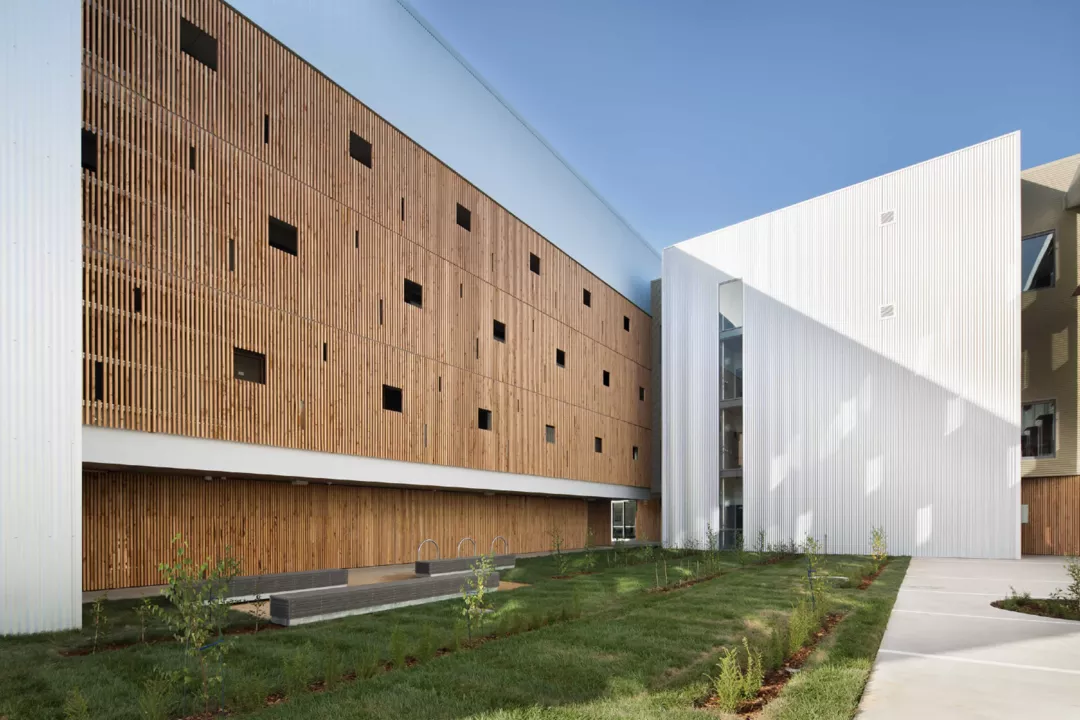

Hobart, Australia · Public college & institute
University of Tasmania International Pathway College
- Location
- Hobart, Tasmania
- Institution
- Public College & Institute
- Founded
- 1846
- Courses listed
- 20
Overview
About University of Tasmania International Pathway College
University of Tasmania International Pathway College delivers a range of bridging programs to enable international students to pathway from their home country into an undergraduate degree. The International Pathway College is based at the Sandy Bay campus in Hobart. Programs at the International Pathway College are delivered by UP Education, an education provider that partners with leading universities in Australia and New Zealand to provide learning pathways for international students, equipping them with the knowledge, skills and confidence to excel at English-language universities.
Why University of Tasmania International Pathway College
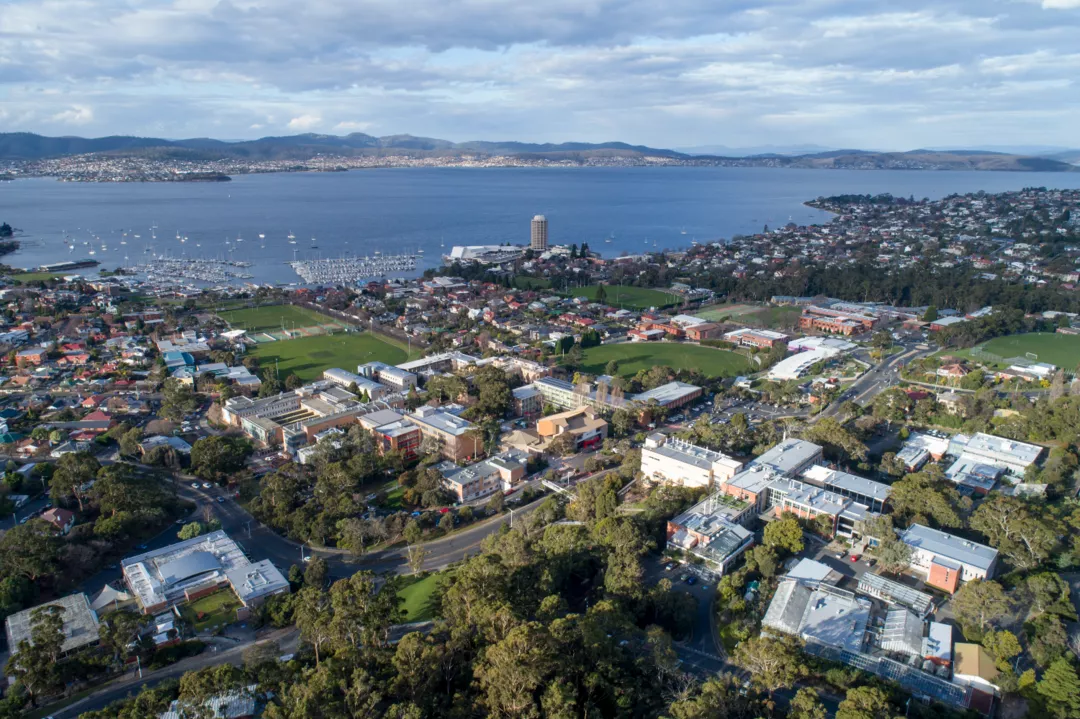
- Location: Tasmania is a unique location with scenic natural environments, vibrant cities, and World-Heritage-listed wilderness. The campus is located in the beachside suburb of Sandy Bay, five minutes' drive south of the city centre. This scenic campus is close to shops, transport, accommodation, entertainment and services and is just a short walk from the Hobart CBD.
- Reputation: Programs are nationally recognised and equip students with the content, English language and tertiary study skills needed to excel at higher education programs in Australia.
- Program Offerings: The University of Tasmania International Pathway College provides course offerings that enable students to improve either or both their English and/or academic skills to successfully progress into degree studies.
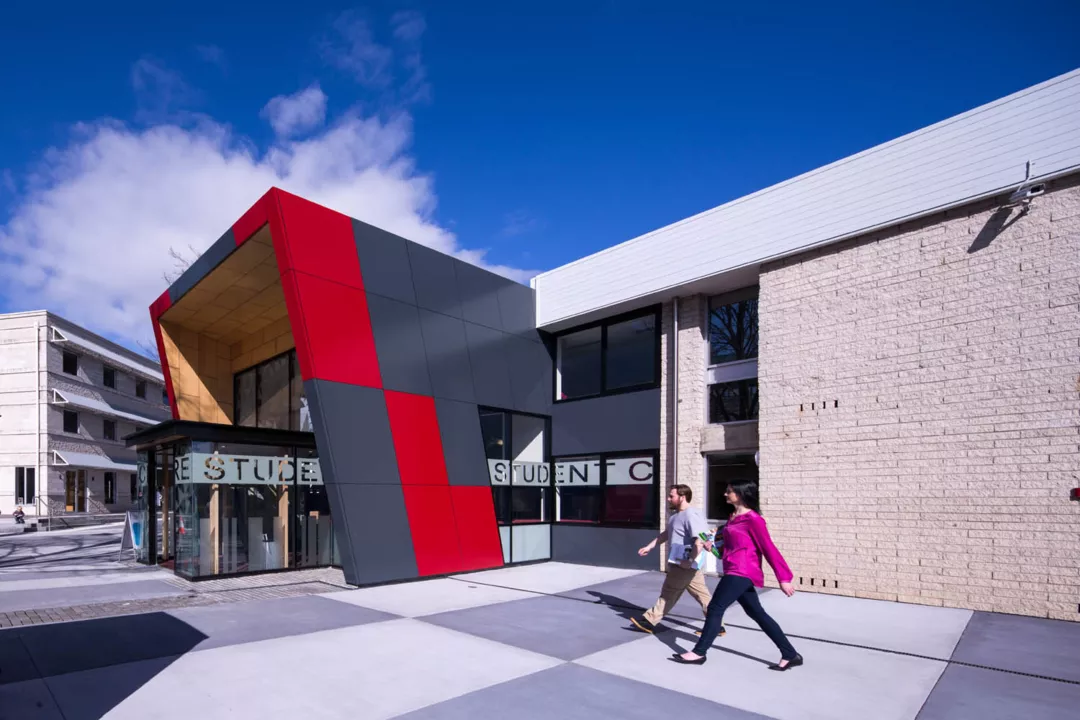
Campus life
Programs
Courses at University of Tasmania International Pathway College
Bachelor's · Law & Criminology
Foundation Studies Program (Fast Track) – Arts + Bachelor of Arts and Bachelor of Laws – Ancient Civilisations
64 months
Next intake: Jun 2027
Apply by 27 Mar 2027
Bachelor's · Law & Criminology
Foundation Studies Program (Fast Track) – Arts + Bachelor of Arts and Bachelor of Laws – Ancient Civilisations
64 months Next intake: Jun 2027 Apply by 27 Mar 2027
Program Description
Foundation Studies Program (Fast Track) - Arts (X0G:1) (0100809)
The Foundation Studies program is a direct academic pathway to first-year undergraduate degree study, or an equivalent. The program acts as a bridging course for international students who wish to study a university undergraduate degree course but who don’t yet meet academic requirements and/or have the English language skills for tertiary study.
To successfully complete the program, students must achieve a 50% pass in all units, including English.
Upon successful completion of the course, graduates can enter one of the University of Tasmania’s undergraduate degree courses.
Bachelor of Arts and Bachelor of Laws - Ancient Civilisations (93A):
The double degree allows students to deepen their knowledge and expertise within two separate study areas. This means students can choose from University of Tasmania’s range of exciting, diverse courses and they can embark on a journey as unique as they are.
At the University of Tasmania, students will be part of an academic community that cares deeply about the topics that they teach and study.
Students will learn to influence cultural and social change, and students will gain the knowledge and creativity to envision better futures. Students will take on the world’s cultural, environmental, and humanitarian challenges from multiple perspectives and gain the confidence to make a positive difference. In first year, students will have the opportunity to visit Country with an Aboriginal Elder or knowledge holder as part of the University of Tasmania's curriculum's reflection of the value and place of Indigenous knowledges and perspectives.
The Bachelor of Arts will equip students with a range of specialised and transferable skills that are highly sought after by employers: creative thinking, respect for multiple perspectives, and the ability to work effectively in a team environment.
To study law is to understand the importance of social justice and using the law to improve the health of society and this planet. It is about developing high-level skills in legal techniques and a sensitivity to the way that those skills can be used to advance a range of interests. By learning to understand law as both a local and transnational affair, the commonalities amongst law and legal systems, as well as how context can shape laws and legal culture, students open doors to diverse careers in the practice of law in Australia and globally.
Students who choose to study law at the University of Tasmania, the journey is more extraordinary because the lines between study, research and professional practice often dissolve. Drawing on the University of Tasmania’s strong tradition of close engagement with the Tasmanian legal profession and their network of practitioner alumni, students will have opportunities to engage with the judiciary, senior practitioners, leaders from government and industry and key legal institutions from their first year.
The University of Tasmania’s island campus provides ideal opportunities to learn from world-leaders in Environmental, Antarctic, Marine and Climate Law. Their law school hosts the Tasmanian Law Reform Institute, enabling students to contribute to law reform, particularly in relation to criminal law. Students will also develop global perspectives on some of the great challenges in society - gene-editing and the legal regulation of biotechnology, the regulation of armed conflict and the prosecution of war crimes.
By studying Ancient Civilisations students will understand the everchanging nature of human societies, as well as the deep continuities that bind humanity together. They will explore topics in mythology and religion, drama, history, classical epic, and many more. As such, Ancient Civilisations is dynamic and multidisciplinary: this program allows them to gain experience with ancient historiography, literary criticism, material culture, and philosophical enquiry.
This programs explores with surveys of the Greek and Roman cultures which introduce skills for interpreting ancient primary sources. University of Tasmania’s intermediate units introduce students to classical scholarship and continue to deepen skills in critical analysis of primary sources. At the advanced level, they begin to engage critically with secondary scholarship and build intellectual independence by developing their own research projects. Together, the Ancient Civilisations and Ancient Languages majors make up the Classics discipline, and both majors are taught by renowned Classics lecturers. This major develops critical thinking, research methods, and intercultural awareness, which prepares students for a range of professional careers that require an understanding of the ethical implications of a project, long-term effects of actions or diverse experiences of policy. Areas where such skills are needed include: Politics and Policy, Education, Human Resources and Non-Government Organisations.
Upcoming intakes: Jun 2027 · Oct 2027 · Feb 2028
Bachelor's · Law & Criminology
Foundation Studies Program (Fast Track) – Arts + Bachelor of Arts and Bachelor of Laws – Ancient Languages
64 months
Next intake: Jun 2027
Apply by 27 Mar 2027
Bachelor's · Law & Criminology
Foundation Studies Program (Fast Track) – Arts + Bachelor of Arts and Bachelor of Laws – Ancient Languages
64 months Next intake: Jun 2027 Apply by 27 Mar 2027
Program Description
Foundation Studies Program (Fast Track) - Arts (X0G:1) (0100809)
The Foundation Studies program is a direct academic pathway to first-year undergraduate degree study, or an equivalent. The program acts as a bridging course for international students who wish to study a university undergraduate degree course but who don’t yet meet academic requirements and/or have the English language skills for tertiary study.
To successfully complete the program, students must achieve a 50% pass in all units, including English.
Upon successful completion of the course, graduates can enter one of the University of Tasmania’s undergraduate degree courses.
Bachelor of Arts and Bachelor of Laws - Ancient Languages (93A):
The double degree allows students to deepen their knowledge and expertise within two separate study areas. This means students can choose from University of Tasmania’s range of exciting, diverse courses and they can embark on a journey as unique as they are.
At the University of Tasmania, students will be part of an academic community that cares deeply about the topics that they teach and study.
Students will learn to influence cultural and social change, and students will gain the knowledge and creativity to envision better futures. Students will take on the world’s cultural, environmental, and humanitarian challenges from multiple perspectives and gain the confidence to make a positive difference. In first year, students will have the opportunity to visit Country with an Aboriginal Elder or knowledge holder as part of the University of Tasmania's curriculum's reflection of the value and place of Indigenous knowledges and perspectives.
The Bachelor of Arts will equip students with a range of specialised and transferable skills that are highly sought after by employers: creative thinking, respect for multiple perspectives, and the ability to work effectively in a team environment.
To study law is to understand the importance of social justice and using the law to improve the health of society and this planet. It is about developing high-level skills in legal techniques and a sensitivity to the way that those skills can be used to advance a range of interests. By learning to understand law as both a local and transnational affair, the commonalities amongst law and legal systems, as well as how context can shape laws and legal culture, students open doors to diverse careers in the practice of law in Australia and globally.
Students who choose to study law at the University of Tasmania, the journey is more extraordinary because the lines between study, research and professional practice often dissolve. Drawing on the University of Tasmania’s strong tradition of close engagement with the Tasmanian legal profession and their network of practitioner alumni, students will have opportunities to engage with the judiciary, senior practitioners, leaders from government and industry and key legal institutions from their first year.
The University of Tasmania’s island campus provides ideal opportunities to learn from world-leaders in Environmental, Antarctic, Marine and Climate Law. Their law school hosts the Tasmanian Law Reform Institute, enabling students to contribute to law reform, particularly in relation to criminal law. Students will also develop global perspectives on some of the great challenges in society - gene-editing and the legal regulation of biotechnology, the regulation of armed conflict and the prosecution of war crimes.
By studying Latin and Greek, students will find an exciting new home in the languages that shaped the fundamentals of western thought in the sciences, philosophy, medicine, and literature. Beautiful and fascinating in their own right, these ancient languages provide them with a deeper understanding of modern culture, specialist technical terminologies and many modern languages through their roots in Latin and Greek. Each week they will experience the intense satisfaction of building their brain into a stronger, better, more agile resource. Understanding the precious cultural resources bound up in even 'dead' languages also exposes students to the politics of vulnerable Indigenous languages, such as the returned and reconstructed island language of Tasmania, palawa kani.
This is a unique course recognised as the most dynamic (and best off-campus) ancient languages course in Australasia. University of Tasmania’s introductory units begin with Latin and are designed for students with no experience in ancient or modern languages. These units pay attention to fundamental principles of grammar, informing general understanding of language structure, and guide students through skillfully adapted texts allowing direct access to ancient thought. This program’s intermediate units continue to develop grammatical skills while gradually incorporating original texts. At advanced level students will read ancient texts in their original language, and begin Ancient Greek in accelerated form. The Ancient Languages Major integrates closely with Ancient Civilisations and connects with several majors in the Humanities, Social Sciences and Legal Studies. Learning Ancient Greek and Latin and reading their centuries of literature are among the great intellectual adventures, and employers recognise the analytical and creative skills such training develops.
Upcoming intakes: Jun 2027 · Oct 2027 · Feb 2028
Bachelor's · Social Sciences & Psychology
Foundation Studies Program (Fast Track) – Arts + Bachelor of Arts and Bachelor of Laws – Gender and Diversity
64 months
Next intake: Jun 2027
Apply by 27 Mar 2027
Bachelor's · Social Sciences & Psychology
Foundation Studies Program (Fast Track) – Arts + Bachelor of Arts and Bachelor of Laws – Gender and Diversity
64 months Next intake: Jun 2027 Apply by 27 Mar 2027
Program Description
Foundation Studies Program (Fast Track) - Arts (X0G:1) (0100809)
The Foundation Studies program is a direct academic pathway to first-year undergraduate degree study, or an equivalent. The program acts as a bridging course for international students who wish to study a university undergraduate degree course but who don’t yet meet academic requirements and/or have the English language skills for tertiary study.
To successfully complete the program, students must achieve a 50% pass in all units, including English.
Upon successful completion of the course, graduates can enter one of the University of Tasmania’s undergraduate degree courses.
Bachelor of Arts and Bachelor of Laws - Gender and Diversity (93A):
The double degree allows students to deepen their knowledge and expertise within two separate study areas. This means students can choose from University of Tasmania’s range of exciting, diverse courses and they can embark on a journey as unique as they are.
At the University of Tasmania, students will be part of an academic community that cares deeply about the topics that they teach and study.
Students will learn to influence cultural and social change, and students will gain the knowledge and creativity to envision better futures. Students will take on the world’s cultural, environmental, and humanitarian challenges from multiple perspectives and gain the confidence to make a positive difference. In first year, students will have the opportunity to visit Country with an Aboriginal Elder or knowledge holder as part of the University of Tasmania's curriculum's reflection of the value and place of Indigenous knowledges and perspectives.
The Bachelor of Arts will equip students with a range of specialised and transferable skills that are highly sought after by employers: creative thinking, respect for multiple perspectives, and the ability to work effectively in a team environment.
To study law is to understand the importance of social justice and using the law to improve the health of society and this planet. It is about developing high-level skills in legal techniques and a sensitivity to the way that those skills can be used to advance a range of interests. By learning to understand law as both a local and transnational affair, the commonalities amongst law and legal systems, as well as how context can shape laws and legal culture, students open doors to diverse careers in the practice of law in Australia and globally.
Students who choose to study law at the University of Tasmania, the journey is more extraordinary because the lines between study, research and professional practice often dissolve. Drawing on the University of Tasmania’s strong tradition of close engagement with the Tasmanian legal profession and their network of practitioner alumni, students will have opportunities to engage with the judiciary, senior practitioners, leaders from government and industry and key legal institutions from their first year.
The University of Tasmania’s island campus provides ideal opportunities to learn from world-leaders in Environmental, Antarctic, Marine and Climate Law. Their law school hosts the Tasmanian Law Reform Institute, enabling students to contribute to law reform, particularly in relation to criminal law. Students will also develop global perspectives on some of the great challenges in society - gene-editing and the legal regulation of biotechnology, the regulation of armed conflict and the prosecution of war crimes.
Students entering the Gender and Diversity program will be immersed in an interdisciplinary exploration of the meaning and impact of gender, race, and sexuality on all the lives. Assumptions about sex, gender and race have influenced everything from University of Tasmania most fundamental understandings of what it is to be human to ancient poetry to contemporary fashion. Students will become familiar with a variety of theoretical approaches to the subject and will be given a range of methodological tools to help students understand those cultural assumptions and practices which have shaped the lived experiences as gendered, racialised beings.
The core units in Gender & Diversity examine questions of identity, power and change, including how understandings of human bodies and sexuality have changed over time. Students will analyse the various ways that masculinities and femininities are enacted in the world, and develop a critical awareness of the gendered and racial dynamics which influence these masculinities and femininities. All human beings live within a particular gender order and racial system: to study gender & diversity is to become more aware of the possibilities and constraints of these structures and their effect on student's life and the world’s people and processes.
This program will prepare students for work in all kinds of settings where an appreciation of diversity matters. This includes the community sector, equity and diversity units in businesses and institutions, discrimination law and human resources.
Upcoming intakes: Jun 2027 · Oct 2027 · Feb 2028
Bachelor's · Science & Environment
Foundation Studies Program (Fast Track) – Arts + Bachelor of Arts and Bachelor of Laws – Geography and Environment
64 months
Next intake: Jun 2027
Apply by 27 Mar 2027
Bachelor's · Science & Environment
Foundation Studies Program (Fast Track) – Arts + Bachelor of Arts and Bachelor of Laws – Geography and Environment
64 months Next intake: Jun 2027 Apply by 27 Mar 2027
Program Description
Foundation Studies Program (Fast Track) - Arts (X0G:1) (0100809)
The Foundation Studies program is a direct academic pathway to first-year undergraduate degree study, or an equivalent. The program acts as a bridging course for international students who wish to study a university undergraduate degree course but who don’t yet meet academic requirements and/or have the English language skills for tertiary study.
To successfully complete the program, students must achieve a 50% pass in all units, including English.
Upon successful completion of the course, graduates can enter one of the University of Tasmania’s undergraduate degree courses.
Bachelor of Arts and Bachelor of Laws - Geography and Environment (93A):
The double degree allows students to deepen their knowledge and expertise within two separate study areas. This means students can choose from University of Tasmania’s range of exciting, diverse courses and they can embark on a journey as unique as they are.
At the University of Tasmania, students will be part of an academic community that cares deeply about the topics that they teach and study.
Students will learn to influence cultural and social change, and students will gain the knowledge and creativity to envision better futures. Students will take on the world’s cultural, environmental, and humanitarian challenges from multiple perspectives and gain the confidence to make a positive difference. In first year, students will have the opportunity to visit Country with an Aboriginal Elder or knowledge holder as part of the University of Tasmania's curriculum's reflection of the value and place of Indigenous knowledges and perspectives.
The Bachelor of Arts will equip students with a range of specialised and transferable skills that are highly sought after by employers: creative thinking, respect for multiple perspectives, and the ability to work effectively in a team environment.
To study law is to understand the importance of social justice and using the law to improve the health of society and this planet. It is about developing high-level skills in legal techniques and a sensitivity to the way that those skills can be used to advance a range of interests. By learning to understand law as both a local and transnational affair, the commonalities amongst law and legal systems, as well as how context can shape laws and legal culture, students open doors to diverse careers in the practice of law in Australia and globally.
Students who choose to study law at the University of Tasmania, the journey is more extraordinary because the lines between study, research and professional practice often dissolve. Drawing on the University of Tasmania’s strong tradition of close engagement with the Tasmanian legal profession and their network of practitioner alumni, students will have opportunities to engage with the judiciary, senior practitioners, leaders from government and industry and key legal institutions from their first year.
The University of Tasmania’s island campus provides ideal opportunities to learn from world-leaders in Environmental, Antarctic, Marine and Climate Law. Their law school hosts the Tasmanian Law Reform Institute, enabling students to contribute to law reform, particularly in relation to criminal law. Students will also develop global perspectives on some of the great challenges in society - gene-editing and the legal regulation of biotechnology, the regulation of armed conflict and the prosecution of war crimes.
The Geography: Place, People and Environment major gives students the skills to address the greatest challenges of the time, including climate change, sustainable development, economic inequality, resource conflict, social and environmental justice, decolonisation, and community well-being. University of Tasmania offers students exciting opportunities to experience first-hand this island’s diverse and unique cultures, places, peoples, landscapes and environments. Real-world and hands-on learning experiences equip students with geographical techniques essential for complex problem-solving and devising place-based solutions at different scales.
Students will develop skills for 21st century jobs that require flexibility, innovative thinking and lifelong learning. Students will learn to critically assess, research and integrate arguments and information; work ethically, independently and in teams; and engage in ongoing professional development. They will expand their knowledge of environments and peoples, and the ways they interact from the local to the global. Students will graduate with expertise relevant to government policy, social and economic planning, political advocacy, environmental management, natural and cultural conservation, and community development.
Upcoming intakes: Jun 2027 · Oct 2027 · Feb 2028
Bachelor's · Social Sciences & Psychology
Foundation Studies Program (Fast Track) – Arts + Bachelor of Arts and Bachelor of Laws – German
64 months
Next intake: Jun 2027
Apply by 27 Mar 2027
Bachelor's · Social Sciences & Psychology
Foundation Studies Program (Fast Track) – Arts + Bachelor of Arts and Bachelor of Laws – German
64 months Next intake: Jun 2027 Apply by 27 Mar 2027
Program Description
Foundation Studies Program (Fast Track) - Arts (X0G:1) (0100809)
The Foundation Studies program is a direct academic pathway to first-year undergraduate degree study, or an equivalent. The program acts as a bridging course for international students who wish to study a university undergraduate degree course but who don’t yet meet academic requirements and/or have the English language skills for tertiary study.
To successfully complete the program, students must achieve a 50% pass in all units, including English.
Upon successful completion of the course, graduates can enter one of the University of Tasmania’s undergraduate degree courses.
Bachelor of Arts and Bachelor of Laws - German (93A):
The double degree allows students to deepen their knowledge and expertise within two separate study areas. This means students can choose from University of Tasmania’s range of exciting, diverse courses and they can embark on a journey as unique as they are.
At the University of Tasmania, students will be part of an academic community that cares deeply about the topics that they teach and study.
Students will learn to influence cultural and social change, and students will gain the knowledge and creativity to envision better futures. Students will take on the world’s cultural, environmental, and humanitarian challenges from multiple perspectives and gain the confidence to make a positive difference. In first year, students will have the opportunity to visit Country with an Aboriginal Elder or knowledge holder as part of the University of Tasmania's curriculum's reflection of the value and place of Indigenous knowledges and perspectives.
The Bachelor of Arts will equip students with a range of specialised and transferable skills that are highly sought after by employers: creative thinking, respect for multiple perspectives, and the ability to work effectively in a team environment.
To study law is to understand the importance of social justice and using the law to improve the health of society and this planet. It is about developing high-level skills in legal techniques and a sensitivity to the way that those skills can be used to advance a range of interests. By learning to understand law as both a local and transnational affair, the commonalities amongst law and legal systems, as well as how context can shape laws and legal culture, students open doors to diverse careers in the practice of law in Australia and globally.
Students who choose to study law at the University of Tasmania, the journey is more extraordinary because the lines between study, research and professional practice often dissolve. Drawing on the University of Tasmania’s strong tradition of close engagement with the Tasmanian legal profession and their network of practitioner alumni, students will have opportunities to engage with the judiciary, senior practitioners, leaders from government and industry and key legal institutions from their first year.
The University of Tasmania’s island campus provides ideal opportunities to learn from world-leaders in Environmental, Antarctic, Marine and Climate Law. Their law school hosts the Tasmanian Law Reform Institute, enabling students to contribute to law reform, particularly in relation to criminal law. Students will also develop global perspectives on some of the great challenges in society - gene-editing and the legal regulation of biotechnology, the regulation of armed conflict and the prosecution of war crimes.
The German language is spoken by approximately 100 million people in major European countries like Germany, Austria and Switzerland. Germany has the largest population in the European Union and German remains the language with the most native speakers in Europe. It is also a major community language in Australia; migration from German-speaking countries has been a part of Australia from the early nineteenth century to the present.
The Germany is a modern and culturally diverse country. The largest economy in the European Union and the fourth-largest economy in the world, its emphasis on progress and innovation has manifested itself in Australia through well-known companies like Bayer and Volkswagen.
The German program at University of Tasmania comprises the study of both German language and culture, including literature, history and society. Students can commence at beginner level or a higher level if they are a background speaker. All levels of study are aligned with the Common European Framework of Reference for Languages (CEFR: A1 to C2). This guarantees the international comparability and transferability of students' acquired language skills.
Upcoming intakes: Jun 2027 · Oct 2027 · Feb 2028
Bachelor's · Social Sciences & Psychology
Foundation Studies Program (Fast Track) – Arts + Bachelor of Arts and Bachelor of Laws – History
64 months
Next intake: Jun 2027
Apply by 27 Mar 2027
Bachelor's · Social Sciences & Psychology
Foundation Studies Program (Fast Track) – Arts + Bachelor of Arts and Bachelor of Laws – History
64 months Next intake: Jun 2027 Apply by 27 Mar 2027
Program Description
Foundation Studies Program (Fast Track) - Arts (X0G:1) (0100809)
The Foundation Studies program is a direct academic pathway to first-year undergraduate degree study, or an equivalent. The program acts as a bridging course for international students who wish to study a university undergraduate degree course but who don’t yet meet academic requirements and/or have the English language skills for tertiary study.
To successfully complete the program, students must achieve a 50% pass in all units, including English.
Upon successful completion of the course, graduates can enter one of the University of Tasmania’s undergraduate degree courses.
Bachelor of Arts and Bachelor of Laws - History (93A):
The double degree allows students to deepen their knowledge and expertise within two separate study areas. This means students can choose from University of Tasmania’s range of exciting, diverse courses and they can embark on a journey as unique as they are.
At the University of Tasmania, students will be part of an academic community that cares deeply about the topics that they teach and study.
Students will learn to influence cultural and social change, and students will gain the knowledge and creativity to envision better futures. Students will take on the world’s cultural, environmental, and humanitarian challenges from multiple perspectives and gain the confidence to make a positive difference. In first year, students will have the opportunity to visit Country with an Aboriginal Elder or knowledge holder as part of the University of Tasmania's curriculum's reflection of the value and place of Indigenous knowledges and perspectives.
The Bachelor of Arts will equip students with a range of specialised and transferable skills that are highly sought after by employers: creative thinking, respect for multiple perspectives, and the ability to work effectively in a team environment.
To study law is to understand the importance of social justice and using the law to improve the health of society and this planet. It is about developing high-level skills in legal techniques and a sensitivity to the way that those skills can be used to advance a range of interests. By learning to understand law as both a local and transnational affair, the commonalities amongst law and legal systems, as well as how context can shape laws and legal culture, students open doors to diverse careers in the practice of law in Australia and globally.
Students who choose to study law at the University of Tasmania, the journey is more extraordinary because the lines between study, research and professional practice often dissolve. Drawing on the University of Tasmania’s strong tradition of close engagement with the Tasmanian legal profession and their network of practitioner alumni, students will have opportunities to engage with the judiciary, senior practitioners, leaders from government and industry and key legal institutions from their first year.
The University of Tasmania’s island campus provides ideal opportunities to learn from world-leaders in Environmental, Antarctic, Marine and Climate Law. Their law school hosts the Tasmanian Law Reform Institute, enabling students to contribute to law reform, particularly in relation to criminal law. Students will also develop global perspectives on some of the great challenges in society - gene-editing and the legal regulation of biotechnology, the regulation of armed conflict and the prosecution of war crimes.
In the History program, students will understand the whole world by understanding the long-term changes and continuities that shaped today. Historical knowledge is a vital component of cultural literacy, broadens student’s mind, fosters the capacity for empathy and equips one to be a global citizen. Historians are like very open-minded detectives: questioning, analysing and interpreting evidence from the past. When someone cries 'fake news', students will have the skills to find evidence from a range of sources to reconsider the claims of the present. They will also have the inexplicable joy of encountering the unexpected and the unknown. It has never been more urgent to understand the past so that we have the ability to make new futures.
Through the History program at the University of Tasmania students will gain a sophisticated sense of their location in time and place, and will become skilled in historical research, critical analysis and communication of ideas. Students will develop skills in researching a variety of historical evidence that is becoming increasingly accessible in digital forms. Students will learn to analyse sources and issues, and fluently express their ideas in discussions, essays and other forms of communication.
Upcoming intakes: Jun 2027 · Oct 2027 · Feb 2028
Bachelor's · Social Sciences & Psychology
Foundation Studies Program (Fast Track) – Arts + Bachelor of Arts and Bachelor of Laws – Japanese
64 months
Next intake: Jun 2027
Apply by 27 Mar 2027
Bachelor's · Social Sciences & Psychology
Foundation Studies Program (Fast Track) – Arts + Bachelor of Arts and Bachelor of Laws – Japanese
64 months Next intake: Jun 2027 Apply by 27 Mar 2027
Program Description
Foundation Studies Program (Fast Track) - Arts (X0G:1) (0100809)
The Foundation Studies program is a direct academic pathway to first-year undergraduate degree study, or an equivalent. The program acts as a bridging course for international students who wish to study a university undergraduate degree course but who don’t yet meet academic requirements and/or have the English language skills for tertiary study.
To successfully complete the program, students must achieve a 50% pass in all units, including English.
Upon successful completion of the course, graduates can enter one of the University of Tasmania’s undergraduate degree courses.
Bachelor of Arts and Bachelor of Laws - Japanese (93A):
The double degree allows students to deepen their knowledge and expertise within two separate study areas. This means students can choose from University of Tasmania’s range of exciting, diverse courses and they can embark on a journey as unique as they are.
At the University of Tasmania, students will be part of an academic community that cares deeply about the topics that they teach and study.
Students will learn to influence cultural and social change, and students will gain the knowledge and creativity to envision better futures. Students will take on the world’s cultural, environmental, and humanitarian challenges from multiple perspectives and gain the confidence to make a positive difference. In first year, students will have the opportunity to visit Country with an Aboriginal Elder or knowledge holder as part of the University of Tasmania's curriculum's reflection of the value and place of Indigenous knowledges and perspectives.
The Bachelor of Arts will equip students with a range of specialised and transferable skills that are highly sought after by employers: creative thinking, respect for multiple perspectives, and the ability to work effectively in a team environment.
To study law is to understand the importance of social justice and using the law to improve the health of society and this planet. It is about developing high-level skills in legal techniques and a sensitivity to the way that those skills can be used to advance a range of interests. By learning to understand law as both a local and transnational affair, the commonalities amongst law and legal systems, as well as how context can shape laws and legal culture, students open doors to diverse careers in the practice of law in Australia and globally.
Students who choose to study law at the University of Tasmania, the journey is more extraordinary because the lines between study, research and professional practice often dissolve. Drawing on the University of Tasmania’s strong tradition of close engagement with the Tasmanian legal profession and their network of practitioner alumni, students will have opportunities to engage with the judiciary, senior practitioners, leaders from government and industry and key legal institutions from their first year.
The University of Tasmania’s island campus provides ideal opportunities to learn from world-leaders in Environmental, Antarctic, Marine and Climate Law. Their law school hosts the Tasmanian Law Reform Institute, enabling students to contribute to law reform, particularly in relation to criminal law. Students will also develop global perspectives on some of the great challenges in society - gene-editing and the legal regulation of biotechnology, the regulation of armed conflict and the prosecution of war crimes.
The third-largest economy in the world, Japan is a world leader in popular culture fields such as anime, manga and gaming. The Japanese program is a gateway to Japanese popular cultures and global literacy. Gaining critical insights through this lens can impact student's understanding of their own culture in surprising ways.
The Japanese program at the University of Tasmania offers, concurrently with the pathways to master the Japanese language, the opportunity to enhance student’s critical thinking skills in global contexts. The University of Tasmania staff support and work closely with a vibrant student community, in which students are regularly encouraged to actively participate to enhance their study and deepen their understanding of Japanese language and culture. With a wide range of overseas study and internship options supported by generous scholarships, the program produces graduates going on to a variety of careers in fields spanning diplomacy, media, education, public service, trade, and the arts.
Upcoming intakes: Jun 2027 · Oct 2027 · Feb 2028
Bachelor's · Arts, Media & Design
Foundation Studies Program (Fast Track) – Arts + Bachelor of Arts and Bachelor of Laws – Media and Communication
64 months
Next intake: Jun 2027
Apply by 27 Mar 2027
Bachelor's · Arts, Media & Design
Foundation Studies Program (Fast Track) – Arts + Bachelor of Arts and Bachelor of Laws – Media and Communication
64 months Next intake: Jun 2027 Apply by 27 Mar 2027
Program Description
Foundation Studies Program (Fast Track) - Arts (X0G:1) (0100809)
The Foundation Studies program is a direct academic pathway to first-year undergraduate degree study, or an equivalent. The program acts as a bridging course for international students who wish to study a university undergraduate degree course but who don’t yet meet academic requirements and/or have the English language skills for tertiary study.
To successfully complete the program, students must achieve a 50% pass in all units, including English.
Upon successful completion of the course, graduates can enter one of the University of Tasmania’s undergraduate degree courses.
Bachelor of Arts and Bachelor of Laws - Media and Communication (93A):
The double degree allows students to deepen their knowledge and expertise within two separate study areas. This means students can choose from University of Tasmania’s range of exciting, diverse courses and they can embark on a journey as unique as they are.
At the University of Tasmania, students will be part of an academic community that cares deeply about the topics that they teach and study.
Students will learn to influence cultural and social change, and students will gain the knowledge and creativity to envision better futures. Students will take on the world’s cultural, environmental, and humanitarian challenges from multiple perspectives and gain the confidence to make a positive difference. In first year, students will have the opportunity to visit Country with an Aboriginal Elder or knowledge holder as part of the University of Tasmania's curriculum's reflection of the value and place of Indigenous knowledges and perspectives.
The Bachelor of Arts will equip students with a range of specialised and transferable skills that are highly sought after by employers: creative thinking, respect for multiple perspectives, and the ability to work effectively in a team environment.
To study law is to understand the importance of social justice and using the law to improve the health of society and this planet. It is about developing high-level skills in legal techniques and a sensitivity to the way that those skills can be used to advance a range of interests. By learning to understand law as both a local and transnational affair, the commonalities amongst law and legal systems, as well as how context can shape laws and legal culture, students open doors to diverse careers in the practice of law in Australia and globally.
Students who choose to study law at the University of Tasmania, the journey is more extraordinary because the lines between study, research and professional practice often dissolve. Drawing on the University of Tasmania’s strong tradition of close engagement with the Tasmanian legal profession and their network of practitioner alumni, students will have opportunities to engage with the judiciary, senior practitioners, leaders from government and industry and key legal institutions from their first year.
The University of Tasmania’s island campus provides ideal opportunities to learn from world-leaders in Environmental, Antarctic, Marine and Climate Law. Their law school hosts the Tasmanian Law Reform Institute, enabling students to contribute to law reform, particularly in relation to criminal law. Students will also develop global perspectives on some of the great challenges in society - gene-editing and the legal regulation of biotechnology, the regulation of armed conflict and the prosecution of war crimes.
From 24-hour news cycles and endless streaming services to social media posts building brands and inspiring social change, media and communication connect every aspect of the personal and professional lives. Media and communication graduates are sought by many industries looking for people whose understanding of media goes beyond their own favourite shows and social media accounts. An understanding of media and communication opens doors to a wide range of exciting careers.
The island campus of the University of Tasmania is the start of students' journey. The Media School is uniquely co-located with leading media organisations in Hobart. They will bump shoulders and share facilities with practitioners from the news, communication and the screen industries. Outside, they are a short walk from Parliament House, the courts, museums, galleries and performance spaces, and Hobart’s docks, which are the world’s scientific gateway to Antarctica.
The Media and Communication program is tailored for students curious about media from a cultural and sociological perspective. Students will learn skills in media analysis and develop their skills in research and professional writing.
Upcoming intakes: Jun 2027 · Oct 2027 · Feb 2028
Bachelor's · Arts, Media & Design
Foundation Studies Program (Fast Track) – Arts + Bachelor of Arts and Bachelor of Laws – Music and Context
64 months
Next intake: Jun 2027
Apply by 27 Mar 2027
Bachelor's · Arts, Media & Design
Foundation Studies Program (Fast Track) – Arts + Bachelor of Arts and Bachelor of Laws – Music and Context
64 months Next intake: Jun 2027 Apply by 27 Mar 2027
Program Description
Foundation Studies Program (Fast Track) - Arts (X0G:1) (0100809)
The Foundation Studies program is a direct academic pathway to first-year undergraduate degree study, or an equivalent. The program acts as a bridging course for international students who wish to study a university undergraduate degree course but who don’t yet meet academic requirements and/or have the English language skills for tertiary study.
To successfully complete the program, students must achieve a 50% pass in all units, including English.
Upon successful completion of the course, graduates can enter one of the University of Tasmania’s undergraduate degree courses.
Bachelor of Arts and Bachelor of Laws - Music and Context (93A):
The double degree allows students to deepen their knowledge and expertise within two separate study areas. This means students can choose from University of Tasmania’s range of exciting, diverse courses and they can embark on a journey as unique as they are.
At the University of Tasmania, students will be part of an academic community that cares deeply about the topics that they teach and study.
Students will learn to influence cultural and social change, and students will gain the knowledge and creativity to envision better futures. Students will take on the world’s cultural, environmental, and humanitarian challenges from multiple perspectives and gain the confidence to make a positive difference. In first year, students will have the opportunity to visit Country with an Aboriginal Elder or knowledge holder as part of the University of Tasmania's curriculum's reflection of the value and place of Indigenous knowledges and perspectives.
The Bachelor of Arts will equip students with a range of specialised and transferable skills that are highly sought after by employers: creative thinking, respect for multiple perspectives, and the ability to work effectively in a team environment.
To study law is to understand the importance of social justice and using the law to improve the health of society and this planet. It is about developing high-level skills in legal techniques and a sensitivity to the way that those skills can be used to advance a range of interests. By learning to understand law as both a local and transnational affair, the commonalities amongst law and legal systems, as well as how context can shape laws and legal culture, students open doors to diverse careers in the practice of law in Australia and globally.
Students who choose to study law at the University of Tasmania, the journey is more extraordinary because the lines between study, research and professional practice often dissolve. Drawing on the University of Tasmania’s strong tradition of close engagement with the Tasmanian legal profession and their network of practitioner alumni, students will have opportunities to engage with the judiciary, senior practitioners, leaders from government and industry and key legal institutions from their first year.
The University of Tasmania’s island campus provides ideal opportunities to learn from world-leaders in Environmental, Antarctic, Marine and Climate Law. Their law school hosts the Tasmanian Law Reform Institute, enabling students to contribute to law reform, particularly in relation to criminal law. Students will also develop global perspectives on some of the great challenges in society - gene-editing and the legal regulation of biotechnology, the regulation of armed conflict and the prosecution of war crimes.
Music played an important role in the earliest of human civilizations as a key element of ritual, religion, healing, cultural expression and entertainment. The development of musical styles and genres has been shaped by political and societal change, reflecting the individual and collaborative outputs of those who create music, as well as the influences from patrons, audiences and the commercial music industry. Throughout this Bachelor of Arts - Music and Context program students will learn about the characteristics and evolution of a wide variety of musical styles and significant works; assess the potential impact of recording and sound production on musicians and audiences; compare and reflect on the perspectives of creators, performers, critics and listeners; and develop a rich and interdisciplinary understanding of the role and function of music and music-making in communities past and present.
Music supports, enriches and accompanies students' daily life experiences: come and explore this integral aspect of cross-cultural identity in the modern world.
Upcoming intakes: Jun 2027 · Oct 2027 · Feb 2028
Bachelor's · Social Sciences & Psychology
Foundation Studies Program (Fast Track) – Arts + Bachelor of Arts and Bachelor of Laws – Philosophy
64 months
Next intake: Jun 2027
Apply by 27 Mar 2027
Bachelor's · Social Sciences & Psychology
Foundation Studies Program (Fast Track) – Arts + Bachelor of Arts and Bachelor of Laws – Philosophy
64 months Next intake: Jun 2027 Apply by 27 Mar 2027
Program Description
Foundation Studies Program (Fast Track) - Arts (X0G:1) (0100809)
The Foundation Studies program is a direct academic pathway to first-year undergraduate degree study, or an equivalent. The program acts as a bridging course for international students who wish to study a university undergraduate degree course but who don’t yet meet academic requirements and/or have the English language skills for tertiary study.
To successfully complete the program, students must achieve a 50% pass in all units, including English.
Upon successful completion of the course, graduates can enter one of the University of Tasmania’s undergraduate degree courses.
Bachelor of Arts and Bachelor of Laws - Philosophy (93A):
The double degree allows students to deepen their knowledge and expertise within two separate study areas. This means students can choose from University of Tasmania’s range of exciting, diverse courses and they can embark on a journey as unique as they are.
At the University of Tasmania, students will be part of an academic community that cares deeply about the topics that they teach and study.
Students will learn to influence cultural and social change, and students will gain the knowledge and creativity to envision better futures. Students will take on the world’s cultural, environmental, and humanitarian challenges from multiple perspectives and gain the confidence to make a positive difference. In first year, students will have the opportunity to visit Country with an Aboriginal Elder or knowledge holder as part of the University of Tasmania's curriculum's reflection of the value and place of Indigenous knowledges and perspectives.
The Bachelor of Arts will equip students with a range of specialised and transferable skills that are highly sought after by employers: creative thinking, respect for multiple perspectives, and the ability to work effectively in a team environment.
To study law is to understand the importance of social justice and using the law to improve the health of society and this planet. It is about developing high-level skills in legal techniques and a sensitivity to the way that those skills can be used to advance a range of interests. By learning to understand law as both a local and transnational affair, the commonalities amongst law and legal systems, as well as how context can shape laws and legal culture, students open doors to diverse careers in the practice of law in Australia and globally.
Students who choose to study law at the University of Tasmania, the journey is more extraordinary because the lines between study, research and professional practice often dissolve. Drawing on the University of Tasmania’s strong tradition of close engagement with the Tasmanian legal profession and their network of practitioner alumni, students will have opportunities to engage with the judiciary, senior practitioners, leaders from government and industry and key legal institutions from their first year.
The University of Tasmania’s island campus provides ideal opportunities to learn from world-leaders in Environmental, Antarctic, Marine and Climate Law. Their law school hosts the Tasmanian Law Reform Institute, enabling students to contribute to law reform, particularly in relation to criminal law. Students will also develop global perspectives on some of the great challenges in society - gene-editing and the legal regulation of biotechnology, the regulation of armed conflict and the prosecution of war crimes.
In this program students will encounter philosophical issues from different perspectives across both Eastern and Western philosophical traditions. In the first year, students will study some of the central branches of philosophy – ethics and political philosophy, metaphysics, and epistemology. In the second year students will explore the history of philosophical thinking, in ancient Greece, the Buddhist tradition and the early modern world in Europe. By third year students will be investigating current issues: reading major modern philosophical texts, examining the connections between philosophy and other fields of inquiry, and bringing philosophical work to bear on contemporary problems.
Upcoming intakes: Jun 2027 · Oct 2027 · Feb 2028
Bachelor's · Social Sciences & Psychology
Foundation Studies Program (Fast Track) – Arts + Bachelor of Arts and Bachelor of Laws – Politics and Policy
64 months
Next intake: Jun 2027
Apply by 27 Mar 2027
Bachelor's · Social Sciences & Psychology
Foundation Studies Program (Fast Track) – Arts + Bachelor of Arts and Bachelor of Laws – Politics and Policy
64 months Next intake: Jun 2027 Apply by 27 Mar 2027
Program Description
Foundation Studies Program (Fast Track) - Arts (X0G:1) (0100809)
The Foundation Studies program is a direct academic pathway to first-year undergraduate degree study, or an equivalent. The program acts as a bridging course for international students who wish to study a university undergraduate degree course but who don’t yet meet academic requirements and/or have the English language skills for tertiary study.
To successfully complete the program, students must achieve a 50% pass in all units, including English.
Upon successful completion of the course, graduates can enter one of the University of Tasmania’s undergraduate degree courses.
Bachelor of Arts and Bachelor of Laws - Politics and Policy (93A):
The double degree allows students to deepen their knowledge and expertise within two separate study areas. This means students can choose from University of Tasmania’s range of exciting, diverse courses and they can embark on a journey as unique as they are.
At the University of Tasmania, students will be part of an academic community that cares deeply about the topics that they teach and study.
Students will learn to influence cultural and social change, and students will gain the knowledge and creativity to envision better futures. Students will take on the world’s cultural, environmental, and humanitarian challenges from multiple perspectives and gain the confidence to make a positive difference. In first year, students will have the opportunity to visit Country with an Aboriginal Elder or knowledge holder as part of the University of Tasmania's curriculum's reflection of the value and place of Indigenous knowledges and perspectives.
The Bachelor of Arts will equip students with a range of specialised and transferable skills that are highly sought after by employers: creative thinking, respect for multiple perspectives, and the ability to work effectively in a team environment.
To study law is to understand the importance of social justice and using the law to improve the health of society and this planet. It is about developing high-level skills in legal techniques and a sensitivity to the way that those skills can be used to advance a range of interests. By learning to understand law as both a local and transnational affair, the commonalities amongst law and legal systems, as well as how context can shape laws and legal culture, students open doors to diverse careers in the practice of law in Australia and globally.
Students who choose to study law at the University of Tasmania, the journey is more extraordinary because the lines between study, research and professional practice often dissolve. Drawing on the University of Tasmania’s strong tradition of close engagement with the Tasmanian legal profession and their network of practitioner alumni, students will have opportunities to engage with the judiciary, senior practitioners, leaders from government and industry and key legal institutions from their first year.
The University of Tasmania’s island campus provides ideal opportunities to learn from world-leaders in Environmental, Antarctic, Marine and Climate Law. Their law school hosts the Tasmanian Law Reform Institute, enabling students to contribute to law reform, particularly in relation to criminal law. Students will also develop global perspectives on some of the great challenges in society - gene-editing and the legal regulation of biotechnology, the regulation of armed conflict and the prosecution of war crimes.
In the first year students will learn about political institutions and policy processes. In the second and third years they will learn to compare political systems and policies, focus more closely on a policy area that interests students (environmental or marine politics and policy, for example), and have the opportunity to undertake an internship with the Tasmanian Parliament or Tasmanian State Service.
Studying Politics and Public Policy in Tasmania will give students the opportunity to directly engage with state policy makers and to observe firsthand the politics of debating and accepting particular shifts in policy; students will learn to analyse social and organisational structures, and understand complex concepts, as well as legal and political communication. Throughout students' studies they will deepen their reading, debating, writing and researching skills. The skills acquired in this program will prepare students for work in civil society settings, public services, political institutions, the media and other complex organisations.
Upcoming intakes: Jun 2027 · Oct 2027 · Feb 2028
Bachelor's · Social Sciences & Psychology
Foundation Studies Program (Fast Track) – Arts + Bachelor of Arts and Bachelor of Laws – Psychological Science
64 months
Next intake: Jun 2027
Apply by 27 Mar 2027
Bachelor's · Social Sciences & Psychology
Foundation Studies Program (Fast Track) – Arts + Bachelor of Arts and Bachelor of Laws – Psychological Science
64 months Next intake: Jun 2027 Apply by 27 Mar 2027
Program Description
Foundation Studies Program (Fast Track) - Arts (X0G:1) (0100809)
The Foundation Studies program is a direct academic pathway to first-year undergraduate degree study, or an equivalent. The program acts as a bridging course for international students who wish to study a university undergraduate degree course but who don’t yet meet academic requirements and/or have the English language skills for tertiary study.
To successfully complete the program, students must achieve a 50% pass in all units, including English.
Upon successful completion of the course, graduates can enter one of the University of Tasmania’s undergraduate degree courses.
Bachelor of Arts and Bachelor of Laws - Psychological Science (93A):
The double degree allows students to deepen their knowledge and expertise within two separate study areas. This means students can choose from University of Tasmania’s range of exciting, diverse courses and they can embark on a journey as unique as they are.
At the University of Tasmania, students will be part of an academic community that cares deeply about the topics that they teach and study.
Students will learn to influence cultural and social change, and students will gain the knowledge and creativity to envision better futures. Students will take on the world’s cultural, environmental, and humanitarian challenges from multiple perspectives and gain the confidence to make a positive difference. In first year, students will have the opportunity to visit Country with an Aboriginal Elder or knowledge holder as part of the University of Tasmania's curriculum's reflection of the value and place of Indigenous knowledges and perspectives.
The Bachelor of Arts will equip students with a range of specialised and transferable skills that are highly sought after by employers: creative thinking, respect for multiple perspectives, and the ability to work effectively in a team environment.
To study law is to understand the importance of social justice and using the law to improve the health of society and this planet. It is about developing high-level skills in legal techniques and a sensitivity to the way that those skills can be used to advance a range of interests. By learning to understand law as both a local and transnational affair, the commonalities amongst law and legal systems, as well as how context can shape laws and legal culture, students open doors to diverse careers in the practice of law in Australia and globally.
Students who choose to study law at the University of Tasmania, the journey is more extraordinary because the lines between study, research and professional practice often dissolve. Drawing on the University of Tasmania’s strong tradition of close engagement with the Tasmanian legal profession and their network of practitioner alumni, students will have opportunities to engage with the judiciary, senior practitioners, leaders from government and industry and key legal institutions from their first year.
The University of Tasmania’s island campus provides ideal opportunities to learn from world-leaders in Environmental, Antarctic, Marine and Climate Law. Their law school hosts the Tasmanian Law Reform Institute, enabling students to contribute to law reform, particularly in relation to criminal law. Students will also develop global perspectives on some of the great challenges in society - gene-editing and the legal regulation of biotechnology, the regulation of armed conflict and the prosecution of war crimes.
Psychological science covers everything from how the brain functions, to how social and environmental factors shape the thoughts, feelings, and behaviours.
Students who graduate with a major in psychology have a wide range of career options beyond working as a counsellor or psychologist. University of Tasmania psychology graduates have gone on to work in fields such as human resources, defence forces, health and legal agencies, and many other settings. And research is just as varied – from working with expeditioners in the Antarctic, to communities in remote Australia; from learning how children develop language, to understanding how gaming influences behaviour. University of Tasmania work with organisations such as the department of health and police force, and with individuals, for example, people experiencing the effects of brain injury, substance addiction, or mental illness. Studying psychology at University of Tasmania provides students with the opportunity to apply their knowledge to address issues relevant to regional, rural, and metropolitan societies at the local, national, and global level.
Upcoming intakes: Jun 2027 · Oct 2027 · Feb 2028
Bachelor's · Social Sciences & Psychology
Foundation Studies Program (Fast Track) – Arts + Bachelor of Arts and Bachelor of Laws – Sociology
64 months
Next intake: Jun 2027
Apply by 27 Mar 2027
Bachelor's · Social Sciences & Psychology
Foundation Studies Program (Fast Track) – Arts + Bachelor of Arts and Bachelor of Laws – Sociology
64 months Next intake: Jun 2027 Apply by 27 Mar 2027
Program Description
Foundation Studies Program (Fast Track) - Arts (X0G:1) (0100809)
The Foundation Studies program is a direct academic pathway to first-year undergraduate degree study, or an equivalent. The program acts as a bridging course for international students who wish to study a university undergraduate degree course but who don’t yet meet academic requirements and/or have the English language skills for tertiary study.
To successfully complete the program, students must achieve a 50% pass in all units, including English.
Upon successful completion of the course, graduates can enter one of the University of Tasmania’s undergraduate degree courses.
Bachelor of Arts and Bachelor of Laws - Sociology (93A):
The double degree allows students to deepen their knowledge and expertise within two separate study areas. This means students can choose from University of Tasmania’s range of exciting, diverse courses and they can embark on a journey as unique as they are.
At the University of Tasmania, students will be part of an academic community that cares deeply about the topics that they teach and study.
Students will learn to influence cultural and social change, and students will gain the knowledge and creativity to envision better futures. Students will take on the world’s cultural, environmental, and humanitarian challenges from multiple perspectives and gain the confidence to make a positive difference. In first year, students will have the opportunity to visit Country with an Aboriginal Elder or knowledge holder as part of the University of Tasmania's curriculum's reflection of the value and place of Indigenous knowledges and perspectives.
The Bachelor of Arts will equip students with a range of specialised and transferable skills that are highly sought after by employers: creative thinking, respect for multiple perspectives, and the ability to work effectively in a team environment.
To study law is to understand the importance of social justice and using the law to improve the health of society and this planet. It is about developing high-level skills in legal techniques and a sensitivity to the way that those skills can be used to advance a range of interests. By learning to understand law as both a local and transnational affair, the commonalities amongst law and legal systems, as well as how context can shape laws and legal culture, students open doors to diverse careers in the practice of law in Australia and globally.
Students who choose to study law at the University of Tasmania, the journey is more extraordinary because the lines between study, research and professional practice often dissolve. Drawing on the University of Tasmania’s strong tradition of close engagement with the Tasmanian legal profession and their network of practitioner alumni, students will have opportunities to engage with the judiciary, senior practitioners, leaders from government and industry and key legal institutions from their first year.
The University of Tasmania’s island campus provides ideal opportunities to learn from world-leaders in Environmental, Antarctic, Marine and Climate Law. Their law school hosts the Tasmanian Law Reform Institute, enabling students to contribute to law reform, particularly in relation to criminal law. Students will also develop global perspectives on some of the great challenges in society - gene-editing and the legal regulation of biotechnology, the regulation of armed conflict and the prosecution of war crimes.
By studying sociology, students will come to appreciate how the world around influences the way they think, feel and act while acquiring a better understanding of themselves and their role in this world. This is what sociology does. It makes sense of the many challenges that human societies face in the modern world and the ways in which people and societies confront those challenges. Studying Sociology will provide students with the knowledge to understand how these challenges have emerged, the skills to analyse the complexities of how those challenges effect different social groups, and the capacity to evaluate options for creating more sustainable and socially just societies.
Sociology questions the established, taken-for-granted views of reality, to provide clearer and more complex understandings of social life. This major offers an exciting range of social topics to engage with including how globalisation and global issues influence everyday life, the significance of cities and urbanisation in the early 21st century, the role of social divisions, inequality and power in shaping our life chances, and the diverse ways in which gender, sexuality, ethnicity and race contribute to the construction of our identity. Students will start with an introduction to sociological theory and foundational issues before advancing into the intermediate core units on diverse social theory and social research methods. By the third year, they will be able to utilise their sociological theory and social research approaches to engage with critical issues facing right now.
Sociology equips students with the skills to think critically about the world around them and the ability to apply different perspectives in their decision-making and planning. This is an essential requirement in any career needing cultural awareness and research expertise.
Upcoming intakes: Jun 2027 · Oct 2027 · Feb 2028
Bachelor's · Arts, Media & Design
Foundation Studies Program (Fast Track) – Arts + Bachelor of Arts and Bachelor of Laws – Theatre and Performance
64 months
Next intake: Jun 2027
Apply by 27 Mar 2027
Bachelor's · Arts, Media & Design
Foundation Studies Program (Fast Track) – Arts + Bachelor of Arts and Bachelor of Laws – Theatre and Performance
64 months Next intake: Jun 2027 Apply by 27 Mar 2027
Program Description
Foundation Studies Program (Fast Track) - Arts (X0G:1) (0100809)
The Foundation Studies program is a direct academic pathway to first-year
undergraduate degree study, or an equivalent. The program acts as a bridging course for international students who wish to study a university undergraduate degree course but who don’t yet meet academic requirements and/or have the English language skills for tertiary study.
To successfully complete the program, students must achieve a 50% pass in all units, including English.
Upon successful completion of the course, graduates can enter one of the University of Tasmania’s undergraduate degree courses.
Bachelor of Arts and Bachelor of Laws - Theatre and Performance (93A):
The double degree allows students to deepen their knowledge and expertise within two separate study areas. This means students can choose from University of Tasmania’s range of exciting, diverse courses and they can embark on a journey as unique as they are.
At the University of Tasmania, students will be part of an academic community that cares deeply about the topics that they teach and study.
Students will learn to influence cultural and social change, and students will gain the knowledge and creativity to envision better futures. Students will take on the world’s cultural, environmental, and humanitarian challenges from multiple perspectives and gain the confidence to make a positive difference. In first year, students will have the opportunity to visit Country with an Aboriginal Elder or knowledge holder as part of the University of Tasmania's curriculum's reflection of the value and place of Indigenous knowledges and perspectives.
The Bachelor of Arts will equip students with a range of specialised and transferable skills that are highly sought after by employers: creative thinking, respect for multiple perspectives, and the ability to work effectively in a team environment.
To study law is to understand the importance of social justice and using the law to improve the health of society and this planet. It is about developing high-level skills in legal techniques and a sensitivity to the way that those skills can be used to advance a range of interests. By learning to understand law as both a local and transnational affair, the commonalities amongst law and legal systems, as well as how context can shape laws and legal culture, students open doors to diverse careers in the practice of law in Australia and globally.
Students who choose to study law at the University of Tasmania, the journey is more extraordinary because the lines between study, research and professional practice often dissolve. Drawing on the University of Tasmania’s strong tradition of close engagement with the Tasmanian legal profession and their network of practitioner alumni, students will have opportunities to engage with the judiciary, senior practitioners, leaders from government and industry and key legal institutions from their first year.
The University of Tasmania’s island campus provides ideal opportunities to learn from world-leaders in Environmental, Antarctic, Marine and Climate Law. Their law school hosts the Tasmanian Law Reform Institute, enabling students to contribute to law reform, particularly in relation to criminal law. Students will also develop global perspectives on some of the great challenges in society - gene-editing and the legal regulation of biotechnology, the regulation of armed conflict and the prosecution of war crimes.
Students entering the Theatre and Performance program will develop skills through practice-led learning, to become creative, critical and resilient practitioners. At the same time students will explore the history and theory of theatre and performance, delving into the history of theatre, and the future of performance practice, enriching their capacity to create innovative work that responds to the twenty-first century world.
Through critical and reflective engagement students will learn how to manage creative projects, lead collaborative processes and develop communication and problem-solving skills. Students will develop practical and technical skills for performance within wider artistic, social, political and environmental contexts while exploring the best of contemporary theatre practice. Through University of Tasmania Creative Curriculum units, students will have the opportunity to extend their skills through work-integrated learning placements in acclaimed Tasmanian festivals like Dark MOFO, Mona Foma, Ten Days on the Island, The Unconformity or Junction Arts Festival.
Upcoming intakes: Jun 2027 · Oct 2027 · Feb 2028
Bachelor's · Law & Criminology
Foundation Studies Program (Fast Track) – Arts + Bachelor of Arts and Bachelor of Laws- Art and Curatorial Practices
64 months
Next intake: Jun 2027
Apply by 27 Mar 2027
Bachelor's · Law & Criminology
Foundation Studies Program (Fast Track) – Arts + Bachelor of Arts and Bachelor of Laws- Art and Curatorial Practices
64 months Next intake: Jun 2027 Apply by 27 Mar 2027
Program Description
Foundation Studies Program (Fast Track) - Arts (X0G:1) (0100809)
The Foundation Studies program is a direct academic pathway to first-year undergraduate degree study, or an equivalent. The program acts as a bridging course for international students who wish to study a university undergraduate degree course but who don’t yet meet academic requirements and/or have the English language skills for tertiary study.
To successfully complete the program, students must achieve a 50% pass in all units, including English.
Upon successful completion of the course, graduates can enter one of the University of Tasmania’s undergraduate degree courses.
Bachelor of Arts and Bachelor of Laws- Art and Curatorial Practices (93A):
The double degree allows students to deepen their knowledge and expertise within two separate study areas. This means students can choose from University of Tasmania’s range of exciting, diverse courses and they can embark on a journey as unique as they are.
At the University of Tasmania, students will be part of an academic community that cares deeply about the topics that they teach and study.
Students will learn to influence cultural and social change, and students will gain the knowledge and creativity to envision better futures. Students will take on the world’s cultural, environmental, and humanitarian challenges from multiple perspectives and gain the confidence to make a positive difference. In first year, students will have the opportunity to visit Country with an Aboriginal Elder or knowledge holder as part of the University of Tasmania's curriculum's reflection of the value and place of Indigenous knowledges and perspectives.
The Bachelor of Arts will equip students with a range of specialised and transferable skills that are highly sought after by employers: creative thinking, respect for multiple perspectives, and the ability to work effectively in a team environment.
To study law is to understand the importance of social justice and using the law to improve the health of society and this planet. It is about developing high-level skills in legal techniques and a sensitivity to the way that those skills can be used to advance a range of interests. By learning to understand law as both a local and transnational affair, the commonalities amongst law and legal systems, as well as how context can shape laws and legal culture, students open doors to diverse careers in the practice of law in Australia and globally.
Students who choose to study law at the University of Tasmania, the journey is more extraordinary because the lines between study, research and professional practice often dissolve. Drawing on the University of Tasmania’s strong tradition of close engagement with the Tasmanian legal profession and their network of practitioner alumni, students will have opportunities to engage with the judiciary, senior practitioners, leaders from government and industry and key legal institutions from their first year.
The University of Tasmania’s island campus provides ideal opportunities to learn from world-leaders in Environmental, Antarctic, Marine and Climate Law. Their law school hosts the Tasmanian Law Reform Institute, enabling students to contribute to law reform, particularly in relation to criminal law. Students will also develop global perspectives on some of the great challenges in society - gene-editing and the legal regulation of biotechnology, the regulation of armed conflict and the prosecution of war crimes.
The Art and Curatorial Practices program shows how an understanding of art as both artefacts and experiences can shape how creative work is made, analysed and communicated. Curatorial practices, as a term, encapsulates the idea that curatorship question the traditional narratives of art history, and create transformative encounters with creative work. In this program students will develop visual and spatial literacies in conjunction with high level writing and project management skills, enabling students to conceptualise and carry out curatorial projects in the visual arts. This program immerses students in contemporary curatorial debates and practices, using object-based learning, authentic assessment, and industry contextualisation. They will develop an understanding of art theory and history from a contemporary Tasmanian standpoint, with a commitment to decolonisation, ecological awareness, and place.
This program will prepare students to work in areas such as curating and administrating in emerging, independent and events-based arts, as well as equipping students for further study in postgraduate coursework and research. The Art and Curatorial Practices program will provide training in project management and develop student's effective communication strategies and digital literacy. In students' curatorial practice project, they will develop and pitch an idea for their own curatorial project to a panel of industry experts, ready to take students' next step through connections with art institutions and experimental, independent art organisations.
Upcoming intakes: Jun 2027 · Oct 2027 · Feb 2028
Bachelor's · Law & Criminology
Foundation Studies Program (Fast Track) – Arts + Bachelor of Arts and Bachelor of Laws- Chinese
64 months
Next intake: Jun 2027
Apply by 27 Mar 2027
Bachelor's · Law & Criminology
Foundation Studies Program (Fast Track) – Arts + Bachelor of Arts and Bachelor of Laws- Chinese
64 months Next intake: Jun 2027 Apply by 27 Mar 2027
Program Description
Foundation Studies Program (Fast Track) - Arts (X0G:1) (0100809)
The Foundation Studies program is a direct academic pathway to first-year undergraduate degree study, or an equivalent. The program acts as a bridging course for international students who wish to study a university undergraduate degree course but who don’t yet meet academic requirements and/or have the English language skills for tertiary study.
To successfully complete the program, students must achieve a 50% pass in all units, including English.
Upon successful completion of the course, graduates can enter one of the University of Tasmania’s undergraduate degree courses.
Bachelor of Arts and Bachelor of Laws- Chinese (93A):
The double degree allows students to deepen their knowledge and expertise within two separate study areas. This means students can choose from University of Tasmania’s range of exciting, diverse courses and they can embark on a journey as unique as they are.
At the University of Tasmania, students will be part of an academic community that cares deeply about the topics that they teach and study.
Students will learn to influence cultural and social change, and students will gain the knowledge and creativity to envision better futures. Students will take on the world’s cultural, environmental, and humanitarian challenges from multiple perspectives and gain the confidence to make a positive difference. In first year, students will have the opportunity to visit Country with an Aboriginal Elder or knowledge holder as part of the University of Tasmania's curriculum's reflection of the value and place of Indigenous knowledges and perspectives.
The Bachelor of Arts will equip students with a range of specialised and transferable skills that are highly sought after by employers: creative thinking, respect for multiple perspectives, and the ability to work effectively in a team environment.
To study law is to understand the importance of social justice and using the law to improve the health of society and this planet. It is about developing high-level skills in legal techniques and a sensitivity to the way that those skills can be used to advance a range of interests. By learning to understand law as both a local and transnational affair, the commonalities amongst law and legal systems, as well as how context can shape laws and legal culture, students open doors to diverse careers in the practice of law in Australia and globally.
Students who choose to study law at the University of Tasmania, the journey is more extraordinary because the lines between study, research and professional practice often dissolve. Drawing on the University of Tasmania’s strong tradition of close engagement with the Tasmanian legal profession and their network of practitioner alumni, students will have opportunities to engage with the judiciary, senior practitioners, leaders from government and industry and key legal institutions from their first year.
The University of Tasmania’s island campus provides ideal opportunities to learn from world-leaders in Environmental, Antarctic, Marine and Climate Law. Their law school hosts the Tasmanian Law Reform Institute, enabling students to contribute to law reform, particularly in relation to criminal law. Students will also develop global perspectives on some of the great challenges in society - gene-editing and the legal regulation of biotechnology, the regulation of armed conflict and the prosecution of war crimes.
China is one of the world’s oldest civilisations. It is one of the most dynamic and fastest growing economies in the world. China has played an increasingly significant role in world economy and politics over the past decades. Learn more about the histories and cultures of China as students immerse themselves in Mandarin. This program is geared toward practical use of the Chinese language and takes a holistic approach to developing literacy in Chinese through the skills of listening, speaking, reading and writing. This program will cater for complete beginners to advanced speakers and offer many opportunities to enhance studies by overseas study visits. The major consists of six core language units supplemented by an extensive introduction to the culture of contemporary China. University of Tasmania’s faculty teach in an exciting combination of face-to-face and online modes combining the best of personal attention with the best of digital assistance to keep motivated and constantly refining language skills wherever they are.
A knowledge of China with Mandarin language skills means a huge variety of diverse careers are open to students. As Australia's relations with China have expanded enormously so has the demand for skills in Chinese language and an appreciation of Chinese cultural forms. Particular industries where this demand is strongest include: diplomacy, tourism, accounting and finance, translators and interpreters, law, technology, business and education.
Upcoming intakes: Jun 2027 · Oct 2027 · Feb 2028
Bachelor's · Health & Nursing
Foundation Studies Program (Fast Track) – Arts + Bachelor of Arts and Bachelor of Laws- Creative Arts and Health
64 months
Next intake: Jun 2027
Apply by 27 Mar 2027
Bachelor's · Health & Nursing
Foundation Studies Program (Fast Track) – Arts + Bachelor of Arts and Bachelor of Laws- Creative Arts and Health
64 months Next intake: Jun 2027 Apply by 27 Mar 2027
Program Description
Foundation Studies Program (Fast Track) - Arts (X0G:1) (0100809)
The Foundation Studies program is a direct academic pathway to first-year undergraduate degree study, or an equivalent. The program acts as a bridging course for international students who wish to study a university undergraduate degree course but who don’t yet meet academic requirements and/or have the English language skills for tertiary study.
To successfully complete the program, students must achieve a 50% pass in all units, including English.
Upon successful completion of the course, graduates can enter one of the University of Tasmania’s undergraduate degree courses.
Bachelor of Arts and Bachelor of Laws- Creative Arts and Health (93A):
The double degree allows students to deepen their knowledge and expertise within two separate study areas. This means students can choose from University of Tasmania’s range of exciting, diverse courses and they can embark on a journey as unique as they are.
At the University of Tasmania, students will be part of an academic community that cares deeply about the topics that they teach and study.
Students will learn to influence cultural and social change, and students will gain the knowledge and creativity to envision better futures. Students will take on the world’s cultural, environmental, and humanitarian challenges from multiple perspectives and gain the confidence to make a positive difference. In first year, students will have the opportunity to visit Country with an Aboriginal Elder or knowledge holder as part of the University of Tasmania's curriculum's reflection of the value and place of Indigenous knowledges and perspectives.
The Bachelor of Arts will equip students with a range of specialised and transferable skills that are highly sought after by employers: creative thinking, respect for multiple perspectives, and the ability to work effectively in a team environment.
To study law is to understand the importance of social justice and using the law to improve the health of society and this planet. It is about developing high-level skills in legal techniques and a sensitivity to the way that those skills can be used to advance a range of interests. By learning to understand law as both a local and transnational affair, the commonalities amongst law and legal systems, as well as how context can shape laws and legal culture, students open doors to diverse careers in the practice of law in Australia and globally.
Students who choose to study law at the University of Tasmania, the journey is more extraordinary because the lines between study, research and professional practice often dissolve. Drawing on the University of Tasmania’s strong tradition of close engagement with the Tasmanian legal profession and their network of practitioner alumni, students will have opportunities to engage with the judiciary, senior practitioners, leaders from government and industry and key legal institutions from their first year.
The University of Tasmania’s island campus provides ideal opportunities to learn from world-leaders in Environmental, Antarctic, Marine and Climate Law. Their law school hosts the Tasmanian Law Reform Institute, enabling students to contribute to law reform, particularly in relation to criminal law. Students will also develop global perspectives on some of the great challenges in society - gene-editing and the legal regulation of biotechnology, the regulation of armed conflict and the prosecution of war crimes.
Engagement with music, visual arts, dance and other creative art forms can change people’s lives, bringing joy, restoring self-confidence and improving mental and physical wellbeing. In this major, students can learn about global developments in this emerging interdisciplinary field and develop an understanding of how and why the arts can help to relieve suffering, improve wellbeing, and foster resilience. They will have opportunities to explore their own artistic creativity and challenge themselves to apply their knowledge and skills through finding arts-based solutions to the health and wellbeing challenges of the 21st century.
In first year students will learn the fundamentals of how interactions with different forms of the creative arts are processed by the brain, evaluate innovative arts-based programs that have been developed to improve function and wellbeing and reflect on their own experience of the creative process. In the second year they will continue to explore their creativity and learn visual and digital skills for arts-based interventions along with a range of strategies to promote emotional wellbeing. During third year students will develop further contextual knowledge and skills for working with diverse groups of people of all ages and deepen their understanding of how engagement with the arts affects the brain and body. Students will also learn research specific applications of the arts to improve the health and wellbeing of individuals and communities, while developing their own proposal for trialling a concept and designing an arts project for a specific group or need.
Studying this innovative major in Tasmania will give students access to leading researchers in creative arts practices, dementia, sociology and health, within a state that leads the world in alternative responses to ageing. By completing this major students are eligible to receive membership of the peak creative arts therapy association ANZACATA. Graduates in this field find employment in diverse settings including arts organisations, hospitals, aged care facilities, rehabilitation centres, and prisons.
Upcoming intakes: Jun 2027 · Oct 2027 · Feb 2028
Bachelor's · Law & Criminology
Foundation Studies Program (Fast Track) – Arts + Bachelor of Arts and Bachelor of Laws- Criminology
64 months
Next intake: Jun 2027
Apply by 27 Mar 2027
Bachelor's · Law & Criminology
Foundation Studies Program (Fast Track) – Arts + Bachelor of Arts and Bachelor of Laws- Criminology
64 months Next intake: Jun 2027 Apply by 27 Mar 2027
Program Description
Foundation Studies Program (Fast Track) - Arts (X0G:1) (0100809)
The Foundation Studies program is a direct academic pathway to first-year undergraduate degree study, or an equivalent. The program acts as a bridging course for international students who wish to study a university undergraduate degree course but who don’t yet meet academic requirements and/or have the English language skills for tertiary study.
To successfully complete the program, students must achieve a 50% pass in all units, including English.
Upon successful completion of the course, graduates can enter one of the University of Tasmania’s undergraduate degree courses.
Bachelor of Arts and Bachelor of Laws- Criminology (93A):
The double degree allows students to deepen their knowledge and expertise within two separate study areas. This means students can choose from University of Tasmania’s range of exciting, diverse courses and they can embark on a journey as unique as they are.
At the University of Tasmania, students will be part of an academic community that cares deeply about the topics that they teach and study.
Students will learn to influence cultural and social change, and students will gain the knowledge and creativity to envision better futures. Students will take on the world’s cultural, environmental, and humanitarian challenges from multiple perspectives and gain the confidence to make a positive difference. In first year, students will have the opportunity to visit Country with an Aboriginal Elder or knowledge holder as part of the University of Tasmania's curriculum's reflection of the value and place of Indigenous knowledges and perspectives.
The Bachelor of Arts will equip students with a range of specialised and transferable skills that are highly sought after by employers: creative thinking, respect for multiple perspectives, and the ability to work effectively in a team environment.
To study law is to understand the importance of social justice and using the law to improve the health of society and this planet. It is about developing high-level skills in legal techniques and a sensitivity to the way that those skills can be used to advance a range of interests. By learning to understand law as both a local and transnational affair, the commonalities amongst law and legal systems, as well as how context can shape laws and legal culture, students open doors to diverse careers in the practice of law in Australia and globally.
Students who choose to study law at the University of Tasmania, the journey is more extraordinary because the lines between study, research and professional practice often dissolve. Drawing on the University of Tasmania’s strong tradition of close engagement with the Tasmanian legal profession and their network of practitioner alumni, students will have opportunities to engage with the judiciary, senior practitioners, leaders from government and industry and key legal institutions from their first year.
The University of Tasmania’s island campus provides ideal opportunities to learn from world-leaders in Environmental, Antarctic, Marine and Climate Law. Their law school hosts the Tasmanian Law Reform Institute, enabling students to contribute to law reform, particularly in relation to criminal law. Students will also develop global perspectives on some of the great challenges in society - gene-editing and the legal regulation of biotechnology, the regulation of armed conflict and the prosecution of war crimes.
Crime is an issue that governments and communities face every day. Criminology is the study of crime, criminality and criminal justice systems; it focuses on criminalisation as a process, the causes of crime, the social context of offending, crime prevention, systems of social control, and the punishment and rehabilitation of offenders. In this major students will explore the meaning of justice and the best ways to respond to crime and criminality while debating the role of the media, the contribution of parliaments and what really happens at crime scenes and in court rooms. University of Tasmania’s case studies include examples from across the world as well as what happens in local communities. This program includes everything from cybercrime, murder and theft through to corruption and environmental crime. Over the course of this major students will come to understand the main features of criminology as an academic discipline and be able to apply criminological theories, concepts and evidence. They will learn to analyse the causes and responses to crime as well as critically evaluate explanations of crime at local, national and global levels. This major will provide the knowledge and skills to work in criminal justice agencies and develop initiatives and agendas for change. Some specific areas where students may find work include policing, crime prevention, corrections and policy research.
Upcoming intakes: Jun 2027 · Oct 2027 · Feb 2028
Bachelor's · Arts, Media & Design
Foundation Studies Program (Fast Track) – Arts + Bachelor of Arts and Bachelor of Laws- English and Writing
64 months
Next intake: Jun 2027
Apply by 27 Mar 2027
Bachelor's · Arts, Media & Design
Foundation Studies Program (Fast Track) – Arts + Bachelor of Arts and Bachelor of Laws- English and Writing
64 months Next intake: Jun 2027 Apply by 27 Mar 2027
Program Description
Foundation Studies Program (Fast Track) - Arts (X0G:1) (0100809)
The Foundation Studies program is a direct academic pathway to first-year undergraduate degree study, or an equivalent. The program acts as a bridging course for international students who wish to study a university undergraduate degree course but who don’t yet meet academic requirements and/or have the English language skills for tertiary study.
To successfully complete the program, students must achieve a 50% pass in all units, including English.
Upon successful completion of the course, graduates can enter one of the University of Tasmania’s undergraduate degree courses.
Bachelor of Arts and Bachelor of Laws- English and Writing (93A):
The double degree allows students to deepen their knowledge and expertise within two separate study areas. This means students can choose from University of Tasmania’s range of exciting, diverse courses and they can embark on a journey as unique as they are.
At the University of Tasmania, students will be part of an academic community that cares deeply about the topics that they teach and study.
Students will learn to influence cultural and social change, and students will gain the knowledge and creativity to envision better futures. Students will take on the world’s cultural, environmental, and humanitarian challenges from multiple perspectives and gain the confidence to make a positive difference. In first year, students will have the opportunity to visit Country with an Aboriginal Elder or knowledge holder as part of the University of Tasmania's curriculum's reflection of the value and place of Indigenous knowledges and perspectives.
The Bachelor of Arts will equip students with a range of specialised and transferable skills that are highly sought after by employers: creative thinking, respect for multiple perspectives, and the ability to work effectively in a team environment.
To study law is to understand the importance of social justice and using the law to improve the health of society and this planet. It is about developing high-level skills in legal techniques and a sensitivity to the way that those skills can be used to advance a range of interests. By learning to understand law as both a local and transnational affair, the commonalities amongst law and legal systems, as well as how context can shape laws and legal culture, students open doors to diverse careers in the practice of law in Australia and globally.
Students who choose to study law at the University of Tasmania, the journey is more extraordinary because the lines between study, research and professional practice often dissolve. Drawing on the University of Tasmania’s strong tradition of close engagement with the Tasmanian legal profession and their network of practitioner alumni, students will have opportunities to engage with the judiciary, senior practitioners, leaders from government and industry and key legal institutions from their first year.
The University of Tasmania’s island campus provides ideal opportunities to learn from world-leaders in Environmental, Antarctic, Marine and Climate Law. Their law school hosts the Tasmanian Law Reform Institute, enabling students to contribute to law reform, particularly in relation to criminal law. Students will also develop global perspectives on some of the great challenges in society - gene-editing and the legal regulation of biotechnology, the regulation of armed conflict and the prosecution of war crimes.
Students can study language and culture through the best and most compelling books and stories of the ages, they will learn to read the world around them actively and critically. Students will come to understand how texts work as well as the key elements of poetry, narrative, theatre and filmmaking. Reading texts from the medieval period to the present, from fiction and poetry to theatre, film, television and the Internet, they will discover how to analyse texts and genres in their cultural, historical and contemporary contexts. Through reading, viewing and writing they will discover how to reflect, imagine and create while learning to develop their voice as a writer. Through mastering different styles students will establish an understanding of how to write in different disciplines and for different purposes.
A major in English and Writing prepares students for any field in which careful reading, clear thinking, and persuasive writing are valued. The University of Tasmania emphases on textual analysis and writing skills conclude English a traditionally strong undergraduate major for any professions requiring advanced communication skills.
Upcoming intakes: Jun 2027 · Oct 2027 · Feb 2028
Bachelor's · Social Sciences & Psychology
Foundation Studies Program (Fast Track) – Arts + Bachelor of Arts and Bachelor of Laws- French
64 months
Next intake: Jun 2027
Apply by 27 Mar 2027
Bachelor's · Social Sciences & Psychology
Foundation Studies Program (Fast Track) – Arts + Bachelor of Arts and Bachelor of Laws- French
64 months Next intake: Jun 2027 Apply by 27 Mar 2027
Program Description
Foundation Studies Program (Fast Track) - Arts (X0G:1) (0100809)
The Foundation Studies program is a direct academic pathway to first-year undergraduate degree study, or an equivalent. The program acts as a bridging course for international students who wish to study a university undergraduate degree course but who don’t yet meet academic requirements and/or have the English language skills for tertiary study.
To successfully complete the program, students must achieve a 50% pass in all units, including English.
Upon successful completion of the course, graduates can enter one of the University of Tasmania’s undergraduate degree courses.
Bachelor of Arts and Bachelor of Laws- French (93A):
The double degree allows students to deepen their knowledge and expertise within two separate study areas. This means students can choose from University of Tasmania’s range of exciting, diverse courses and they can embark on a journey as unique as they are.
At the University of Tasmania, students will be part of an academic community that cares deeply about the topics that they teach and study.
Students will learn to influence cultural and social change, and students will gain the knowledge and creativity to envision better futures. Students will take on the world’s cultural, environmental, and humanitarian challenges from multiple perspectives and gain the confidence to make a positive difference. In first year, students will have the opportunity to visit Country with an Aboriginal Elder or knowledge holder as part of the University of Tasmania's curriculum's reflection of the value and place of Indigenous knowledges and perspectives.
The Bachelor of Arts will equip students with a range of specialised and transferable skills that are highly sought after by employers: creative thinking, respect for multiple perspectives, and the ability to work effectively in a team environment.
To study law is to understand the importance of social justice and using the law to improve the health of society and this planet. It is about developing high-level skills in legal techniques and a sensitivity to the way that those skills can be used to advance a range of interests. By learning to understand law as both a local and transnational affair, the commonalities amongst law and legal systems, as well as how context can shape laws and legal culture, students open doors to diverse careers in the practice of law in Australia and globally.
Students who choose to study law at the University of Tasmania, the journey is more extraordinary because the lines between study, research and professional practice often dissolve. Drawing on the University of Tasmania’s strong tradition of close engagement with the Tasmanian legal profession and their network of practitioner alumni, students will have opportunities to engage with the judiciary, senior practitioners, leaders from government and industry and key legal institutions from their first year.
The University of Tasmania’s island campus provides ideal opportunities to learn from world-leaders in Environmental, Antarctic, Marine and Climate Law. Their law school hosts the Tasmanian Law Reform Institute, enabling students to contribute to law reform, particularly in relation to criminal law. Students will also develop global perspectives on some of the great challenges in society - gene-editing and the legal regulation of biotechnology, the regulation of armed conflict and the prosecution of war crimes.
The University of Tasmania is excited to partner with Macquarie University for the teaching of the French program. Macquarie University is one of Australia’s leading universities in the study of languages.
Upcoming intakes: Jun 2027 · Oct 2027 · Feb 2028
No courses match your search.
Student life & support
Work while studying
International students can work part-time alongside their studies (subject to visa conditions).
Co-op & placements
Co-op options are limited — ask us about placement-friendly alternatives.
On-campus housing
Students typically arrange off-campus or homestay accommodation.
Accommodation options
Students need to plan their accommodations well in advance of their arrival as all accommodation options fill up quickly, well before the start of the semester.
On-Campus Residence Accommodations
On-Campus residence accommodations are provided per discretion by the school.
Off-Campus Accommodations
The local area has a variety of off-campus rental housing options including single homes, duplexes, apartments and rooms for rent. Students wishing to live off-campus need to research availability on their own and should arrive well before the start of term to do so.
Homestay
There are a wide variety of homestay options available, and our partners do their best to match students and hosts according to their interests and preferences. Homestay hosts include single people, young couples with children and pets, and older couples. All homestay accommodations have been inspected, and all adults in the home have completed a required criminal reference check.