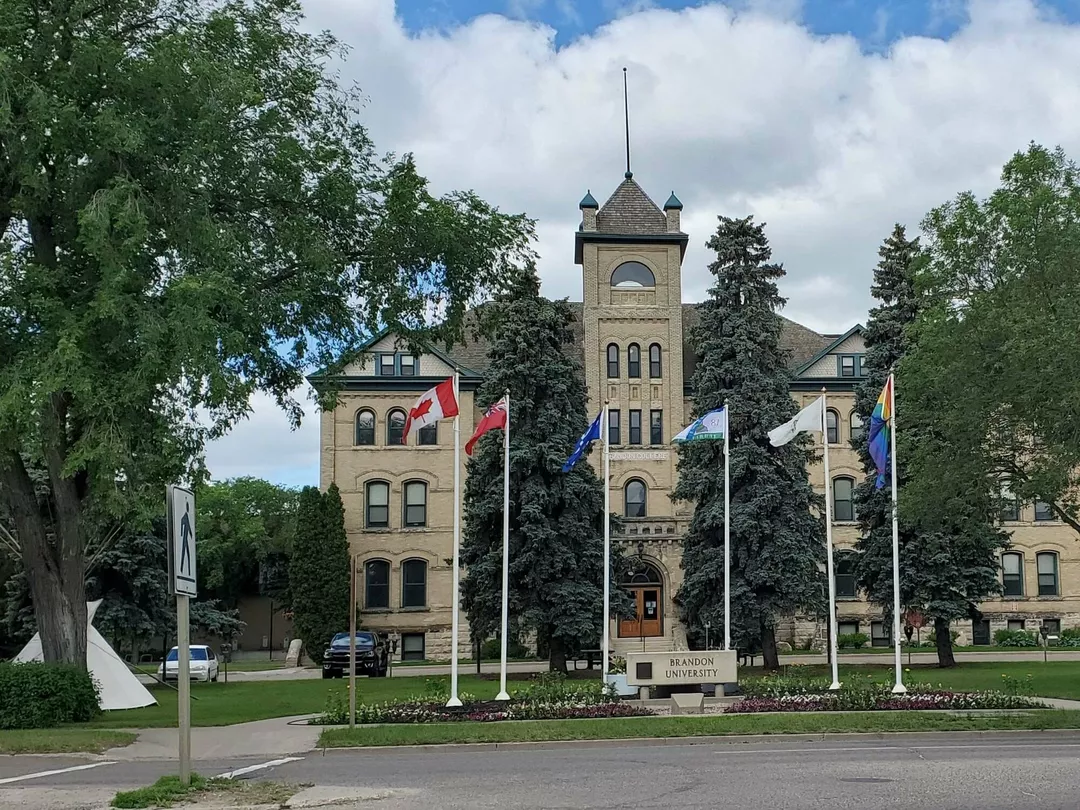

- Location
- Brandon, Manitoba
- Institution
- Public University
- Founded
- 1889
- Courses listed
- 12
Overview
About Brandon University
Brandon University traces its roots back to the late 19th century and the growth of higher education institutions in the City of Brandon. It began as a liberal arts college that offered some theological training and high school education, in addition to a school of music (since 1906). Brandon College was affiliated with McMaster University and the Baptist Union of Western Canada until 1938, when the Baptist Union decided it could no longer support the college due to financial reasons. In that year, Brandon College became a non-denominational corporation and joined with the University of Manitoba as an affiliated college. BU received its charter on June 5, 1967, when Princess Alexandra and the Honourable Angus Ogilvie visited Brandon. Programming in baccalaureate programs expanded and evolved rapidly after 1967 and has continued to present day. BU has since been recognized for its liberal arts and sciences programs, and has maintained a steady-growing student population from rural Manitoba and beyond. Its physical campus has grown building by building (the most recent which include the Clark Hall and the Original Building renovation in 1997, Health Studies building in 2003, Healthy Living Centre in 2013) to fill its campus west of downtown Brandon, and now requires a Campus Master Plan to best accommodate future growth and renew the existing campus condition.
Why Brandon University
- Class Sizes: Brandon University is convenient, clean and friendly. Classes are small and students enjoy many opportunities for close interaction with their professors. Brandon University is one of the most affordable Canadian universities and the City of Brandon enjoys a low cost-of-living compared to most major cities in North America.
- Office of International Activities: International students enhance Brandon University’s academic and multicultural environment. The campus has a distinct international flavour with students from five continents and more than 30 countries. The Office of International Activities is a home away from home for all international students. All international students should feel welcome here and can seek assistance with all types of concerns.
- Facilities: The Healthy Living Centre (HLC) is home to two large gymnasium spaces that provide a variety of sports and recreational opportunities. The main gym is home to Bobcat basketball and volleyball competitions, but when not in use for events the spaces are available for members to play their sport of choice. The HLC is also home to Brandon's only indoor walking and jogging track. Large windows provide panoramic views on the south and east side of the track. The fitness facility is one of the leading health and wellness centres in the Westman region.
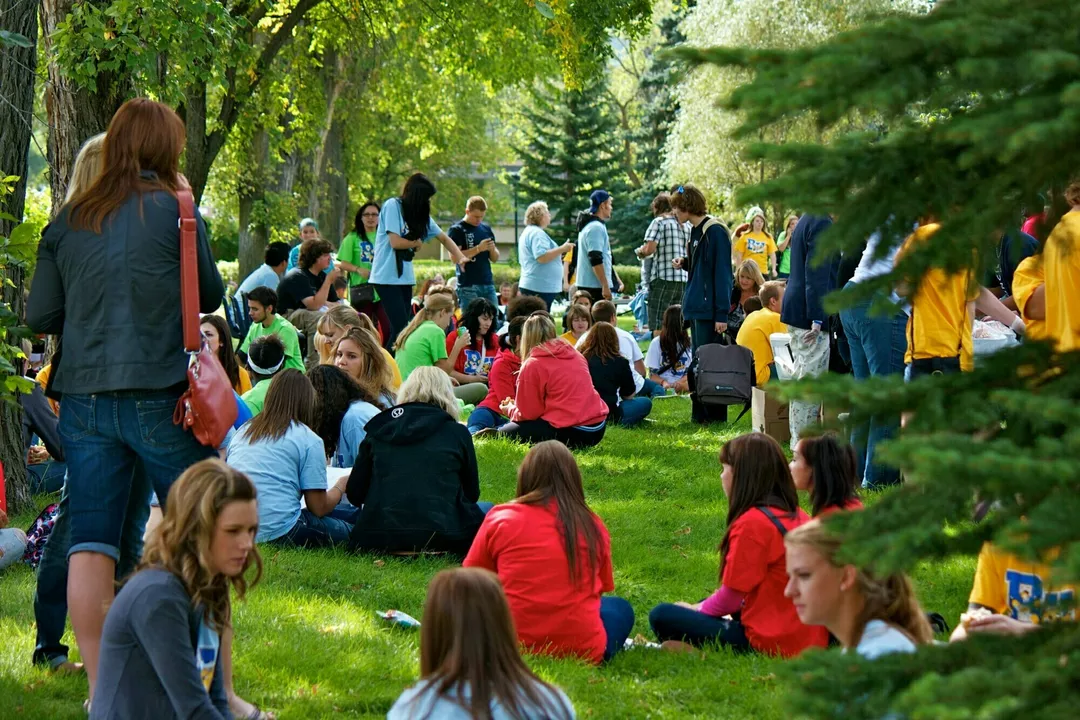
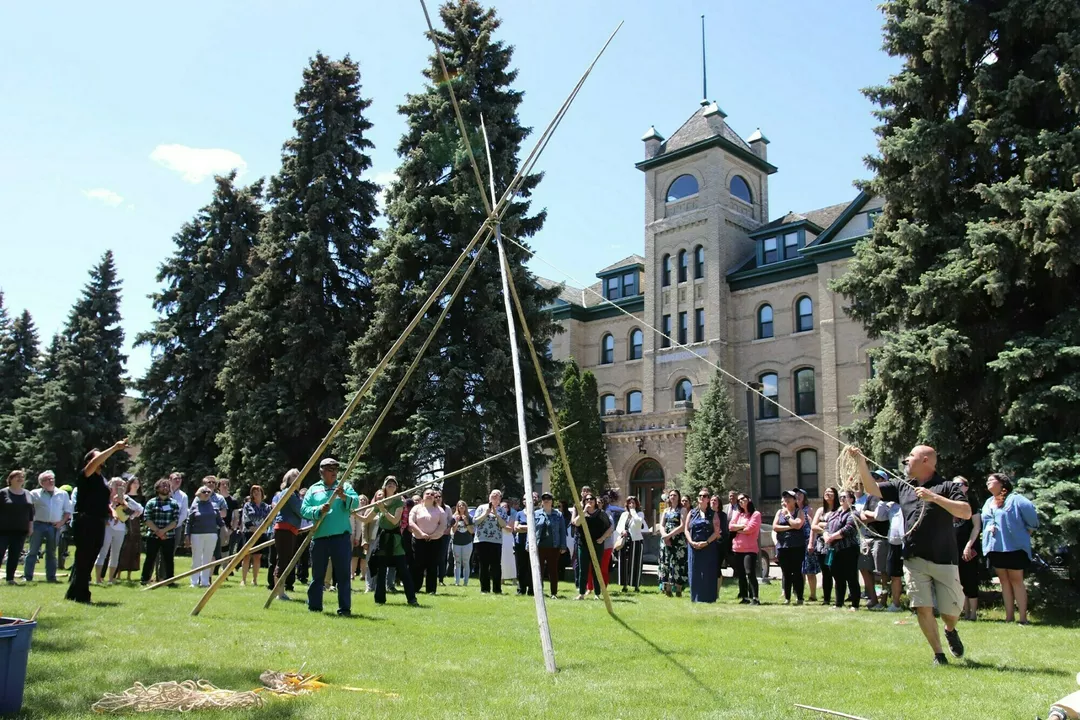
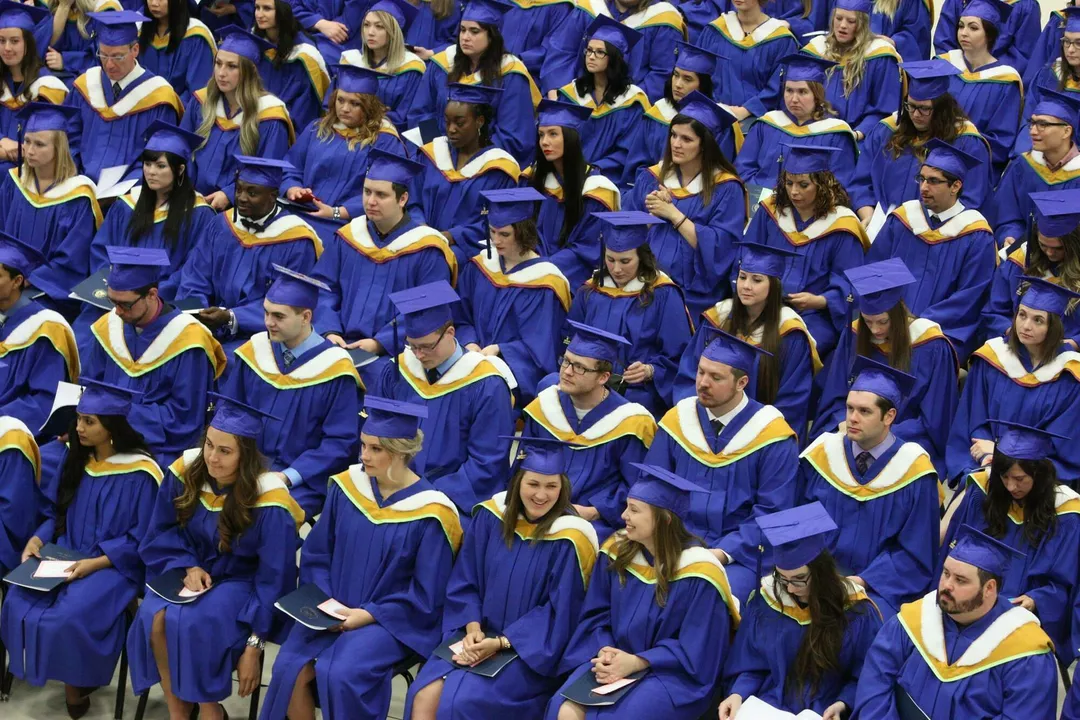
Campus life
Programs
Courses at Brandon University
Bachelor's · Business & Management
Bachelor of Arts – Economics
4 years
Next intake: Sep 2027
Apply by 1 Sep 2027
Bachelor's · Business & Management
Bachelor of Arts – Economics
4 years Next intake: Sep 2027 Apply by 1 Sep 2027
The Department offers core theoretical courses in economic thought, micro economics, macro economics, international trade and finance and monetary theory and monetary institutions. As well, there is a wide variety of options in natural resource and environmental economics, labour economics and industrial relations, public finance, and agricultural economics.
Senior courses are relatively small and combine lectures and seminars. The emphasis in most courses is on mainstream economics but students are also exposed to the major controversies in economics and alternative perspectives from institutional, Marxian and post-Keynesian economics. Discussion and debate are promoted and students are encouraged to challenge the views of faculty members. Students completing majors in economics are well-equipped to progress to graduate studies in economics, professional schools such as law and city planning and to find employment in both the public and private sectors.
Upcoming intakes: Sep 2027 · Jan 2028 · Sep 2028
Bachelor's · Business & Management
Bachelor of Arts – Economics (3 year)
3 years
Next intake: Sep 2027
Apply by 1 Sep 2027
Bachelor's · Business & Management
Bachelor of Arts – Economics (3 year)
3 years Next intake: Sep 2027 Apply by 1 Sep 2027
The Department offers core theoretical courses in economic thought, micro economics, macro economics, international trade and finance and monetary theory and monetary institutions. As well, there is a wide variety of options in natural resource and environmental economics, labour economics and industrial relations, public finance, and agricultural economics.
Senior courses are relatively small and combine lectures and seminars. The emphasis in most courses is on mainstream economics but students are also exposed to the major controversies in economics and alternative perspectives from institutional, Marxian and post-Keynesian economics. Discussion and debate are promoted and students are encouraged to challenge the views of faculty members. Students completing majors in economics are well-equipped to progress to graduate studies in economics, professional schools such as law and city planning and to find employment in both the public and private sectors.
Upcoming intakes: Sep 2027 · Jan 2028 · Sep 2028
Bachelor's · Science & Environment
Bachelor of Arts – Geography
3 years
Next intake: Sep 2027
Apply by 1 Sep 2027
Bachelor's · Science & Environment
Bachelor of Arts – Geography
3 years Next intake: Sep 2027 Apply by 1 Sep 2027
The geography program is designed for students who are interested in the relationships between the environment and society and want to learn about landscapes and people. Geography is about place and space. It studies the interdependence among regions, natural systems, physical features, society, and cultural activities. Using a “spatial” perspective, it aims to form a coherent understanding of Earth.
People with geography skills apply what they know successfully in a wide variety of fields. Recent graduates have embarked on careers in urban and regional land use planning, conservation and resource management, mapping, geographic information systems and remote sensing, parks and recreation, teaching and research. Students have an opportunity to gain hands-on experience through a practicum course, with applied academic training in geography to a project on or off campus. Others work closely with faculty to pursue their interests in a specific field of geography in a Directed Studies or Undergraduate Thesis course.
Upcoming intakes: Sep 2027 · Jan 2028 · Sep 2028
Bachelor's · Social Sciences & Psychology
Bachelor of Arts – Geography – Environmental Studies (Optional Co-op)
4 years
Next intake: Sep 2027
Apply by 1 Sep 2027
Bachelor's · Social Sciences & Psychology
Bachelor of Arts – Geography – Environmental Studies (Optional Co-op)
4 years Next intake: Sep 2027 Apply by 1 Sep 2027
Environmental Science is the interdisciplinary study of the environment, its functioning and its relationship to human activities. It encompasses many of the traditional science disciplines, but uses these in the study of terrestrial, aquatic and atmospheric systems and their interactions. An Environmental Science graduate will have an in-depth knowledge of environmental systems but also of the breadth and context in which these systems operate. Students will develop the wide range of expertise necessary to address present and future environmental problems.
Upcoming intakes: Sep 2027 · Jan 2028 · Sep 2028
Bachelor's · Science & Environment
Bachelor of Arts – Geography – Geomatics (Optional Co-op)
4 years
Next intake: Sep 2027
Apply by 1 Sep 2027
Bachelor's · Science & Environment
Bachelor of Arts – Geography – Geomatics (Optional Co-op)
4 years Next intake: Sep 2027 Apply by 1 Sep 2027
The geography program is designed for students who are interested in the relationships between the environment and society and want to learn about landscapes and people. Geography is about place and space. It studies the interdependence among regions, natural systems, physical features, society, and cultural activities. Using a “spatial” perspective, it aims to form a coherent understanding of Earth.
People with geography skills apply what they know successfully in a wide variety of fields. Recent graduates have embarked on careers in urban and regional land use planning, conservation and resource management, mapping, geographic information systems and remote sensing, parks and recreation, teaching and research. Students have an opportunity to gain hands-on experience through a practicum course, with applied academic training in geography to a project on or off campus. Others work closely with faculty to pursue their interests in a specific field of geography in a Directed Studies or Undergraduate Thesis course.
Upcoming intakes: Sep 2027 · Jan 2028 · Sep 2028
Bachelor's · Science & Environment
Bachelor of Arts – Geography (Optional Co-op)
4 years
Next intake: Sep 2027
Apply by 1 Sep 2027
Bachelor's · Science & Environment
Bachelor of Arts – Geography (Optional Co-op)
4 years Next intake: Sep 2027 Apply by 1 Sep 2027
The geography program is designed for students who are interested in the relationships between the environment and society and want to learn about landscapes and people. Geography is about place and space. It studies the interdependence among regions, natural systems, physical features, society, and cultural activities. Using a “spatial” perspective, it aims to form a coherent understanding of Earth.
People with geography skills apply what they know successfully in a wide variety of fields. Recent graduates have embarked on careers in urban and regional land use planning, conservation and resource management, mapping, geographic information systems and remote sensing, parks and recreation, teaching and research. Students have an opportunity to gain hands-on experience through a practicum course, with applied academic training in geography to a project on or off campus. Others work closely with faculty to pursue their interests in a specific field of geography in a Directed Studies or Undergraduate Thesis course.
Upcoming intakes: Sep 2027 · Jan 2028 · Sep 2028
Bachelor's · Social Sciences & Psychology
Bachelor of Arts- Applied Disaster & Emergency Studies (Optional Co-op)
4 years
Next intake: Sep 2027
Apply by 1 Sep 2027
Bachelor's · Social Sciences & Psychology
Bachelor of Arts- Applied Disaster & Emergency Studies (Optional Co-op)
4 years Next intake: Sep 2027 Apply by 1 Sep 2027
This program introduces students to a broad range of technological and environmental risks with an emphasis on how social and physical factors interact in disasters. Graduates of the program are able to assist with all aspects of emergency management, including traditional preparedness and response activities as well as recovery efforts to help people affected by disasters get their lives back to normal, and mitigation planning to prevent future damages. Applied Disaster and Emergency Studies adopts a liberal arts and sciences approach to foster an appreciation for the interdisciplinary nature of the field. The ADES curriculum balances theory and practice as well as the social and physical science perspectives. A minor is also available to complement any BA or BSc major.
Upcoming intakes: Sep 2027 · Jan 2028 · Sep 2028
Bachelor's · Health & Nursing
Bachelor of Nursing – Pre-Nursing
4 years
Next intake: Sep 2027
Apply by 1 Sep 2027
Bachelor's · Health & Nursing
Bachelor of Nursing – Pre-Nursing
4 years Next intake: Sep 2027 Apply by 1 Sep 2027
The Faculty of Health Studies at Brandon University offers a four year program leading to a Bachelor of Nursing (BN) degree. This professional program will prepare graduates to work in a variety of settings with individuals, families and communities to promote, maintain and strengthen health. Opportunities for careers in nursing are numerous and diverse. Professional nurses’ associations in Canada are predicting a dramatic increase in the demand for nurses. Graduates of the BN program will be eligible to write the qualifying examinations for licensure as a Registered Nurse (RN) with the College of Registered Nurses of Manitoba (CRNM).
Upcoming intakes: Sep 2027 · Jan 2028 · Sep 2028
Master's · Social Sciences & Psychology
Master of Arts – Rural Development
2 years
Next intake: Sep 2027
Apply by 1 Sep 2027
Master's · Social Sciences & Psychology
Master of Arts – Rural Development
2 years Next intake: Sep 2027 Apply by 1 Sep 2027
The Rural and Community Studies Program (RCSP) provides students with the opportunity to design an individually tailored degree that combines courses in rural and community studies with courses from traditional disciplines (e.g. Sociology and Geography). The purpose of this program is to provide students with a better understanding of the social, economic, and environmental issues facing rural regions, and in doing so, provide the skill base to assist those in rural regions to prepare for and adapt to such issues. Relationships with the graduate program in Rural Development and opportunities within the Rural Development Institute allow students to gain practical experience through research work. Prior to entering the program, students must consult with the Co-ordinator, who will assist them in working out a plan of study that meets the university requirements as well as their own needs and interests.
The Master in Rural Development (MRD) degree provides students with the following:
- Knowledge of current development theory
- The ability to apply knowledge to their selected area of interest
- Skills in understanding and participating in rural governance
- Technical skills in research design and reporting
- Basic training in community relations, networking, group facilitation and development planning
- An understanding of the formulation and role of policy in rural development
- Knowledge of the structure and functioning of rural society
Upcoming intakes: Sep 2027 · Jan 2028 · Sep 2028
Master's · Education & Teaching
Master of Education
2 years
Next intake: Sep 2027
Apply by 1 Sep 2027
Master's · Education & Teaching
Master of Education
2 years Next intake: Sep 2027 Apply by 1 Sep 2027
The Master of Education is a 36 credit hour program. All students applying to the M.Ed. programs will be admitted via the coursework route. The current areas of specialization for studies include: Curriculum & Pedagogy, Educational Administration, Guidance and Counselling, and Inclusive Education. All components of a student’s program must be approved by the Chair of the Graduate Studies Program, Faculty of Education in accordance with the University Calendar, unless approved by the Graduate Education Committee.
*Only in exceptional circumstances will students without a B. Ed. degree be considered for admission. Applicants with a relevant undergraduate degree and professional experience may apply.
Note: The tuition displayed is calculated at 9 credits per year - actual values will change depending on the number of courses a student will be enrolled in, however full time tuition will be $22,200 per year
Upcoming intakes: Sep 2027 · Sep 2028
Master's · Arts, Media & Design
Master of Music – Performance and Literature
4 years
Next intake: Sep 2027
Apply by 1 Sep 2027
Master's · Arts, Media & Design
Master of Music – Performance and Literature
4 years Next intake: Sep 2027 Apply by 1 Sep 2027
The School of Music offers studies leading to the Master of Music degree in two areas: Performance & Literature and Music Education. The Master of Music (Performance and Literature) is intended to develop a professional expertise in performance or composition, with additional emphasis on general literature and pedagogical practices. Brandon University offers MMus (Performance and Literature) in the following areas:
- Piano
- Collaborative Piano
- Strings
- Clarinet
- Trumpet
- Trombone
- Euphonium
- Tuba
- Jazz
- Composition
- Choral Music/Choral Conducting
- Wind Band/Instrumental Conducting
Upcoming intakes: Sep 2027 · Sep 2028
Master's · Science & Environment
Master of Science – Environmental & Life Sciences
2 years – 4 years
Next intake: Sep 2027
Apply by 1 Sep 2027
Master's · Science & Environment
Master of Science – Environmental & Life Sciences
2 years – 4 years Next intake: Sep 2027 Apply by 1 Sep 2027
The Master of Science (Environmental and Life Sciences) degree (MELS) is an interdisciplinary program that provides students with the following:
- Technical skills in applied and theoretical research, project design and reporting;
- The ability to integrate and apply knowledge and techniques across a suite of disciplines to selected areas of interest within the environmental and life sciences;
- Courses integrating knowledge and techniques drawn from the traditional disciplines of biology, chemistry, environmental science, geography, and geology;
- An interdisciplinary thesis that investigates the interactions within and among organisms and/or the environment at scales from the molecular to planet-wide;
- Training in the application of life and environmental science technologies.
A thesis is required, describing the outcome of an interdisciplinary research project. The focus of research projects and coursework will be on the interactions within and among organisms and the environment at scales from the molecular to planet-wide. The program will allow the application of cutting–edge life science technologies and expertise to the study of the environment. Program graduates will meet learning objectives in the areas of research methodology, scientific problem solving, project planning, scientific writing and expression, and data interpretation and analysis. Graduates will possess strong research skills and will receive the level of professional preparation required to undertake doctoral studies or gain employment in the growing Life Sciences and Environmental sectors.
Upcoming intakes: Sep 2027 · Sep 2028
No courses match your search.
Student life & support
Work while studying
International students can work part-time alongside their studies (subject to visa conditions).
Co-op & placements
Offers co-op or work-placement options in selected programs.
On-campus housing
Students typically arrange off-campus or homestay accommodation.
Accommodation options
Students need to plan their accommodations well in advance of their arrival as all accommodation options fill up quickly, well before the start of the semester.
On-Campus Residence Accommodations
On-Campus residence accommodations are provided per discretion by the school.
Off-Campus Accommodations
The local area has a variety of off-campus rental housing options including single homes, duplexes, apartments and rooms for rent. Students wishing to live off-campus need to research availability on their own and should arrive well before the start of term to do so.
Homestay
There are a wide variety of homestay options available, and our partners do their best to match students and hosts according to their interests and preferences. Homestay hosts include single people, young couples with children and pets, and older couples. All homestay accommodations have been inspected, and all adults in the home have completed a required criminal reference check.