
- Location
- Kingston, Ontario
- Institution
- Public University
- Founded
- 1841
- Courses listed
- 8
Overview
About Queen's University
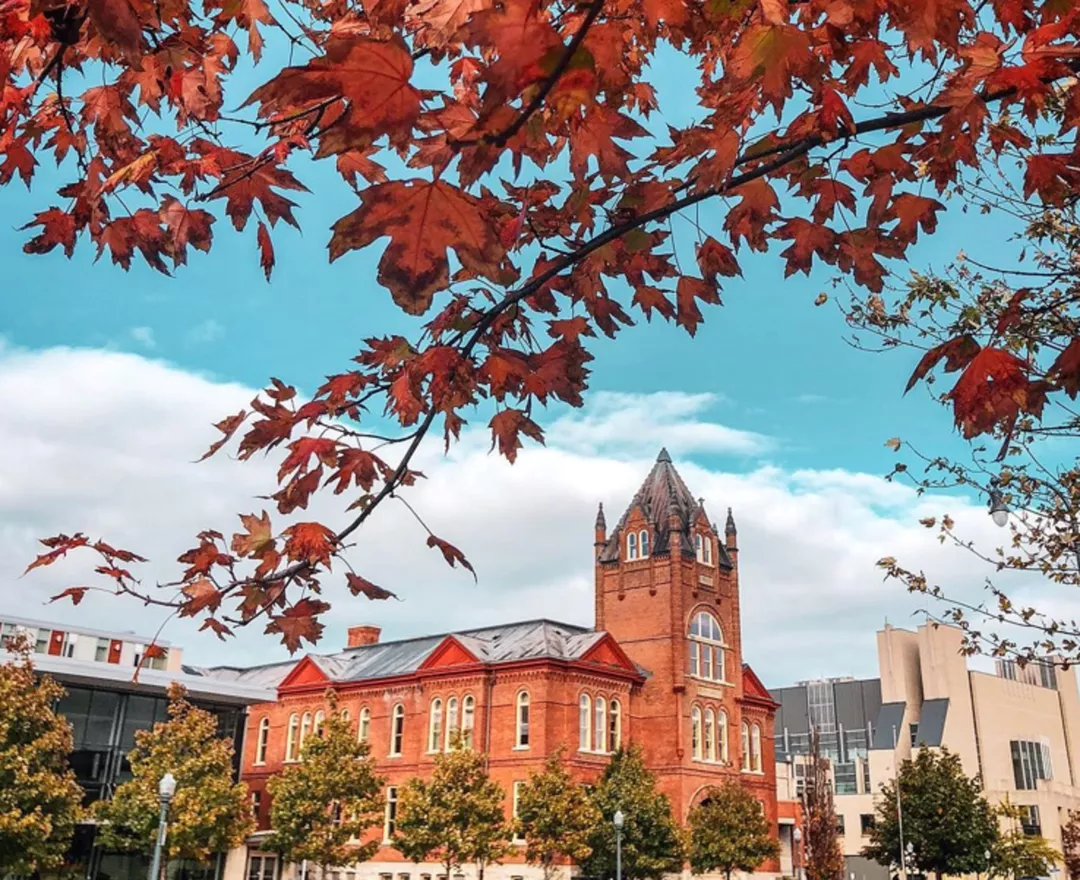
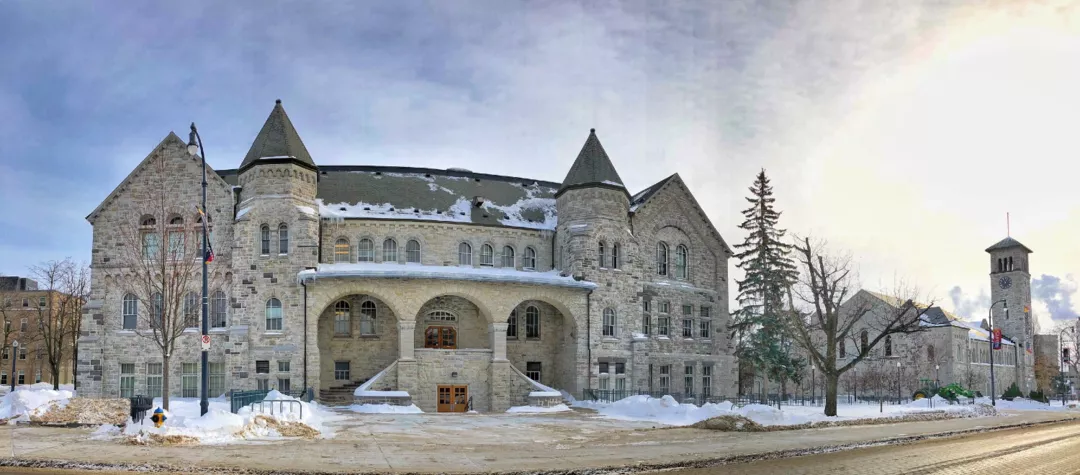
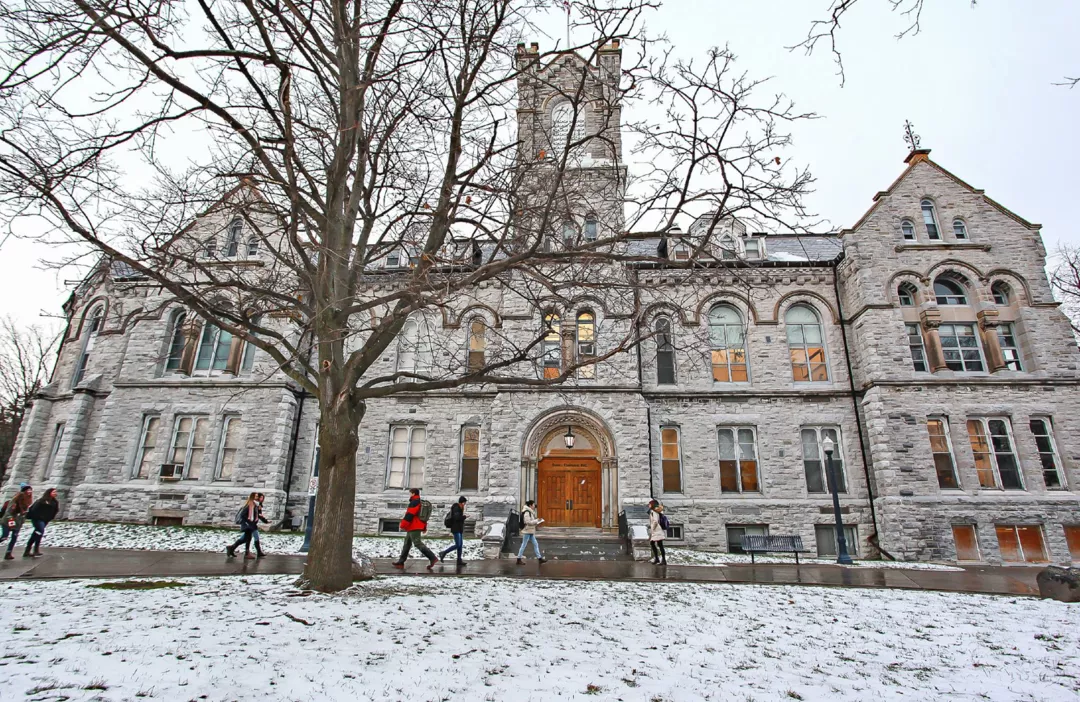
For more than 175 years, Queen’s University has attracted some of the most academically accomplished students in the world – a collection of bright minds and ambitious spirits. When students come to Queen’s, they can expect to not only become a part of its many traditions, but also be exposed to innovative concepts and new ways of thinking. Queen’s University has a stunning limestone campus that sits on the traditional lands of the Haudenosaunee and Anishinaabe peoples, on the shores of Lake Ontario and steps from downtown Kingston.
Queen’s is Canada’s definitive university experience, offering an exceptional student learning experience and a comprehensive research-intensive environment. With the highest graduation rate in the country, exceptional people are connected with an unrivalled community and an unmatched mix of opportunities. It is this powerful combination of research and teaching, living and learning that leads to students’ success and an unmistakable impact on the world.
Home to more than 25,000 students, researchers, professors and artists, along with 2015 Nobel Prize winner, Dr. Arthur B. McDonald. Queen’s offers an impressive range of undergraduate and graduate programs including arts and science, engineering and applied science, business, health sciences, education, policy studies and law.
Queen’s recently ranked 1st place in Canada and 5th place in the world in the Times Higher Education Impact Rankings, advancing the United Nations’ Sustainable Development Goals.
Why Queen’s University
- Graduation Rate: With one of the highest graduation rates in the country at 89.2%, Queen’s students experience personal and academic success both during and after their time at Queen’s. As Canada’s definitive university experience, Queen’s challenges, supports and helps students succeed.
- Internship: The Queen’s Undergraduate Internship Program (QUIP) allows students to gain experience in their second or third year of studies while earning money to offset the cost of their degree program. Internships are 12-16 months. The program is optional and open to students in all Arts (BAH) and Science (BScH), Computing and Engineering undergraduate programs.
- Diversity: Queen’s is home to students from more than 120 different countries; international students make up approximately seven percent of the full-time student population.
- The City: Described by students as both “quaint” and “eclectic,” Kingston is big enough to provide all the conveniences of modern life, and small enough for students, staff, and faculty to feel instantly comfortable and at home.
- Location: Queen’s is an integral part of the Kingston community, with the campus nestled in the core of the city, only a 10-minute walk to downtown. Within a few hours students can drive to Toronto, Montreal, New York State, and even less to drive to Ottawa.
- Campus: The campus is mostly ivy-covered limestone, making it an idyllic university campus. Every building–from very old to very new–has a story to tell.
Application Fee Notice: Please be aware that the application fees are subject to change depending on program level, portal used, previous post-secondary education, and number of OUAC applications.
Campus life

Programs
Courses at Queen's University
Bachelor's · Engineering & Construction
Bachelor of Applied Science – Chemical Engineering
4 years
Next intake: Sep 2027
Apply by 1 Feb 2027
Bachelor's · Engineering & Construction
Bachelor of Applied Science – Chemical Engineering
4 years Next intake: Sep 2027 Apply by 1 Feb 2027
Society relies daily on products such as fuel, pharmaceuticals, advanced composites, semiconductors, magnetic and optical storage devices, agricultural products, light-weight materials, coatings, synthetic fibers, and personal care products. Chemical Engineers develop new advanced materials and design the processes that convert raw materials into value-added products. Chemical Engineering is a broadly-based engineering discipline, which combines the study of mathematics, chemistry, physics, and biology with engineering science, design, and economics.
Students learn how to design safe, efficient, environmentally-friendly, sustainable, and economical processes and products. They also acquire direct experience with pilot-scale chemical process equipment and simulators. Queen’s Chemical Engineering offers options in Chemical Process Engineering and in Bioengineering. Areas of specialization include biochemical, biomedical, bioenvironmental, and chemical process engineering options.
The first year of study in Engineering and Applied Science is based on a common curriculum and serves as an introduction to all of the academic plans offered by the Faculty. The choice of academic plan the student intends to follow in the second and subsequent years is made in February in the Winter Term of the first year.
Note: Students in this program are also eligible for the Queen’s Undergraduate Internship Program (QUIP) which provides 2nd or 3rd year students with a 12-16 month work experience. The internships are paid, professionally supervised, career-related positions offering students the opportunity to learn about current advances, practices, and technologies in business and industry.
Upcoming intakes: Sep 2027 · Sep 2028
Bachelor's · Engineering & Construction
Bachelor of Applied Science – Chemical Engineering – Upper Year Entry
28 months – 4 years
Next intake: Sep 2027
Apply by 1 Jun 2027
Bachelor's · Engineering & Construction
Bachelor of Applied Science – Chemical Engineering – Upper Year Entry
28 months – 4 years Next intake: Sep 2027 Apply by 1 Jun 2027
This Upper Year Entry path is for upper-year applicants. The path is for those who are completing their first year at another university, or have completed or are close to completing a diploma program at a community college, and are interested in transferring to Queen’s University.
Society relies daily on products such as fuel, pharmaceuticals, advanced composites, semiconductors, magnetic and optical storage devices, agricultural products, light-weight materials, coatings, synthetic fibers, and personal care products. Chemical Engineers develop new advanced materials and design the processes that convert raw materials into value-added products. Chemical Engineering is a broadly-based engineering discipline, which combines the study of mathematics, chemistry, physics, and biology with engineering science, design, and economics.
Students learn how to design safe, efficient, environmentally-friendly, sustainable, and economical processes and products. They also acquire direct experience with pilot-scale chemical process equipment and simulators. Queen’s University Chemical Engineering offers options in Chemical Process Engineering and in Bioengineering. Areas of specialization include biochemical, biomedical, bioenvironmental, and chemical process engineering options.
Students in this program are also eligible for the Queen University’s Undergraduate Internship Program (QUIP) which provides 2nd or 3rd year students with a 12-16 month work experience. The internships are paid, professionally supervised, career-related positions offering students the opportunity to learn about current advances, practices, and technologies in business and industry.
Upcoming intakes: Sep 2027 · Sep 2028
Bachelor's · Engineering & Construction
Bachelor of Applied Science – Civil Engineering
4 years
Next intake: Sep 2027
Apply by 1 Feb 2027
Bachelor's · Engineering & Construction
Bachelor of Applied Science – Civil Engineering
4 years Next intake: Sep 2027 Apply by 1 Feb 2027
People go about their lives within a physical environment created by civil engineers: houses, schools, office buildings, highways, and bridges, even river and coastal systems and green landfills. Civil engineering students will study how to plan, design, and build these structures and systems – with an approach that respects the environment. To prepare students for working in the real world, this innovative program emphasizes individual learning, teamwork, communication, leadership, and problem solving. Areas of specialization include environmental, structural, geotechnical, and hydrotechnical.
The first year of study in Engineering and Applied Science is based on a common curriculum and serves as an introduction to all of the academic plans offered by the Faculty. The choice of academic plan the student intends to follow in the second and subsequent years is made in February in the Winter Term of the first year.
Note: Students in this program are also eligible for the Queen’s Undergraduate Internship Program (QUIP) which provides 2nd or 3rd year students with a 12-16 month work experience. The internships are paid, professionally supervised, career-related positions offering students the opportunity to learn about current advances, practices, and technologies in business and industry.
Upcoming intakes: Sep 2027 · Sep 2028
Bachelor's · Engineering & Construction
Bachelor of Applied Science – Civil Engineering – Upper Year Entry
28 months – 4 years
Next intake: Sep 2027
Apply by 1 Jun 2027
Bachelor's · Engineering & Construction
Bachelor of Applied Science – Civil Engineering – Upper Year Entry
28 months – 4 years Next intake: Sep 2027 Apply by 1 Jun 2027
This Upper Year Entry path is for upper-year applicants. The path is for those who are completing their first year at another university, or have completed or are close to completing a diploma program at a community college, and are interested in transferring to Queen’s University.
Civil engineering students will study how to plan, design, and build these structures and systems – with an approach that respects the environment. To prepare students for working in the real world, this innovative program emphasizes individual learning, teamwork, communication, leadership, and problem solving. Areas of specialization include environmental, structural, geotechnical, and hydrotechnical.
Students in this program are also eligible for the Queen’s University Undergraduate Internship Program (QUIP) which provides 2nd or 3rd year students with a 12-16 month work experience. The internships are paid, professionally supervised, career-related positions offering students the opportunity to learn about current advances, practices, and technologies in business and industry.
Upcoming intakes: Sep 2027 · Sep 2028
Bachelor's · Computing & IT
Bachelor of Applied Science – Computer Engineering
4 years
Next intake: Sep 2027
Apply by 1 Feb 2027
Bachelor's · Computing & IT
Bachelor of Applied Science – Computer Engineering
4 years Next intake: Sep 2027 Apply by 1 Feb 2027
Computer Engineering, together with Electrical Engineering, has been the prime economic driver in the 20th century, and permeates every facet of human activities. It provides the software and hardware that govern how students produce, consume, learn, shop, bank, entertain, travel, and connect with each other.
The discipline combines software engineering and computer hardware and architecture. The discipline is at the intersection of engineering, computer science, and mathematics. It enables applications in mobile computing, Internet of Things, wearables, cyber security, smart homes, and data analytics. It is the perfect discipline for people who want to use computers to make the world a better, safer, more exciting place to live. Areas of specialization include software engineering, hardware, mechatronics, artificial intelligence, and machine learning.
The first year of study in Engineering and Applied Science is based on a common curriculum and serves as an introduction to all of the academic plans offered by the Faculty. The choice of academic plan the student intends to follow in the second and subsequent years is made in February in the Winter Term of the first year.
Note: Students in this program are also eligible for the Queen’s Undergraduate Internship Program (QUIP) which provides 2nd or 3rd year students with a 12-16 month work experience. The internships are paid, professionally supervised, career-related positions offering students the opportunity to learn about current advances, practices, and technologies in business and industry.
Upcoming intakes: Sep 2027 · Sep 2028
Bachelor's · Computing & IT
Bachelor of Applied Science – Electrical and Computer (Direct Entry)
4 years
Next intake: Sep 2027
Apply by 1 Feb 2027
Bachelor's · Computing & IT
Bachelor of Applied Science – Electrical and Computer (Direct Entry)
4 years Next intake: Sep 2027 Apply by 1 Feb 2027
This program is intended for students with an interest in innovation and entrepreneurship who want to enter electrical or computer engineering in first year. The program focuses on developing entrepreneurial skills alongside the technical and professional elements that are the hallmark of Queen’s University Engineering.
In the first year of the program students will take broad fundamental courses in math, science, and professional skills supplemented by an entrepreneurial design project specifically designed with for the program's students. At the end of first year students choose between electrical or computer engineering, and develop strong technical fundamentals and skills necessary for innovation including economics and business practices, design and creativity, and teamwork.
Highlights:
- Beginning in first year, students will receive an enriched Electrical and Computer curriculum that builds on Queen’s University Engineering’s common first year
- Students will participate in team-based learning that focuses on product development and prototype demonstration
- Students will network with like-minded students and promote their ideas
- Students will receive guidance and support on technical aspects, business models, as well as execution of their innovative ideas
- Students can tailor their education to match their interests and ambitions by selecting from a large variety of courses
- Additionally, students will acquire skills that can be applied to almost any technical field – industrial or academic.
Upcoming intakes: Sep 2027 · Sep 2028
Bachelor's · Computing & IT
Bachelor of Applied Science – Electrical and Computer (Direct Entry) – Computer Engineering
4 years
Next intake: Sep 2027
Apply by 1 Feb 2027
Bachelor's · Computing & IT
Bachelor of Applied Science – Electrical and Computer (Direct Entry) – Computer Engineering
4 years Next intake: Sep 2027 Apply by 1 Feb 2027
This program is intended for students with an interest in innovation and entrepreneurship who want to enter electrical or computer engineering in first year. The program focuses on developing entrepreneurial skills alongside the technical and professional elements that are the hallmark of Queen’s University Engineering.
In the first year of the program students will take broad fundamental courses in math, science, and professional skills supplemented by an entrepreneurial design project specifically designed with for the program's students. At the end of first year students choose between electrical or computer engineering, and develop strong technical fundamentals and skills necessary for innovation including economics and business practices, design and creativity, and teamwork.
Highlights:
- Students will receive an enriched Electrical and Computer curriculum that builds on Queen’s University Engineering’s common first year
- Students will participate in team-based learning that focuses on product development and prototype demonstration
- Students will network with like-minded students and promote their ideas
- Students will receive guidance and support on technical aspects, business models, as well as execution of their innovative ideas
- Students can tailor their education to match their interests and ambitions by selecting from a large variety of courses
- Additionally, students will acquire skills that can be applied to almost any technical field – industrial or academic.
Upcoming intakes: Sep 2027 · Sep 2028
Bachelor's · Computing & IT
Bachelor of Applied Science – Electrical and Computer (Direct Entry) – Electrical Engineering
4 years
Next intake: Sep 2027
Apply by 1 Feb 2027
Bachelor's · Computing & IT
Bachelor of Applied Science – Electrical and Computer (Direct Entry) – Electrical Engineering
4 years Next intake: Sep 2027 Apply by 1 Feb 2027
This program is intended for students with an interest in innovation and entrepreneurship who want to enter electrical or computer engineering in first year. The program focuses on developing entrepreneurial skills alongside the technical and professional elements that are the hallmark of Queen’s University Engineering.
In the first year of the program students will take broad fundamental courses in math, science, and professional skills supplemented by an entrepreneurial design project specifically designed with for the program's students. At the end of first year students choose between electrical or computer engineering, and develop strong technical fundamentals and skills necessary for innovation including economics and business practices, design and creativity, and teamwork.
Highlights:
- Students will receive an enriched Electrical and Computer curriculum that builds on Queen’s University Engineering’s common first year
- Students will participate in team-based learning that focuses on product development and prototype demonstration
- Students will network with like-minded students and promote their ideas
- Students will receive guidance and support on technical aspects, business models, as well as execution of their innovative ideas
- Students can tailor their education to match their interests and ambitions by selecting from a large variety of courses
- Additionally, students will acquire skills that can be applied to almost any technical field – industrial or academic.
Upcoming intakes: Sep 2027 · Sep 2028
No courses match your search.
Student life & support
Work while studying
International students can work part-time alongside their studies (subject to visa conditions).
Co-op & placements
Offers co-op or work-placement options in selected programs.
On-campus housing
On-campus residence is available.
Accommodation options
Students need to plan their accommodations well in advance of their arrival as all accommodation options fill up quickly, well before the start of the semester.
On-Campus Residence Accommodations
On-Campus residence accommodations are provided per discretion by the school.
Off-Campus Accommodations
The local area has a variety of off-campus rental housing options including single homes, duplexes, apartments and rooms for rent. Students wishing to live off-campus need to research availability on their own and should arrive well before the start of term to do so.
Homestay
There are a wide variety of homestay options available, and our partners do their best to match students and hosts according to their interests and preferences. Homestay hosts include single people, young couples with children and pets, and older couples. All homestay accommodations have been inspected, and all adults in the home have completed a required criminal reference check.