
- Location
- Lethbridge, Alberta
- Institution
- Public University
- Founded
- 1967
- Campuses
- 2
- Courses listed
- 9
Overview
About University of Lethbridge
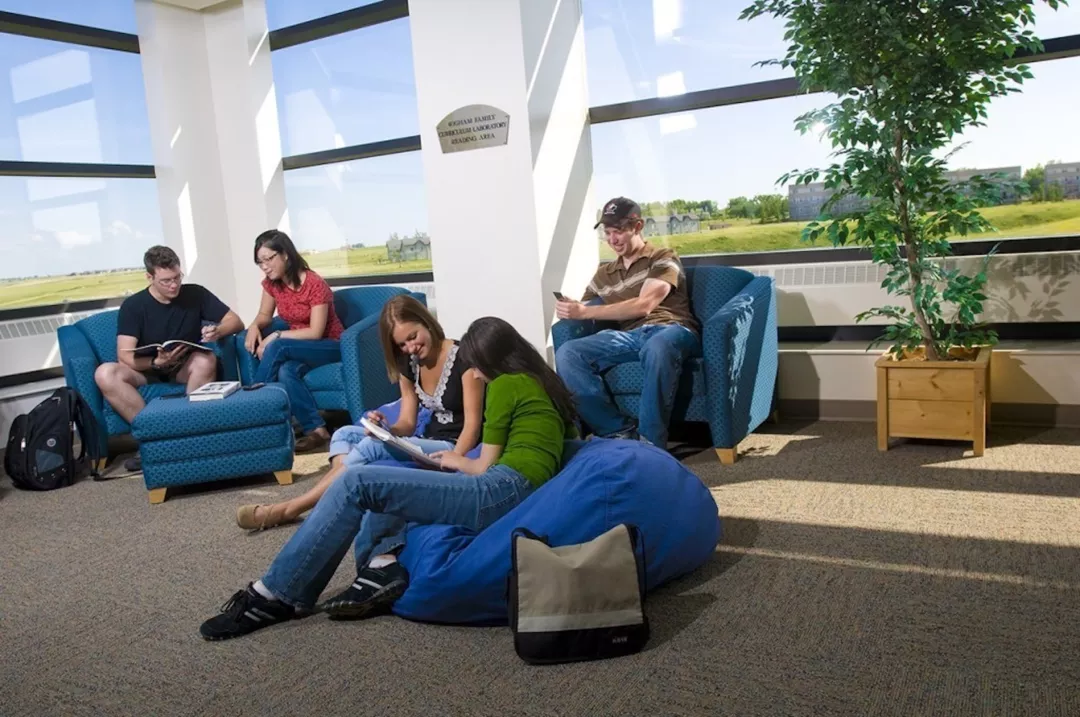
The University of Lethbridge is Alberta’s Destination University. Founded in 1967 on traditional Blackfoot land, the University is a community that fosters an atmosphere of discovery, a welcoming place where students and faculty have the freedom to think, create and explore together. People are the essential resource of the institution; they define the University and are its greatest strength.
The University of Lethbridge is committed to the individual student as a person of ultimate worth. The students learn within and beyond the classroom in research-intensive environments that offer connections with the diverse communities that the University serves. Students are taught by inspired scholars who integrate research and creativity with teaching.
The University of Lethbridge’s motto is Fiat Lux (“Let There be Light”), and their founding principle of liberal education continues to define and inspire them. The University is committed to being the comprehensive academic and research university in Alberta that empowers individuals with broader knowledge and prepares them to think critically and creatively, communicate clearly, solve complex problems, and contribute fully to society. The University of Lethbridge gives people more than an education: it gives them a life trajectory and the tools to make a difference.
Why University of Lethbridge
- Hands-on experience: The University of Lethbridge is the only university in Alberta to offer arts and science co-op work experiences for every major at both the undergraduate and graduate levels.
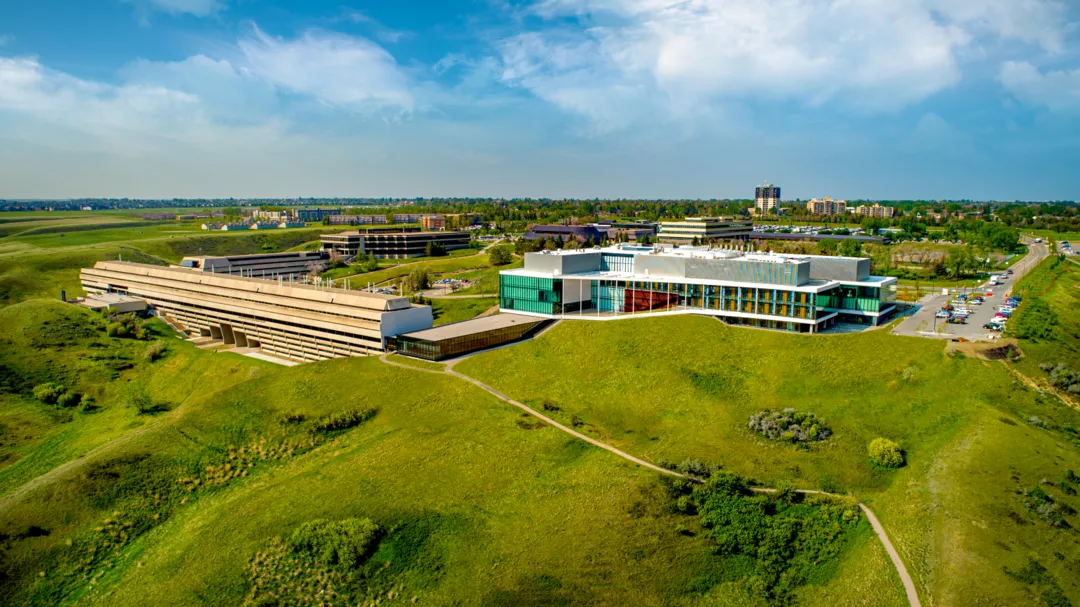
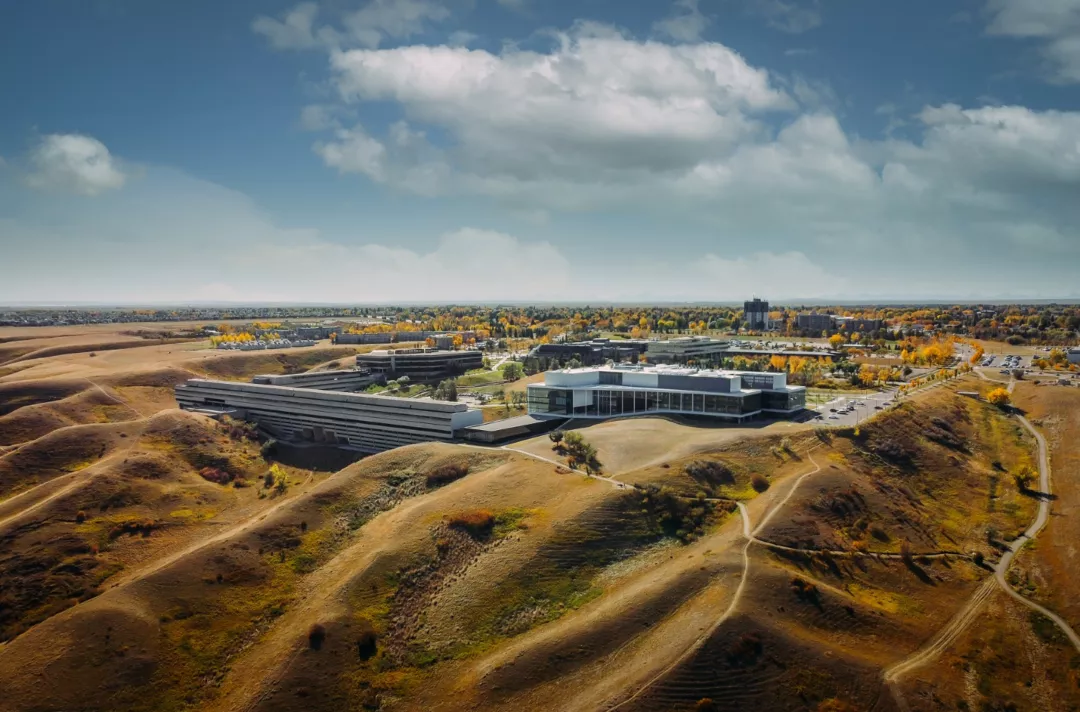
- The city: A city of just over 101,000 residents, Lethbridge is one of Canada’s sunniest cities and is a short distance from the Rocky Mountains, the Calgary International Airport and the U.S. border. Lethbridge is known for its bright sunshine (more than 320 days per year), warm summers, and mild winters thanks to the semi-arid climate and Chinook winds. The Oldman River divides the north and south sides from the west side. The river valley's coulees are home to one of North America's largest urban park systems. With over 240km of trails, enjoy walks, runs and bike rides throughout the city. Adventure is only a short drive away! Experience hiking, camping, skiing and more just outside Lethbridge.
- School ranking: The University of Lethbridge is consistently one of Canada’s top-ranked universities and research institutions. The University of Lethbridge is ranked second in the 2020 Maclean’s University Rankings in the primarily undergraduate category.
- Learning environment: The University of Lethbridge offers Canada’s premier learning experience. It is grounded in liberal education and committed to providing its students with small classes, a personal experience, and the most vital and engaging learning environment in the country.
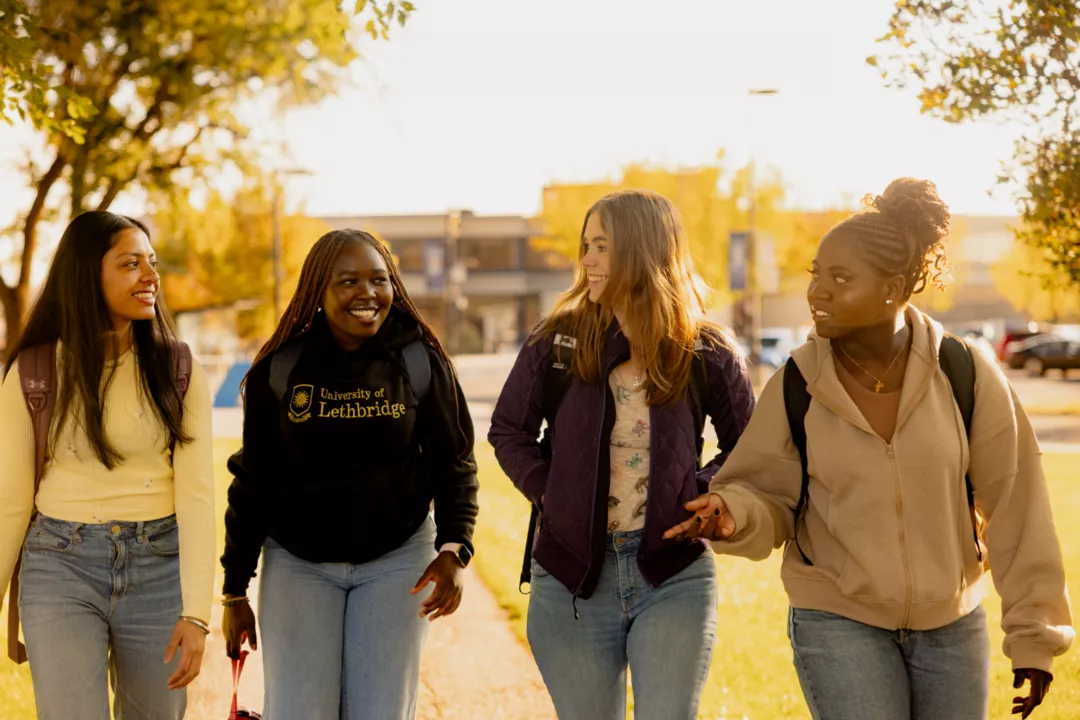
Campus life

Programs
Courses at University of Lethbridge
Bachelor's · Social Sciences & Psychology
Bachelor of Arts and Science – Anthropology & Physics (Optional Co-op)
4 years
Next intake: Sep 2027
Apply by 15 Jun 2027
Bachelor's · Social Sciences & Psychology
Bachelor of Arts and Science – Anthropology & Physics (Optional Co-op)
4 years Next intake: Sep 2027 Apply by 15 Jun 2027
For the Bachelor of Arts and Science, students must complete two majors: an Arts major, and a Science major.
Anthropology
Anthropology studies the diversity of human life in every part of the world. Long-term ethnographic fieldwork is the hallmark of the anthropological approach to studying the human condition and allows people to see how our world fits into a larger context.
Contemporary anthropology examines the material, social, and cultural conditions of human behaviour and life from a “locally global” perspective.
Anthropology will expose students to a variety of different cultures. At the same time, students will learn to examine their life from an anthropological perspective. Students will learn how to explore and understand radically different contexts in both their own and other cultures.
Two elements distinguish anthropology: an intensely comparative, wide-ranging view of human society and culture, and a strong desire to know how individuals in specific cultures make sense of the world and respond to its challenges.
Anthropologists are committed to understanding common aspects of human social life, despite apparent differences. They typically spend long periods of time doing field research where they interact with people in their environment to gain cultural understanding.
Physics
Physics is the study of matter and energy at all scales, from the sub-nuclear to the dimensions of the universe. It is the fundamental science — all other sciences and technologies rely on the principles of physics.
Physics involves observing and understanding natural phenomena. It is evident in the world in everything from the seasons, the motion of objects, the flight of birds, the night sky and the weather, to lasers, electronics and the technology society relies on today.
Physics is very much a “hands-on” science, so the most effective way for students to learn the subject is to actually do physics. Astronomy teaches students how to study objects at a distance and interpret the information gathered. This helps to begin to understand the universe we live in. The skills students will learn in astronomy are also applicable to remote sensing and its application to environmental problems.
The department offers a comprehensive physics major. The foundation of this program is built in the first two years, as students study mechanics, waves, electricity and magnetism, optics, thermal physics and modern physics.
In the third and fourth years, students will gain a deeper understanding of the fundamentals and delve into more advanced and specialized areas. Specialized topics may include the research interests of department faculty members, as all faculty members are involved in rigorous research programs.
Faculty members also ensure students are provided with a wide view of physics, exposing them to all areas of the subject and describing a wide variety of applications. This enables students to make informed decisions when choosing the areas they may wish to pursue in the future.
Upcoming intakes: Sep 2027 · Jan 2028 · Sep 2028
Bachelor's · Arts, Media & Design
Bachelor of Arts and Science – Art & Biological Sciences (Optional Co-op)
4 years – 5 years
Next intake: Sep 2027
Apply by 15 Jun 2027
Bachelor's · Arts, Media & Design
Bachelor of Arts and Science – Art & Biological Sciences (Optional Co-op)
4 years – 5 years Next intake: Sep 2027 Apply by 15 Jun 2027
For the Bachelor of Arts and Science, students must complete two majors: an Arts major, and a Science major.
Art
A bachelor's degree (BA) in art allows students to explore art as well as other interests; it offers flexible program options, while students focus on studio art and art history/museum studies courses.
Students can build their program across art, humanities, sciences and social sciences. Students will delve into studio art and art history/museum studies courses to understand and appreciate art from around the world, and immerse themselves in the study of culture and creativity. Students will also complement these studies with courses outside of their major to achieve their degree.
Biological Sciences
Biological sciences delve into the world of living organisms — from microbes, to human beings, to entire ecosystems. It is the science of life on, under and above earth.
Exploring the nature of life leads biologists out into the world where they study how organisms interact with their environment, how they function and how they evolved over time.
The Department of Biological Sciences provides students with hands-on learning, moving them beyond textbooks and lectures to engaging research projects. Biology is a research-intensive science that can lead to a wide range of study areas, like environmental work, medicine, microbiology or agriculture.
Today’s biologists require a strong background in cellular and molecular biology, organismal biology, genetics, evolution and ecology. Additionally, students will be required to complete courses in chemistry, physics and mathematics, ensuring a strong foundation in the core sciences.
Students will also have access to state-of-the-art science and research facilities, like the Alberta Ingenuity Centre for Water Research. This facility provides the infrastructure to support the research interests of University of Lethbridge’s award-winning faculty, their instructors, as they investigate diverse areas within behavioural and evolutionary ecology, plant biology and systemic biology, cellular and molecular biology and genetics.
Upcoming intakes: Sep 2027 · Jan 2028 · Sep 2028
Bachelor's · Arts, Media & Design
Bachelor of Arts and Science – Art & Mathematics (Optional Co-op)
4 years – 5 years
Next intake: Sep 2027
Apply by 15 Jun 2027
Bachelor's · Arts, Media & Design
Bachelor of Arts and Science – Art & Mathematics (Optional Co-op)
4 years – 5 years Next intake: Sep 2027 Apply by 15 Jun 2027
The Faculty of Arts & Science offers programming leading to a Bachelor of Arts (BA), Bachelor of Science (BSc), or a Bachelor of Arts and Science (BSc). These degree options are tailored to students' specific areas of interest across three academic divisions, humanities, social sciences, and sciences. In addition to traditional degrees, many departments offer specialized programs or participate in the delivery of multi-disciplinary programs and majors.
For the Bachelor of Arts and Science, students must complete two majors: an Arts major, and a Science major.
A bachelor's degree (BA) in art allows students to explore art as well as other interests; it offers flexible program options, while they focus on studio art and art history/museum studies courses.
Students will build their program across art, humanities, sciences and social sciences. They will delve into studio art and art history/museum studies courses to understand and appreciate art from around the world, and immerse themselves in the study of culture and creativity. Students will also complement these studies with courses outside of their major to achieve their degree.
Mathematics is the study of structure and patterns in numbers and shapes. It is an active research area, providing a language, theories and models to solve complex problems across a wide variety of scientific, industrial and economic sectors.
Applied mathematicians develop models of structures in the real world, and in this way mathematics provides a language for many other physical and social sciences. In pure mathematics, the structures are more abstract, and the emphasis is on proof of ideas. Mathematics students will study both pure and applied mathematics, offering the opportunity to see real-world applications of theoretical studies. In all areas of mathematics, research is very active, with a rapid expansion over the last few decades.
The Mathematics degree program offers courses in algebra, analysis, geometry, and statistics. Often students will combine mathematics with courses in physics, computer science, chemistry, economics, management, or other areas of interest. The department of Mathematics and Computer Science offers a major in Mathematics for the Bachelor of Science (BSc) or Bachelor of Arts and Science (BASc) degree program.
Upcoming intakes: Sep 2027 · Jan 2028 · Sep 2028
Bachelor's · Arts, Media & Design
Bachelor of Arts and Science – Art & Physics (Optional Co-op)
4 years – 5 years
Next intake: Sep 2027
Apply by 15 Jun 2027
Bachelor's · Arts, Media & Design
Bachelor of Arts and Science – Art & Physics (Optional Co-op)
4 years – 5 years Next intake: Sep 2027 Apply by 15 Jun 2027
For the Bachelor of Arts and Science, students must complete two majors: an Arts major, and a Science major.
A bachelor's degree (BA) in art allows students to explore art as well as other interests; it offers flexible program options, while those focus on studio art and art history/museum studies courses.
Students can build their program across art, humanities, sciences and social sciences. They will delve into studio art and art history/museum studies courses to understand and appreciate art from around the world, and immerse themselves in the study of culture and creativity. Graduates will also complement these studies with courses outside of their major to achieve their degree.
Physics is the study of matter and energy at all scales, from the sub-nuclear to the dimensions of the universe. It is the fundamental science — all other sciences and technologies rely on the principles of physics.
Physics is very much a “hands-on” science, so the most effective way for students to learn the subject is to actually do physics. Astronomy teaches them how to study objects at a distance and interpret the information gathered. This helps scientists begin to understand the universe. The skills graduates will learn in astronomy are also applicable to remote sensing and its application to environmental problems.
The department offers a comprehensive physics major. The foundation of this program is built in the first two years, as students study mechanics, waves, electricity and magnetism, optics, thermal physics and modern physics.
In the third and fourth years, students will gain a deeper understanding of the fundamentals and delve into more advanced and specialized areas. Specialized topics may include the research interests of department faculty members, as all faculty members are involved in rigorous research programs.
Faculty members also ensure students are provided with a wide view of physics, exposing them to all areas of the subject and describing a wide variety of applications. This enables them to make informed decisions when choosing the areas they may wish to pursue in the future.
Upcoming intakes: Sep 2027 · Jan 2028 · Sep 2028
Bachelor's · Computing & IT
Bachelor of Arts and Science – Economics & Computer Science (Optional Co-op)
4 years
Next intake: Sep 2027
Apply by 15 Jun 2027
Bachelor's · Computing & IT
Bachelor of Arts and Science – Economics & Computer Science (Optional Co-op)
4 years Next intake: Sep 2027 Apply by 15 Jun 2027
The Faculty of Arts & Science offers programming leading to a Bachelor of Arts (BA), Bachelor of Science (BSc), or a Bachelor of Arts and Science (BSc). These degree options are tailored to students' specific areas of interest across three academic divisions, humanities, social sciences, and sciences. In addition to traditional degrees, many departments offer specialized programs or participate in the delivery of multi-disciplinary programs and majors.
For the Bachelor of Arts and Science, students must complete two majors: an Arts major, and a Science major.
Economics is a behavioral science that studies the conditions under which individuals provide the best possible satisfaction of their needs. It is not specifically about money, things or material objects — it’s about the consequences of individual decisions made under conditions of scarcity.
Students will gain a deep understanding of the decision making process at the individual, firm or government level. They will learn how unhampered market processes lead to efficient production of goods and services, and the effects of interfering with these processes.
Students will deal with a variety of topics, such as the comparison of economic systems, the economics of marriage and family, as well as banking and private property rights. They will also delve into current concerns like employment, inflation, government bailouts, the national debt, nonrenewable resources, agriculture and the environment.
Computer science is the study of algorithms and data structures and their applications in designing new and efficient solutions to industrial, technological, environmental or social problems.
Students will learn to tackle difficult problems using a variety of high-tech tools and approaches, and effectively communicate their expertise to others by coupling their technical learning with a solid grounding in liberal education.
Students will gain both theoretical knowledge and practical experience, including access to state-of-the-art hardware and software in the University of Lethbridge's three computer labs whenever they need to use them.
Upcoming intakes: Sep 2027 · Jan 2028 · Sep 2028
Bachelor's · Science & Environment
Bachelor of Arts and Science – Economics & Mathematics (Optional Co-op)
4 years
Next intake: Sep 2027
Apply by 15 Jun 2027
Bachelor's · Science & Environment
Bachelor of Arts and Science – Economics & Mathematics (Optional Co-op)
4 years Next intake: Sep 2027 Apply by 15 Jun 2027
The Faculty of Arts & Science offers programming leading to a Bachelor of Arts (BA), Bachelor of Science (BSc), or a Bachelor of Arts and Science (BSc). These degree options are tailored to students' specific areas of interest across three academic divisions, humanities, social sciences, and sciences. In addition to traditional degrees, many departments offer specialized programs or participate in the delivery of multi-disciplinary programs and majors.
For the Bachelor of Arts and Science, students must complete two majors: an Arts major, and a Science major.
Economics is a behavioral science that studies the conditions under which individuals provide the best possible satisfaction of their needs. It is not specifically about money, things or material objects — it’s about the consequences of individual decisions made under conditions of scarcity.
Students will gain a deep understanding of the decision making process at the individual, firm or government level. They will learn how unhampered market processes lead to efficient production of goods and services, and the effects of interfering with these processes.
Students will deal with a variety of topics, such as the comparison of economic systems, the economics of marriage and family, as well as banking and private property rights. They will also delve into current concerns like employment, inflation, government bailouts, the national debt, nonrenewable resources, agriculture and the environment.
Mathematics is the study of structure and patterns in numbers and shapes. It is an active research area, providing a language, theories and models to solve complex problems across a wide variety of scientific, industrial and economic sectors.
Applied mathematicians develop models of structures in the real world, and in this way mathematics provides a language for many other physical and social sciences. In pure mathematics, the structures are more abstract, and the emphasis is on proof of ideas. Mathematics students will study both pure and applied mathematics, offering the opportunity to see real-world applications of theoretical studies. In all areas of mathematics, research is very active, with a rapid expansion over the last few decades.
The Mathematics degree program offers courses in algebra, analysis, geometry, and statistics. Often students will combine mathematics with courses in physics, computer science, chemistry, economics, management, or other areas of interest. The department of Mathematics and Computer Science offers a major in Mathematics for the Bachelor of Science (BSc) or Bachelor of Arts and Science (BASc) degree program.
Upcoming intakes: Sep 2027 · Jan 2028 · Sep 2028
Bachelor's · Science & Environment
Bachelor of Arts and Science – Economics & Physics (Optional Co-op)
4 years
Next intake: Sep 2027
Apply by 15 Jun 2027
Bachelor's · Science & Environment
Bachelor of Arts and Science – Economics & Physics (Optional Co-op)
4 years Next intake: Sep 2027 Apply by 15 Jun 2027
The Faculty of Arts & Science offers programming leading to a Bachelor of Arts (BA), Bachelor of Science (BSc), or a Bachelor of Arts and Science (BSc). These degree options are tailored to students' specific areas of interest across three academic divisions, humanities, social sciences, and sciences. In addition to traditional degrees, many departments offer specialized programs or participate in the delivery of multi-disciplinary programs and majors.
For the Bachelor of Arts and Science, students must complete two majors: an Arts major, and a Science major.
Economics is a behavioral science that studies the conditions under which individuals provide the best possible satisfaction of their needs. It is not specifically about money, things or material objects — it’s about the consequences of individual decisions made under conditions of scarcity.
Students will gain a deep understanding of the decision making process at the individual, firm or government level. They will learn how unhampered market processes lead to efficient production of goods and services, and the effects of interfering with these processes.
Students will deal with a variety of topics, such as the comparison of economic systems, the economics of marriage and family, as well as banking and private property rights. They will also delve into current concerns like employment, inflation, government bailouts, the national debt, nonrenewable resources, agriculture and the environment.
Physics is the study of matter and energy at all scales, from the sub-nuclear to the dimensions of the universe. It is the fundamental science — all other sciences and technologies rely on the principles of physics.
Physics involves observing and understanding natural phenomena. It is evident in the world around people in everything from the seasons, the motion of objects, the flight of birds, the night sky and the weather, to lasers, electronics and the technology they rely on today.
Physics is very much a “hands-on” science, so the most effective way for students to learn the subject is to actually do physics. Astronomy teaches them how to study objects at a distance and interpret the information gathered. This helps everyone begin to understand the universe they live in. The skills students will learn in astronomy are also applicable to remote sensing and its application to environmental problems.
The department offers a comprehensive physics major. The foundation of this program is built in the first two years, as students study mechanics, waves, electricity and magnetism, optics, thermal physics and modern physics.
In students' third and fourth years, they will gain a deeper understanding of the fundamentals and delve into more advanced and specialized areas. Specialized topics may include the research interests of department faculty members, as all faculty members are involved in rigorous research programs.
Faculty members also ensure students are provided with a wide view of physics, exposing them to all areas of the subject and describing a wide variety of applications. This enables them to make informed decisions when choosing the areas they may wish to pursue in the future.
Upcoming intakes: Sep 2027 · Jan 2028 · Sep 2028
Bachelor's · Arts, Media & Design
Bachelor of Arts and Science – English & Biological Sciences (Optional Co-op)
4 years
Next intake: Sep 2027
Apply by 15 Jun 2027
Bachelor's · Arts, Media & Design
Bachelor of Arts and Science – English & Biological Sciences (Optional Co-op)
4 years Next intake: Sep 2027 Apply by 15 Jun 2027
For the Bachelor of Arts and Science, students must complete two majors: an Arts major, and a Science major.
English
English is not just about the rhetorical and creative aspects of literature. It’s about examining history, culture, psychology, sociology, philosophy, and the human condition to determine what a text means in the context of when and where it was written, and how it relates to people today.
Language is the primary means of communicating values, ideals and vision. The study of English asks fundamental questions about literature and how humans express themselves and interact with others. It is the science of communication and critical inquiry.
Students will learn how people use language in the world at large, and consider the functions, structures and significance of literature over time. They will develop an excellent foundation for a career in virtually any professional capacity due to the cross-disciplinary nature of this program.
Biological Sciences
Biological sciences delve into the world of living organisms — from microbes, to human beings, to entire ecosystems. It is the science of life on, under and above earth.
Exploring the nature of life leads biologists out into the world where they study how organisms interact with their environment, how they function and how they evolved over time.
The Department of Biological Sciences provides students with hands-on learning, moving them beyond textbooks and lectures to engaging research projects. Biology is a research-intensive science that can lead to a wide range of study areas, like environmental work, medicine, microbiology or agriculture.
Today’s biologists require a strong background in cellular and molecular biology, organismal biology, genetics, evolution and ecology. Additionally, graduates will be required to complete courses in chemistry, physics and mathematics, ensuring a strong foundation in the core sciences.
Students will also have access to state-of-the-art science and research facilities, like the Alberta Ingenuity Centre for Water Research. This facility provides the infrastructure to support the research interests of University of Lethbridge’s award-winning faculty, their instructors, as they investigate diverse areas within behavioural and evolutionary ecology, plant biology and systemic biology, cellular and molecular biology and genetics.
Upcoming intakes: Sep 2027 · Jan 2028 · Sep 2028
Master's · Business & Management
Master of Management (MMgt) (Coursework)
16 months
Next intake: Sep 2027
Apply by 15 Feb 2027
Master's · Business & Management
Master of Management (MMgt) (Coursework)
16 months Next intake: Sep 2027 Apply by 15 Feb 2027
The Master of Management is a research-focused graduate program designed to develop advanced knowledge in management theory, research methods and analytical decision-making. Students examine contemporary organizational and business challenges while building expertise in a selected area of management.
Through graduate coursework and supervised research, students strengthen their skills in critical analysis, academic writing, data interpretation and evidence-based problem-solving. The program may culminate in an independent thesis or other substantial research project focused on the student’s chosen area of interest.
Graduates are prepared for research, consulting, management and policy-related roles across public, private and non-profit organizations. The program also provides a strong foundation for doctoral study and academic careers in management or related disciplines.
Upcoming intakes: Sep 2027 · Sep 2028
No courses match your search.
Student life & support
Work while studying
International students can work part-time alongside their studies (subject to visa conditions).
Co-op & placements
Offers co-op or work-placement options in selected programs.
On-campus housing
On-campus residence is available.
Accommodation options
Students need to plan their accommodations well in advance of their arrival as all accommodation options fill up quickly, well before the start of the semester.
On-Campus Residence Accommodations
On-Campus residence accommodations are provided per discretion by the school.
Off-Campus Accommodations
The local area has a variety of off-campus rental housing options including single homes, duplexes, apartments and rooms for rent. Students wishing to live off-campus need to research availability on their own and should arrive well before the start of term to do so.
Homestay
There are a wide variety of homestay options available, and our partners do their best to match students and hosts according to their interests and preferences. Homestay hosts include single people, young couples with children and pets, and older couples. All homestay accommodations have been inspected, and all adults in the home have completed a required criminal reference check.