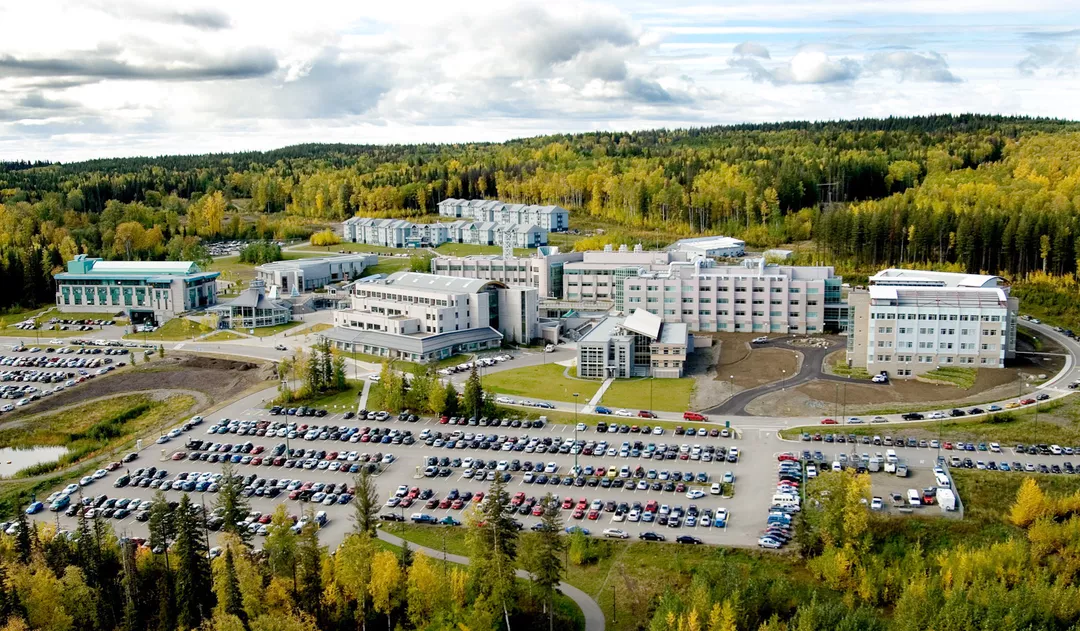

Prince George, Canada · Public university
University of Northern British Columbia
- Location
- Prince George, British Columbia
- Institution
- Public University
- Founded
- 1990
- Courses listed
- 12
Overview
About University of Northern British Columbia
Located in the spectacular landscape of northern British Columbia, UNBC is one of Canada’s best small universities. They have a passion for teaching, discovery, people, the environment, and the North.
UNBC provides outstanding undergraduate and graduate learning opportunities that explore cultures, health, economies, sciences, and the environment. As one of BC’s research-intensive universities, they bring the excitement of new knowledge to their students, and the outcomes of their teaching and research to the world. In addition to fostering and celebrating academic excellence, UNBC is a welcoming place, with a learning environment that is friendly, inclusive, and supportive.
UNBC is a university both in and for the North. This mission has instilled a strong sense of ownership, purpose, and adventure among our students, alumni, faculty, staff, and the communities we serve. They are also Canada’s Green University™ , leading the way to a more sustainable future for all.
Why the University of Northern British Columbia
- Student Life: The Student Life department at UNBC develops and implements fun student activities that engage a diverse student population and enrich their experience. In addition, there are dozens of student-run clubs, CIS-level varsity athletics teams, intramurals, and countless outdoor activities right in our own backyard. Life at UNBC is fun, supportive and social.
- Commitment to Education: Located in the spectacular landscape of central British Columbia, UNBC is one of Canada’s best small, research-intensive universities as well as an active participant in the global community. Their commitment to international education is reflected in the teaching, research, and service missions of the institution. UNBC offers a wide range of undergraduate and graduate programs, taught by award-winning faculty and with the smallest class sizes of any research-intensive university in western Canada. Come experience the UNBC difference.
- Location: Prince George is the hub of northern BC. Students will find plenty of local restaurants, shopping, live music, and nightlife. Prince George is big enough to offer students access to all the amenities, culture, arts, and entertainment they would expect from a major city, but small enough that they will feel at home and connected to their community.
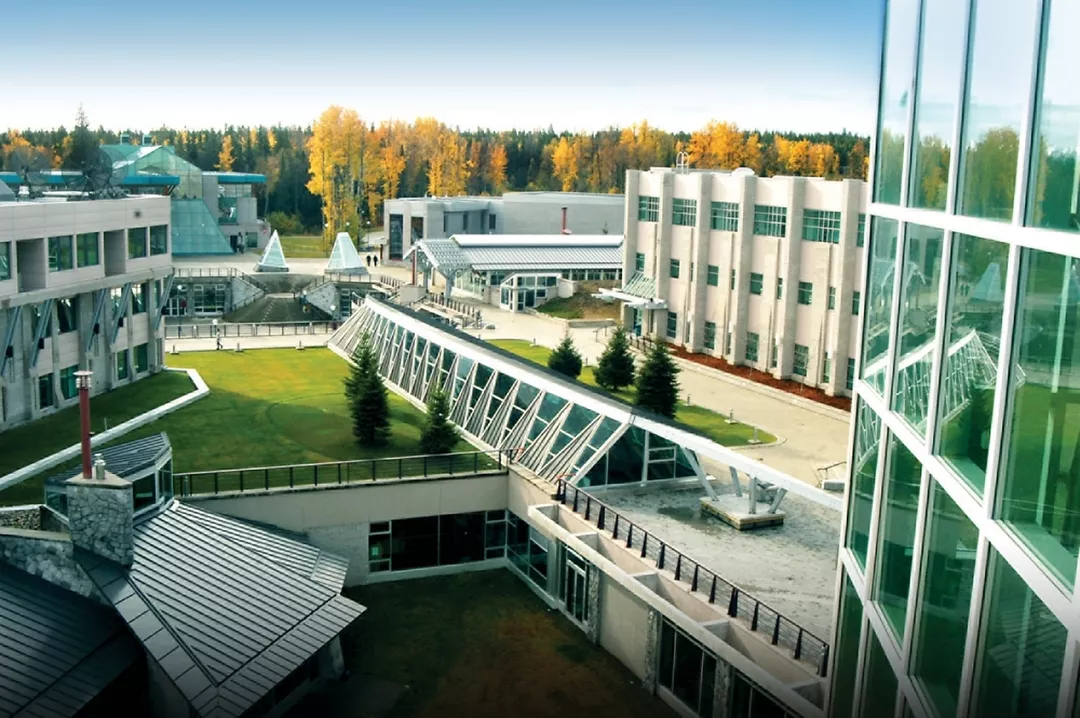
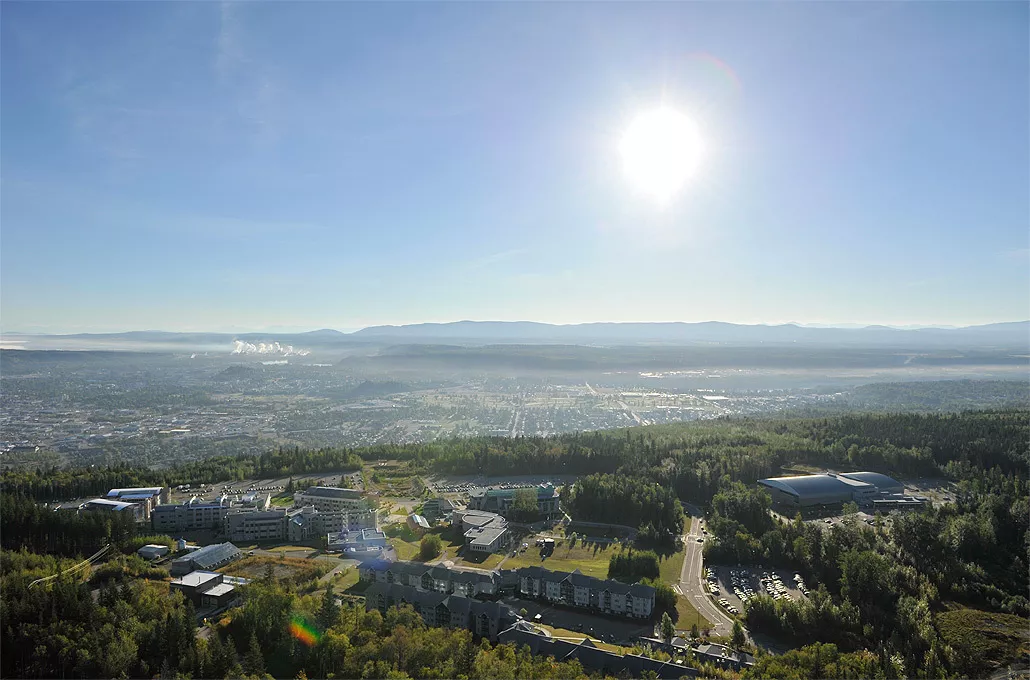
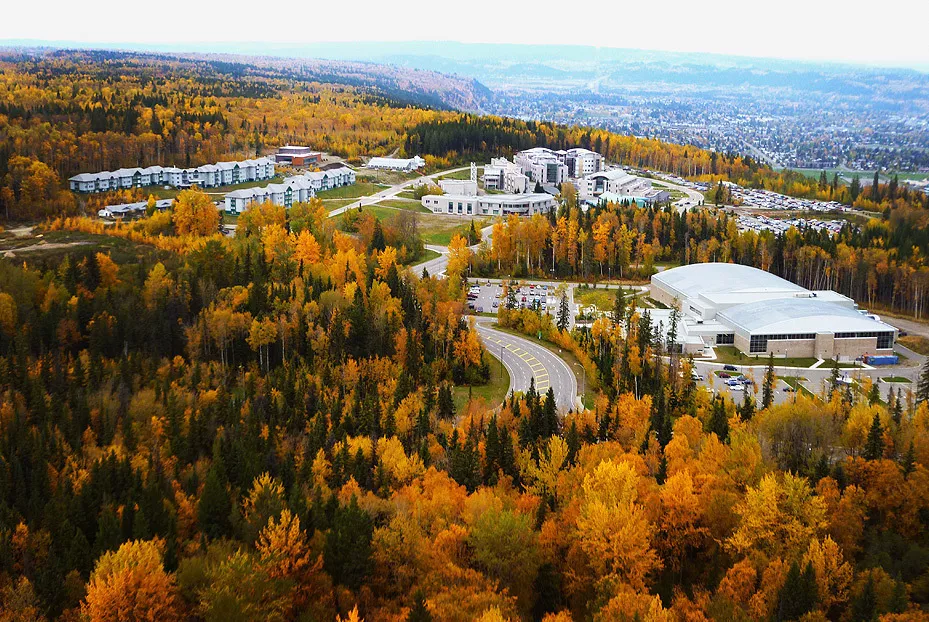
Campus life


Programs
Courses at University of Northern British Columbia
Master's · Social Sciences & Psychology
Master of Arts – Development Economics
2 years
Next intake: Sep 2028
Apply by 15 Jan 2028
Master's · Social Sciences & Psychology
Master of Arts – Development Economics
2 years Next intake: Sep 2028 Apply by 15 Jan 2028
Economic development remains a critical issue for more than three-quarters of the world’s population who reside in countries classified as “low income” or “middle income". The causes and consequences of economic development remain contested issues. This academic program considers the changing global, regional and national contexts for economic development; the policy lessons that can be learned from comparative studies; and the tools required to enable development economists to contribute to the development process.
Economic development cannot be studied in isolation from other dimensions of development. An understanding of poverty, for example, requires not only economic analysis but also an understanding of the insights provided by other social and health sciences. The training of a development economist must therefore expose students to interdisciplinary approaches to development.
Upcoming intakes: Sep 2028
Master's · Arts, Media & Design
Master of Arts – English (Course-Based)
2 years
Next intake: Jan 2028
Apply by 1 Nov 2027
Master's · Arts, Media & Design
Master of Arts – English (Course-Based)
2 years Next intake: Jan 2028 Apply by 1 Nov 2027
The study of literature can provide students with insights concerning past and present concepts of personal and social identity, cultural traditions and beliefs, and interpersonal and cross-cultural relationships. Since the time of Aristotle, moreover, literary commentators have analyzed “setting” as an important formal aspect of literary writing; literary study can therefore help individual to investigate, and perhaps to reconsider, their relationships with both human and non-human environments. In today’s world, where efforts to resolve intercultural conflicts and environmental problems have taken on a profound sense of urgency, literary study provides a crucial forum for intellectual and ethical debate leading to the revision of cultural practice.
The study of English literature provides students with critical skills of analysis and synthesis, helping them to identify and understand complex problems, and encouraging them to conceptualize viable resolutions and alternative understandings. Perhaps more than any other academic discipline, English literature also emphasizes the importance of literacy, including the development of effective writing and oral presentation skills, thereby providing students with the communications skills so highly valued in the professional world.
The Master of Arts degree in English is available on a full-time. Students may choose a course-based MA option (plus ENGL 770) or the coursework and graduate thesis option. Upon admission into the English MA program, each student is assigned a supervisor, who works closely with the student to monitor their program of study and progress. In consultation with supervisors and supervisory committee members, each student chooses courses designed to complement and inform the proposed research area, completing most of the course work during the first year of the program. The second year is devoted primarily to the production of the thesis or, in the case of the course-based MA, to the completion of coursework and the major research paper.
Upcoming intakes: Jan 2028
Master's · Arts, Media & Design
Master of Arts – English (Thesis)
2 years
Next intake: Sep 2028
Apply by 15 Jan 2028
Master's · Arts, Media & Design
Master of Arts – English (Thesis)
2 years Next intake: Sep 2028 Apply by 15 Jan 2028
The study of literature can provide students with insights concerning past and present concepts of personal and social identity, cultural traditions and beliefs, and interpersonal and cross-cultural relationships. Since the time of Aristotle, moreover, literary commentators have analyzed “setting” as an important formal aspect of literary writing; literary study can therefore help individual to investigate, and perhaps to reconsider, their relationships with both human and non-human environments. In today’s world, where efforts to resolve intercultural conflicts and environmental problems have taken on a profound sense of urgency, literary study provides a crucial forum for intellectual and ethical debate leading to the revision of cultural practice.
The study of English literature provides students with critical skills of analysis and synthesis, helping them to identify and understand complex problems, and encouraging them to conceptualize viable resolutions and alternative understandings. Perhaps more than any other academic discipline, English literature also emphasizes the importance of literacy, including the development of effective writing and oral presentation skills, thereby providing students with the communications skills so highly valued in the professional world.
The Master of Arts degree in English is available on a full-time. Students may choose a course-based MA option (plus ENGL 770) or the coursework and graduate thesis option. Upon admission into the English MA program, each student is assigned a supervisor, who works closely with the student to monitor their program of study and progress. In consultation with supervisors and supervisory committee members, each student chooses courses designed to complement and inform the proposed research area, completing most of the course work during the first year of the program. The second year is devoted primarily to the production of the thesis or, in the case of the course-based MA, to the completion of coursework and the major research paper.
Upcoming intakes: Sep 2028
Master's · Social Sciences & Psychology
Master of Arts – Gender Studies (Project)
2 years
Next intake: Jan 2028
Apply by 1 Jun 2027
Master's · Social Sciences & Psychology
Master of Arts – Gender Studies (Project)
2 years Next intake: Jan 2028 Apply by 1 Jun 2027
The Gender Studies Master of Arts program at University of Northern British Columbia offers the opportunity to work with scholars in a variety of disciplines who share a focus on women and/or gender as a category of analysis.
The program has particular strengths in areas such as gender, literature, and cultural studies; gender, history, and anthropology; gender, colonialism, and postcolonialism; gender and globalization; feminism, justice, and ethics; gender and health; and gender and international studies. Gender Studies MA students have the opportunity to design a course of study that incorporates gender- or feminism-based methodologies and interdisciplinarity while developing expertise in an area of concentration.
Upcoming intakes: Jan 2028 · Sep 2028
Master's · Social Sciences & Psychology
Master of Arts – Gender Studies (Thesis)
2 years
Next intake: Jan 2028
Apply by 1 Jun 2027
Master's · Social Sciences & Psychology
Master of Arts – Gender Studies (Thesis)
2 years Next intake: Jan 2028 Apply by 1 Jun 2027
The Gender Studies Master of Arts program at University of Northern British Columbia offers the opportunity to work with scholars in a variety of disciplines who share a focus on women and/or gender as a category of analysis.
The program has particular strengths in areas such as gender, literature, and cultural studies; gender, history, and anthropology; gender, colonialism, and postcolonialism; gender and globalization; feminism, justice, and ethics; gender and health; and gender and international studies. Gender Studies MA students have the opportunity to design a course of study that incorporates gender- or feminism-based methodologies and interdisciplinarity while developing expertise in an area of concentration.
Upcoming intakes: Jan 2028 · Sep 2028
Master's · Social Sciences & Psychology
Master of Arts – History (Project)
2 years
Next intake: Sep 2028
Apply by 15 Jan 2028
Master's · Social Sciences & Psychology
Master of Arts – History (Project)
2 years Next intake: Sep 2028 Apply by 15 Jan 2028
The Department of History offers Master of Arts degrees in a two-year program. The major areas of study are North America, Europe, and Latin America with emphasis on Aboriginal, northern, gender, and environmental history. Students are encouraged to contact an appropriate supervisor before applying to the program and to develop a research project through this contact with members of the department.
University of Northern British Columbia MA has two streams. In the first year of the program, all students take three seminars in their areas of interest as well as two courses in historiography and research methods. In the second year of the program, students may choose between writing an MA thesis or carrying out a creative project.
Upcoming intakes: Sep 2028
Master's · Social Sciences & Psychology
Master of Arts – History (Thesis)
2 years
Next intake: Sep 2028
Apply by 15 Jan 2028
Master's · Social Sciences & Psychology
Master of Arts – History (Thesis)
2 years Next intake: Sep 2028 Apply by 15 Jan 2028
The Department of History offers Master of Arts degrees in a two-year program. The major areas of study are North America, Europe, and Latin America with emphasis on Aboriginal, northern, gender, and environmental history. Students are encouraged to contact an appropriate supervisor before applying to the program and to develop a research project through this contact with members of the department.
University of Northern British Columbia MA has two streams. In the first year of the program, all students take three seminars in their areas of interest as well as two courses in historiography and research methods. In the second year of the program, students may choose between writing an MA thesis or carrying out a creative project.
Upcoming intakes: Sep 2028
Master's · Social Sciences & Psychology
Master of Arts – Interdisciplinary Studies
2 years
Next intake: Jan 2028
Apply by 1 Jun 2027
Master's · Social Sciences & Psychology
Master of Arts – Interdisciplinary Studies
2 years Next intake: Jan 2028 Apply by 1 Jun 2027
The Interdisciplinary Studies (IDIS) program covers the scope of multiple disciplines, enabling faculty from other graduate programs to participate in this program. Therefore, the IDIS Graduate Program welcomes all faculty members eligible to be supervisors to participate in the IDIS Graduate Program.
The MA option in Interdisciplinary Studies is specifically designed to enable students to pursue intellectual development outside the constraints of traditional disciplines in the Humanities and Social Sciences.
Upcoming intakes: Jan 2028 · May 2028 · Sep 2028
Master's · Social Sciences & Psychology
Master of Arts – International Studies
2 years
Next intake: Sep 2028
Apply by 15 Jan 2028
Master's · Social Sciences & Psychology
Master of Arts – International Studies
2 years Next intake: Sep 2028 Apply by 15 Jan 2028
University of Northern British Columbia's innovative and interdisciplinary Master’s degree in International Studies focuses on two of the most pressing and interlinked issues of time: Global Development and Environment. The program draws on courses from 11 different graduate programs and is managed jointly by the Department of Economics and the Department of Global and International Studies.
Broadly understood as processes that affect people(s), regions and/or countries in the Global South and northern areas including the Arctic, global development is examined from multiple perspectives. These perspectives include those of international agencies and civil society organizations. Both mainstream and critical approaches to development studies are examined. The challenges facing the global environment and potential solutions are analysed. Interactions between global development and the environment and between local and global scales are examined.
Upcoming intakes: Sep 2028
MBA · Business & Management
Master of Business Administration (MBA)
2 years
Next intake: Aug 2028
Apply by 15 Jan 2028
MBA · Business & Management
Master of Business Administration (MBA)
2 years Next intake: Aug 2028 Apply by 15 Jan 2028
The MBA is recognized worldwide as the hallmark of the management professional. Graduates of the University of Northern British Columbia Master of Business Administration (MBA) program develop a well-rounded understanding of the skills needed by leaders of private and public sector organizations, and the challenges facing enterprises in general, and northern ones in particular.
The program is designed to allow professionals to complete their degree within two years while continuing to work full-time. During the first year of the program, students are introduced to the major disciplinary areas within the field of business, including strategy, economics, accounting, finance, organizational behaviour, marketing, and operations management. This part of the program builds the broad base of knowledge and skills required by senior management.
During the second year of the program, students gain a broad understanding of the global, legal and ethical environment in which organizations operate, and of the challenges facing organizations. In the context of northern British Columbia, there are economic, social, and environmental challenges confronting small and rural communities participating in a resource-based economy. Through the development of leadership and management capabilities, the MBA Program helps communities and organizations achieve sustainable success and prosperity in a changing and complex world.
Course participants have the opportunity to focus on individual interests during the MBA Project. Working under the supervision of a faculty member, students complete a major research project, applying relevant theory to the study of a substantial organizational problem or issue.
The MBA program course work normally includes work assessed on an individual and group basis. Enterprise problems are seldom completely resolved through individual effort, and group work reinforces and enhances individual ability to work within multi-disciplinary teams.
Students come to the MBA program with diverse backgrounds, a range of social and cultural perspectives, and different industry and business experiences. The MBA program encourages this diversity as it fosters a rich learning environment.
Upcoming intakes: Aug 2028
MBA · Science & Environment
Master of Business Administration (MBA) – Sustainable Leadership
16 months
Next intake: Sep 2027
Apply by 15 Jan 2027
MBA · Science & Environment
Master of Business Administration (MBA) – Sustainable Leadership
16 months Next intake: Sep 2027 Apply by 15 Jan 2027
UNBC’s new MBA in Sustainable Leadership prepares leaders to navigate complex business environments while building stronger, more sustainable businesses and communities.
Unlike traditional MBA programs that may offer sustainability as an elective, UNBC’s program integrates sustainability, strategy, community engagement, and leadership throughout its curriculum.
The program defines sustainable leadership as building sustainable communities through sustainable businesses—not building businesses at the expense of communities.
Students learn to consider the long-term interests of businesses, employees, communities, and regions while developing the skills required to lead organizations of all sizes.
Key areas of study include:
- Community engagement and Impact Benefit Agreements
- Indigenous and regional economic development
- Diversity, inclusion, and employee well-being
- Long-term business and community interests
- Leadership in Northern, rural, and remote communities
Upcoming intakes: Sep 2027 · Sep 2028
MBA · Business & Management
Master of Business Administration (MBA) (Vancouver Campus)
2 years
Next intake: Aug 2028
Apply by 15 Jan 2028
MBA · Business & Management
Master of Business Administration (MBA) (Vancouver Campus)
2 years Next intake: Aug 2028 Apply by 15 Jan 2028
The Master of Business Administration is recognized worldwide as the hallmark of the management professional. Graduates of the UNBC MBA program develop a well-rounded understanding of the skills needed by leaders of private and public sector organizations, and the challenges facing enterprises in general, and northern ones in particular.
The program is designed to allow professionals to complete their degree within two years while continuing to work full-time. During the first year of the program, students are introduced to the major disciplinary areas within the field of business, including strategy, economics, accounting, finance, organizational behaviour, marketing, and operations management. This part of the program builds the broad base of knowledge and skills required by senior management.
During the second year of the program, students gain a broad understanding of the global, legal and ethical environment in which organizations operate, and of the challenges facing organizations. In the context of northern British Columbia, there are economic, social, and environmental challenges confronting small and rural communities participating in a resource-based economy. Through the development of leadership and management capabilities, the MBA Program helps communities and organizations achieve sustainable success and prosperity in a changing and complex world.
Course participants have the opportunity to focus on individual interests during the Master of Business Administration Project. Working under the supervision of a faculty member, students complete a major research project, applying relevant theory to the study of a substantial organizational problem or issue.
The Master of Business Administration program course work normally includes work assessed on an individual and group basis. Enterprise problems are seldom completely resolved through individual effort, and group work reinforces and enhances individual ability to work within multi-disciplinary teams.
Students come to the Master of Business Administration program with diverse backgrounds, a range of social and cultural perspectives, and different industry and business experiences. The MBA program encourages this diversity as it fosters a rich learning environment.
Upcoming intakes: Aug 2028
No courses match your search.
Student life & support
Work while studying
International students can work part-time alongside their studies (subject to visa conditions).
Co-op & placements
Offers co-op or work-placement options in selected programs.
On-campus housing
On-campus residence is available.
Accommodation options
Students need to plan their accommodations well in advance of their arrival as all accommodation options fill up quickly, well before the start of the semester.
On-Campus Residence Accommodations
On-Campus residence accommodations are provided per discretion by the school.
Off-Campus Accommodations
The local area has a variety of off-campus rental housing options including single homes, duplexes, apartments and rooms for rent. Students wishing to live off-campus need to research availability on their own and should arrive well before the start of term to do so.
Homestay
There are a wide variety of homestay options available, and our partners do their best to match students and hosts according to their interests and preferences. Homestay hosts include single people, young couples with children and pets, and older couples. All homestay accommodations have been inspected, and all adults in the home have completed a required criminal reference check.