
- Location
- Regina, Saskatchewan
- Institution
- Public University
- Founded
- 1974
- Courses listed
- 17
Overview
About University of Regina
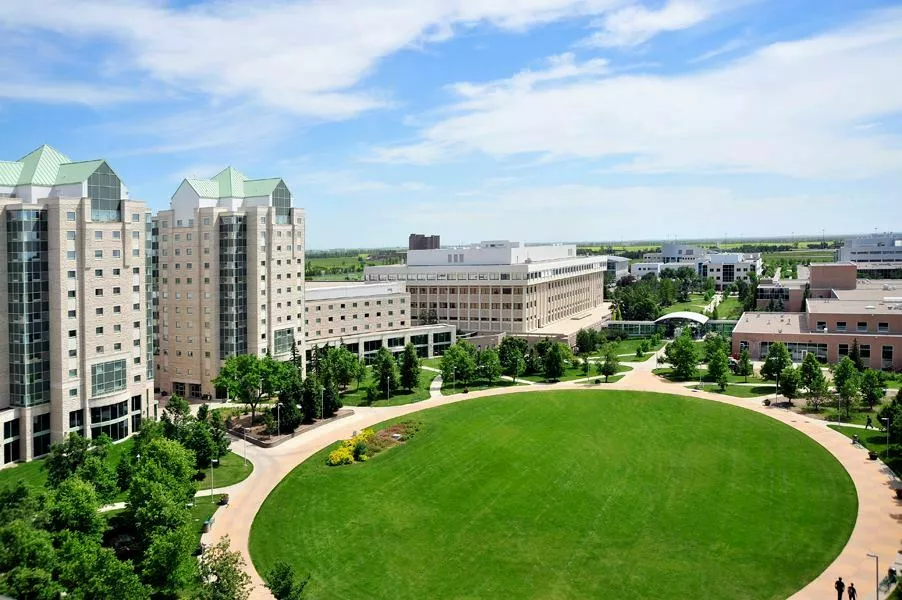
Located in the province's capitol, the University of Regina is the leading experience-based learning university in Saskatchewan. It has a welcoming campus, a diverse and inclusive learning environment, exceptional academic programs, high-impact research, and world-class facilities. The University of Regina has everything students need to succeed!
When students attend the University of Regina they join approximately 16,000 other students in a truly Canadian learning experience. Diverse and inclusive, international students make up almost 18% of the student population. The University of Regina welcomes approximately 3,000 international students from nearly 100 countries each year.
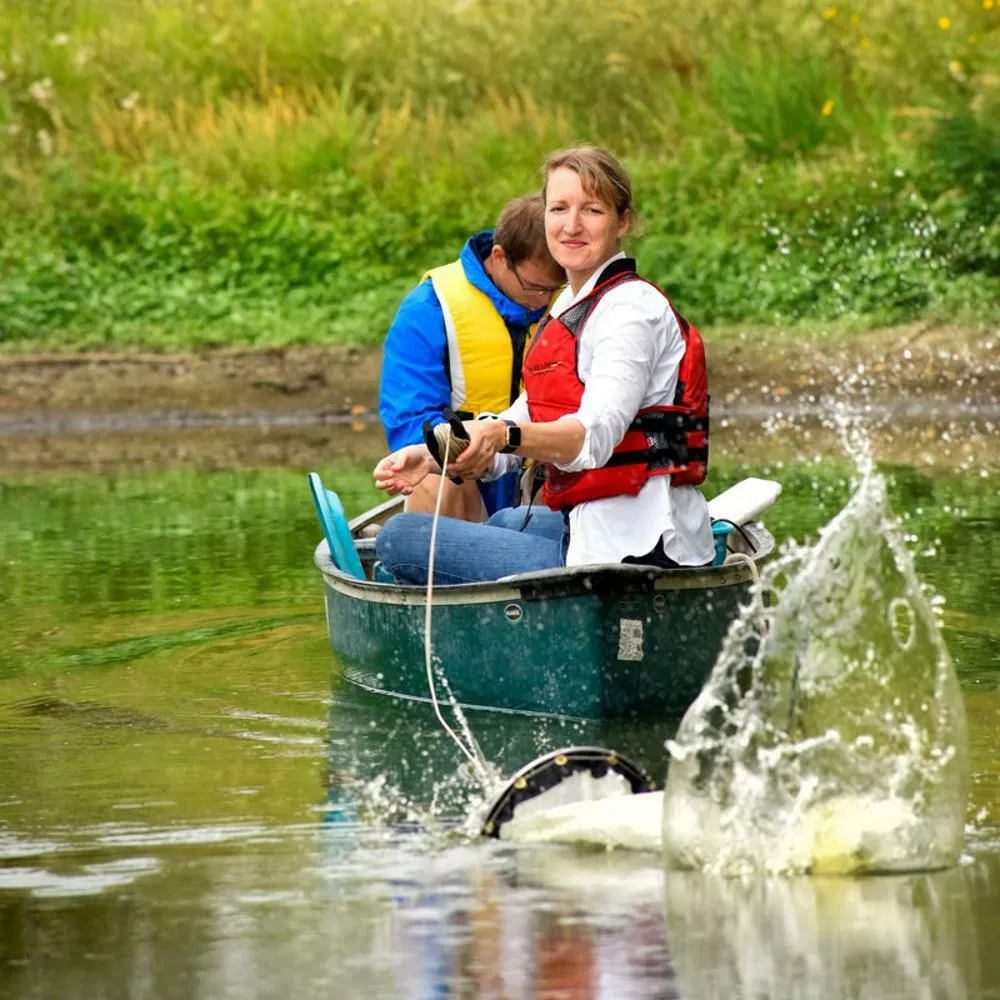
The campus is beautiful, safe and home to top researchers and academics. The faculty and student researchers share a desire to understand and influence the world. This is where teaching and research come together, and daring discovery occurs! In 2020-2021, the school had over $31 million in research revenue.
The University of Regina is located on Treaty 4 Territory with a presence in Treaty 6 Territory. These are the ancestral lands of the nêhiyawak (Cree), Anihšināpēk (Salteaux), Dakota, Lakota, Nakota and the homeland of the Métis/Michif Nation.
Why the University of Regina
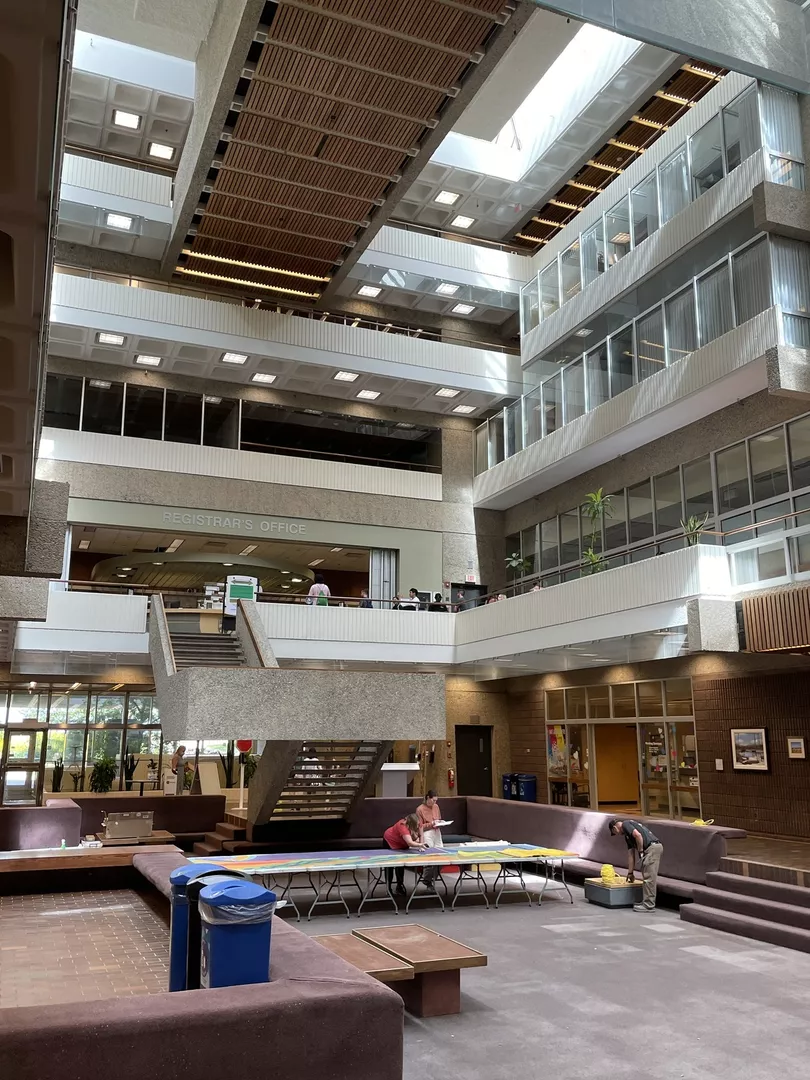
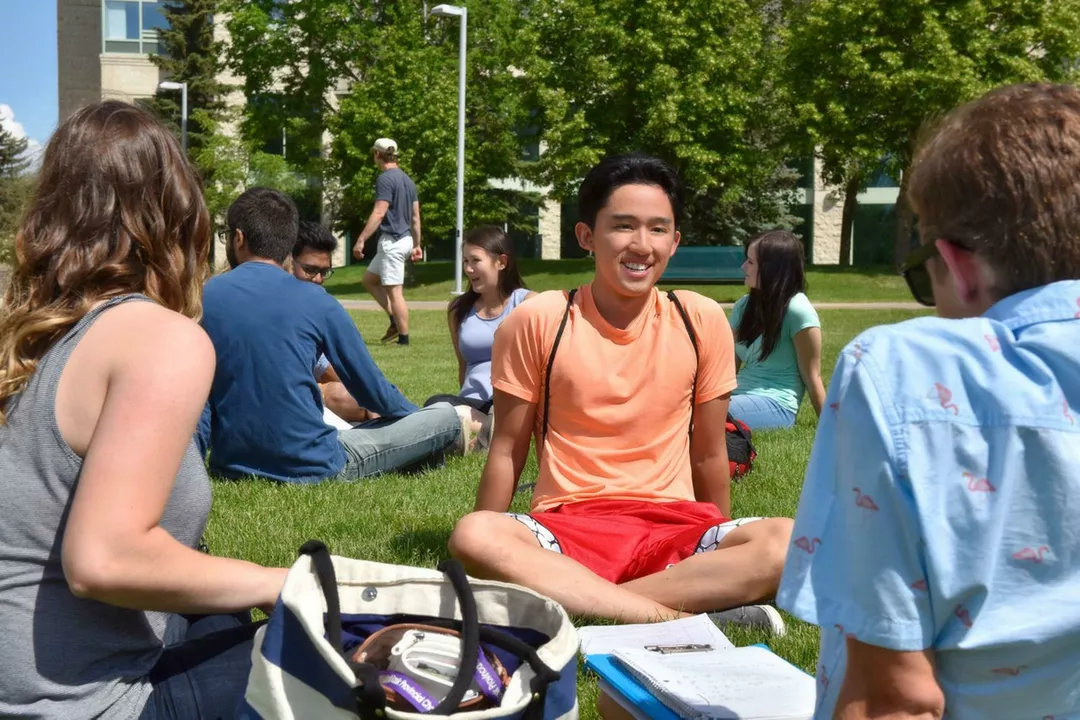
- Campus life: The University of Regina Students' Union (URSU) acts as a conduit for student representation at the University of Regina and within the community. They provide students with opportunities to lead and be heard. URSU services and programs contribute to a safe, healthy and fulfilling university experience. Students can stay fit by joining a sport club, going to the aquatics Centre or the Fitness and Lifestyle Centre or they can join intramural activities, or they can cheer on their favourite varsity team.
- Location: Right in the heart of Canada, outdoor beauty meets modern metropolis. Regina, Saskatchewan — known as the Queen City — is an incredibly friendly capital city. Regina is one of Canada’s sunniest cities. The winters get cold, but they are gorgeous. The University of Regina sits right in Wascana Centre, just minutes from Wascana Lake, and it's surrounded by trails. Admire nature's beauty while getting some fresh air, exercise, meditate or even study by the shore.
- Support: University of Regina International is a student's first point of contact as an international student at the University of Regina. University of Regina International Student Services assists all international students with building a strong foundation for academic success. Beginning the moment students are accepted and throughout the entire duration of their program, the University of Regina provides personalized support and guidance in the student's academic journey.
- Co-op: University of Regina pioneered the Co-op Work Experience Program in Western Canada and has been committed to it ever since. Students can earn while they learn - typical salaries range from $12,000-$14,000 per semester - as they sample different career choices, work environments, and locations. Students can also participate in internships, field work, practicums and professional placements.
Campus life


Programs
Courses at University of Regina
Bachelor's · Engineering & Construction
Bachelor of Applied Science – Electronic Systems Engineering (Optional Co-op)
4.5 years – 5 years
Next intake: Jan 2027
Apply by 1 Jan 2027
Bachelor's · Engineering & Construction
Bachelor of Applied Science – Electronic Systems Engineering (Optional Co-op)
4.5 years – 5 years Next intake: Jan 2027 Apply by 1 Jan 2027
The bachelor’s degree in electronic systems engineering from the University of Regina in Saskatchewan prepares students to become an effective engineer with career options across many areas of specialty, including:
- Wired and wireless communications
- Embedded systems
- Electric power
- Control and automation for natural resource and manufacturing industries
Accredited by the Canadian Engineering Accreditation Board (CEAB), this electronic systems engineering bachelor degree qualifies students to register with provincial/territorial associations, which puts them on the path to becoming a professional engineer.
University of Regina’s systems approach to electronic engineering focuses on critical technical engineering content as well as safety, environmental, social and economic considerations.
Complete assignments inside hands-on labs with dedicated instructors. Take courses taught by faculty with deep industry experience and connections. Make the most of co-op/internships where students can earn as much as $8,000-$13,000 per semester while gaining valuable work experience.
Note, even if you started your engineering degree elsewhere, University of Regina welcomes transfer students into the electronic systems engineering bachelor’s degree program.
Upcoming intakes: Jan 2027 · Sep 2027 · Jan 2028
Bachelor's · Engineering & Construction
Bachelor of Applied Science – Environmental Systems Engineering (Optional Co-op)
4.5 years – 5 years
Next intake: Jan 2027
Apply by 1 Jan 2027
Bachelor's · Engineering & Construction
Bachelor of Applied Science – Environmental Systems Engineering (Optional Co-op)
4.5 years – 5 years Next intake: Jan 2027 Apply by 1 Jan 2027
Communities around the world and closer to home face many environmental challenges that require ethical, comprehensive solutions. The best answers break down boundaries and lift up the co-operation needed for real change. With a University of Regina’s environmental systems engineering degree, students learn how to play an important role in tackling looming issues that put human safety, agriculture sustainability and other important industries at risk.
Students can harness their methodical and creative mindset to engineer new systems. Learn to think ahead to implementation, integration and day-to-day management over the long term. Environmental systems engineering students at the University of Regina, learn to:
- Conduct environmental impact, risk assessment and remediation studies
- Use applied probability to make confident, well-informed decisions
Upcoming intakes: Jan 2027 · Sep 2027 · Jan 2028
Bachelor's · Engineering & Construction
Bachelor of Applied Science – Industrial Systems Engineering (Optional Co-op)
4.5 years – 5 years
Next intake: Jan 2027
Apply by 1 Jan 2027
Bachelor's · Engineering & Construction
Bachelor of Applied Science – Industrial Systems Engineering (Optional Co-op)
4.5 years – 5 years Next intake: Jan 2027 Apply by 1 Jan 2027
Students will use advanced labs to help earn their broad-based industrial systems engineering degree in the University of Regina's industrial systems engineering bachelor’s program.
Study topics such as:
- Strength of materials
- Heat transfer
- Computer-aided engineering
- Mechanics of fluids
Students will make use of these four industrial systems engineering labs:
- Thermodynamics
- Process Engineering
- Materials
- Manufacturing
University of Regina's industrial systems engineering program offers these flexible degree options:
- Bachelor of Applied Science in Industrial Systems Engineering
- Bachelor of Applied Science (Co-op) in Industrial Systems Engineering
- Bachelor of Applied Science (Internship) in Industrial Systems Engineering
The program is fully accredited by the Canadian Engineering Accreditation Board. Students will be on the path to become a professional engineer because the industrial systems engineering degree qualifies students to register with provincial and territorial professional associations.
Upcoming intakes: Jan 2027 · Sep 2027 · Jan 2028
Bachelor's · Computing & IT
Bachelor of Applied Science – Software Systems Engineering (Optional Co-op)
4.5 years – 5 years
Next intake: Jan 2027
Apply by 1 Jan 2027
Bachelor's · Computing & IT
Bachelor of Applied Science – Software Systems Engineering (Optional Co-op)
4.5 years – 5 years Next intake: Jan 2027 Apply by 1 Jan 2027
The Bachelor of Applied Science in Software Systems Engineering from the University of Regina in Saskatchewan prepares students to develop software solutions from concept to completion.
The software systems engineering bachelor degree is accredited by the Canadian Engineering Accreditation Board (CEAB). Students graduate fully qualified to register with provincial/territorial engineering associations – the first step toward being a professional engineer!
University of Regina’s bachelor’s degree in software systems engineering features dedicated software development labs. These are available only to software systems engineering students to ensure students have access to the equipment they need to build critical skills.
Students learn from faculty with experience in everything from multimedia and mobile computing to transactional systems and security. They can challenges themselves in classes such as:
- Artificial intelligence
- People-centered design
- Internet-of-things
- Networking and full-stack development
Plus, make the most of co-op experience/ internships, with the potential to earn $8,000-$13,000 per semester while gaining valuable work experience that helps students compete for top software engineering jobs when they graduate.
University of Regina welcomes transfer students into the software systems engineering bachelor program.
Upcoming intakes: Jan 2027 · Sep 2027 · Jan 2028
Bachelor's · Social Sciences & Psychology
Bachelor of Arts – Geography and Environmental Studies (Optional Co-op)
4 years
Next intake: Sep 2027
Apply by 1 May 2027
Bachelor's · Social Sciences & Psychology
Bachelor of Arts – Geography and Environmental Studies (Optional Co-op)
4 years Next intake: Sep 2027 Apply by 1 May 2027
Geography and environmental studies differ from other subjects due to their emphasis on space, place, and how humans connect and interact with their environment. Major global challenges of current times, such as climate change, depletion of natural resources, water availability, migration, war and conflict are better understood and addressed by those who have an in-depth knowledge of geography and environmental studies. The subject is diverse and is based on both natural science and social studies.
Geography and Environmental Studies encompasses three areas:
- human geography
- physical geography
- environmental studies
Human geography analyses the way humans use and understand the world and addresses the spatial differentiation and organization of human activity and its interrelationships with the physical environment.
Physical geography—a component of Earth sciences—is the study of the natural processes that occur at and above the surface of the Earth.
Geography is one of mankind’s earliest scientific disciplines and studies the environment – everything that surrounds people, including human beings.
Environmental Studies encompasses the study of the planet and its intricate variety of living and non-living elements and processes, how human beings connect with the physical structures, institutions and economies they built, and the politics, language and culture by which humans communicate.
Upcoming intakes: Sep 2027 · Sep 2028
Bachelor's · Business & Management
Bachelor of Business Administration (Optional Co-op)
4 years
Next intake: Jan 2027
Apply by 1 Jan 2027
Bachelor's · Business & Management
Bachelor of Business Administration (Optional Co-op)
4 years Next intake: Jan 2027 Apply by 1 Jan 2027
The Bachelor of Business Administration degree is a four-year program designed to prepare students for a successful and progressive career in business as a responsible leader who creates positive social change. Gain general business knowledge in the first two years and by the end of year two, select one of five majors for specialization including:
- Accounting - Be the cog that makes the big wheel turn. Prepare budgets, control costs, and maintain financial records to help businesses achieve their vision.
- Finance - Why is $1 today worth more than $1 tomorrow? Learn how to get the bang for every buck and how money drives strategy.
- General Business Studies - Be the puzzle master. Guide change, make clear decisions, communicate effectively, and review operations to build the bigger picture – piece by piece.
- Human Resource Management - The people person. Aid in recruiting, managing, and developing an organization’s greatest asset – their people.
- Marketing -Get the creative juices flowing. Identify key markets, promote business, and use market research to bring in the bacon – in other words drive sales.
Upcoming intakes: Jan 2027 · Sep 2027 · Jan 2028
Bachelor's · Education & Teaching
Bachelor of Education After Degree – Elementary – Early Elementary (Pre-K to Grade 5)
2 years
Next intake: Jan 2027
Apply by 1 Jan 2027
Bachelor's · Education & Teaching
Bachelor of Education After Degree – Elementary – Early Elementary (Pre-K to Grade 5)
2 years Next intake: Jan 2027 Apply by 1 Jan 2027
Programs in Elementary Teacher Education at the University of Regina study develop a deep understanding of the complexities of life in schools and aims to support the development of critically engaged citizens in schools. By helping students develop the professional attitudes, knowledges, and skills necessary to teach in an increasingly diverse and complex environment they acquire the adaptability needed to address the challenges in today’s schools.
Graduates have experience with enacting innovative and responsive pedagogies, including equitable assessment and evaluation; teaching, learning, and participating in our digital world; teaching for multiple literacies; and responding with multiple levels of intervention to learning, behavioural, and health challenges in schools
The degree is approved by the Saskatchewan Teachers’ Professional Regulatory Board as meeting the requirements for Teacher Certification in the province of Saskatchewan.
Upcoming intakes: Jan 2027 · Sep 2027 · Jan 2028
Bachelor's · Education & Teaching
Bachelor of Education After Degree – Elementary Education- Middle Years (Grades 6 To 9)
2 years
Next intake: Jan 2027
Apply by 1 Jan 2027
Bachelor's · Education & Teaching
Bachelor of Education After Degree – Elementary Education- Middle Years (Grades 6 To 9)
2 years Next intake: Jan 2027 Apply by 1 Jan 2027
Programs in Elementary Teacher Education at the University of Regina study develop a deep understanding of the complexities of life in schools and aims to support the development of critically engaged citizens in schools. By helping students develop the professional attitudes, knowledges, and skills necessary to teach in an increasingly diverse and complex environment they acquire the adaptability needed to address the challenges in today’s schools.
Graduates have experience with enacting innovative and responsive pedagogies, including equitable assessment and evaluation; teaching, learning, and participating in our digital world; teaching for multiple literacies; and responding with multiple levels of intervention to learning, behavioural, and health challenges in schools
The degree is approved by the Saskatchewan Teachers’ Professional Regulatory Board as meeting the requirements for Teacher Certification in the province of Saskatchewan.
Upcoming intakes: Jan 2027 · Sep 2027 · Jan 2028
Master's · Business & Management
Master of Administration – Leadership (Course Option) (Optional Co-op)
2 years
Next intake: Jan 2027
Apply by 1 Jan 2027
Master's · Business & Management
Master of Administration – Leadership (Course Option) (Optional Co-op)
2 years Next intake: Jan 2027 Apply by 1 Jan 2027
The Levene Master of Administration in Leadership is a two year program. The Levene Master of Administration in Leadership will apply students' management style to theory to lead employees effectively and strategically. Students will expand their expertise in strategy, governance and leadership through courses focused on organizational design, continuous learning and conflict resolution.
Reasons to take the Master of Administration in Leadership program:
- Co-op program option allows students to earn while they learn
- Close connection to the business community fosters expanded professional networks
- Students have a passion for leadership development
Upcoming intakes: Jan 2027 · Sep 2027 · Jan 2028
Master's · Business & Management
Master of Administration – Leadership (Project Option) (Optional Co-op)
2 years – 28 months
Next intake: Jan 2027
Apply by 1 Jan 2027
Master's · Business & Management
Master of Administration – Leadership (Project Option) (Optional Co-op)
2 years – 28 months Next intake: Jan 2027 Apply by 1 Jan 2027
The Levene Master of Administration in Leadership is a two year program. The Levene Master of Administration in Leadership will apply students' management style to theory to lead employees effectively and strategically. Students will expand their expertise in strategy, governance and leadership through courses focused on organizational design, continuous learning and conflict resolution.
Reasons to take the Master of Administration in Leadership program:
- Co-op program option allows students to earn while they learn
- Close connection to the business community fosters expanded professional networks
- Students have a passion for leadership development
Upcoming intakes: Jan 2027 · Sep 2027 · Jan 2028
Master's · Engineering & Construction
Master of Applied Science – Electronic Systems Engineering (Thesis Option)
2 years
Next intake: Jan 2027
Apply by 1 Jan 2027
Master's · Engineering & Construction
Master of Applied Science – Electronic Systems Engineering (Thesis Option)
2 years Next intake: Jan 2027 Apply by 1 Jan 2027
Electronic Systems Engineering focuses on the integration of electronics, computers, and communication technologies in many different types of systems.
The Electronic Systems Engineering program at the University of Regina focuses on a core program of analog and digital electronics with specialization streams in: instrumentation and control, telecommunications, micro-electronics, and power and energy.
Software and computer-related courses are part of the electronics core program, allowing students to develop greater facility with both hardware and software.
All engineering students take a common initial core program consisting of the basic maths and sciences needed by all engineers, plus introductory design courses.
Electronic Systems Engineering students learn the performance of electronic components, develop understanding of component behaviour in complex systems, learn and practice skills for the design and management of electronic systems, and develop and complete design projects.
The Master of Applied Science is a research oriented program with a thesis requirement.
Upcoming intakes: Jan 2027 · Sep 2027 · Jan 2028
Master's · Engineering & Construction
Master of Applied Science – Environmental Systems Engineering (Thesis Option)
2 years
Next intake: Jan 2027
Apply by 1 Jan 2027
Master's · Engineering & Construction
Master of Applied Science – Environmental Systems Engineering (Thesis Option)
2 years Next intake: Jan 2027 Apply by 1 Jan 2027
The Environmental Systems Engineering program is very popular with students and respected by industry, largely because of its timely combination of environmental concerns and the systems approach to addressing civil and industrial environmental issues. Areas of study include environmental system design and impact and risk assessment.
The Environmental Systems Engineering program demonstrates and applies systems engineering principles to environmental issues associated with water resources, air pollution, transportation, industrial development, and waste management.
All engineering students take a common initial core program consisting of the basic math's and sciences needed by all engineers, plus introductory design courses.
In the Environmental Systems Engineering program students learn to plan, design, and manage environmental systems and conduct environmental impact, risk assessment, and remediation studies.
Upcoming intakes: Jan 2027 · Sep 2027 · Jan 2028
Master's · Engineering & Construction
Master of Applied Science – Industrial Systems Engineering (Thesis Option)
2 years
Next intake: Jan 2027
Apply by 1 Jan 2027
Master's · Engineering & Construction
Master of Applied Science – Industrial Systems Engineering (Thesis Option)
2 years Next intake: Jan 2027 Apply by 1 Jan 2027
The Industrial Systems Engineer becomes an engineering generalist with specialized training in the nature, behaviour, control, and monitoring of engineering systems.
The Industrial Systems Engineering (ISE) program is designed to train engineers to organize and effectively utilize the total resources of modern manufacturing and process industries: materials, machinery, facilities, people, and capital.
All engineering students take a common initial core program consisting of the basic maths and sciences needed by all engineers, plus introductory design courses.
University of Regina's Industrial Systems Engineering students study the strength of materials, principles of heat transfer, computer-aided engineering, and fluid mechanics, as well as process modeling in manufacturing industries and lean manufacturing. Students apply prior knowledge to machine design through simulation studies. Advanced studies in process engineering, control, operations management, and manufacturing are also strong program elements.
The Master of Applied Science is a research oriented program with a thesis requirement.
Upcoming intakes: Jan 2027 · Sep 2027 · Jan 2028
Master's · Engineering & Construction
Master of Applied Science – Process Systems Engineering (Thesis Option)
2 years
Next intake: Jan 2027
Apply by 1 Jan 2027
Master's · Engineering & Construction
Master of Applied Science – Process Systems Engineering (Thesis Option)
2 years Next intake: Jan 2027 Apply by 1 Jan 2027
Process Systems Engineering (PSEng) is a broad category of engineering that deals with the process design for the purpose of converting raw goods to usable end products, including energy. Process engineering looks at the entire process from Point A, which is a raw material, to Point Z, which is the desired end product. It does not necessarily deal with acquiring the raw base material, although knowledge of its acquisition is part of the University of Regina’s systems approach to teaching and research.
The Master of Applied Science is a research oriented program with a thesis requirement.
Upcoming intakes: Jan 2027 · Sep 2027 · Jan 2028
Master's · Computing & IT
Master of Applied Science – Software Systems Engineering (Thesis Option)
2 years
Next intake: Jan 2027
Apply by 1 Jan 2027
Master's · Computing & IT
Master of Applied Science – Software Systems Engineering (Thesis Option)
2 years Next intake: Jan 2027 Apply by 1 Jan 2027
Software Systems Engineering’s objective is to train students to study, analyze, design and develop different software systems including web-based software systems, transaction-based systems, interactive multimedia systems, and management information systems, and to become knowledgeable in the process and life-cycle aspects of software development. The program also aims to teach students to apply computational theories to real-life programming techniques; analyze requirements; design, implement and test software systems; plan and manage software projects; solve technical problems; practice co-design and embedded systems construction.
The Master of Applied Science is a research oriented program with a thesis requirement. This program encourages the development of research skills and scholarship through precise supervision and mentoring.
Upcoming intakes: Jan 2027 · Sep 2027 · Jan 2028
Master's · Social Sciences & Psychology
Master of Arts – Aging Studies (Thesis Option)
2 years
Next intake: Sep 2027
Apply by 1 May 2027
Master's · Social Sciences & Psychology
Master of Arts – Aging Studies (Thesis Option)
2 years Next intake: Sep 2027 Apply by 1 May 2027
The Centre on Aging and Health coordinates an interdisciplinary research-oriented Master's degree in Aging Studies. Students may work toward an Master of Arts or an Master of Science degree depending on the nature of their Master's thesis research. This program reflects the collaboration of the Faculty of Arts, the Faculty of Kinesiology and Health Studies, and the Faculty of Social Work. The program aims to provide research training and specialized gerontological knowledge in aging to health professionals. The program is also suitable for students who wish to pursue doctoral studies and research careers.
Upcoming intakes: Sep 2027 · Sep 2028
MBA · Business & Management
Master of Business Administration (MBA) – General Management (Course Option) (Optional Co-op)
2 years
Next intake: Jan 2028
Apply by 1 Jun 2027
MBA · Business & Management
Master of Business Administration (MBA) – General Management (Course Option) (Optional Co-op)
2 years Next intake: Jan 2028 Apply by 1 Jun 2027
The Master of Business Administration - General Management (Course Option) (Optional Co-op) is a two year program. Tailored to fit students' lifestyles and their personal and professional goals, courses are focused on advancing business expertise with higher level strategy to help the students see beyond small detail toward the big picture.
The Master of Business Administration program helps students to maximize their leadership potential using integrated learning techniques and multiple sources of knowledge that include the faculty, fellow business scholars, alumni and the business community.
Reasons to take the Levene Master of Business Administration program:
- Co-op program option allows students to earn while they learn
- Scholarships available for qualified students
- Optional memorable International Study Tour exposes students to global business
- Close connection to the business community fosters expanded professional networks
Upcoming intakes: Jan 2028 · May 2028 · Sep 2028
No courses match your search.
Student life & support
Work while studying
International students can work part-time alongside their studies (subject to visa conditions).
Co-op & placements
Offers co-op or work-placement options in selected programs.
On-campus housing
On-campus residence is available.
Accommodation options
Students need to plan their accommodations well in advance of their arrival as all accommodation options fill up quickly, well before the start of the semester.
On-Campus Residence Accommodations
On-Campus residence accommodations are provided per discretion by the school.
Off-Campus Accommodations
The local area has a variety of off-campus rental housing options including single homes, duplexes, apartments and rooms for rent. Students wishing to live off-campus need to research availability on their own and should arrive well before the start of term to do so.
Homestay
There are a wide variety of homestay options available, and our partners do their best to match students and hosts according to their interests and preferences. Homestay hosts include single people, young couples with children and pets, and older couples. All homestay accommodations have been inspected, and all adults in the home have completed a required criminal reference check.