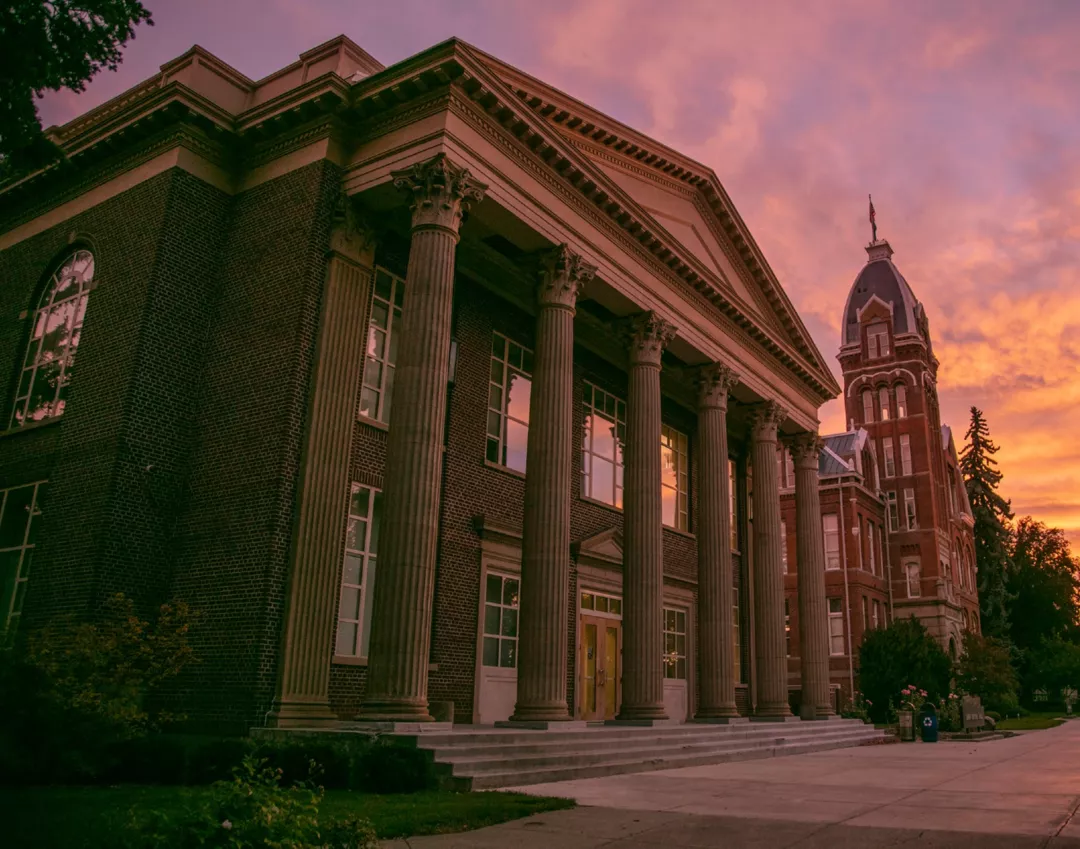

- Location
- Ellensburg, Washington
- Institution
- Public University
- Founded
- 1891
- Courses listed
- 9
Overview
About Central Washington University
Central Washington University’s (CWU) commitment to hands-on learning and discovery and individual attention takes students beyond the limits of the classroom and books. Students get to do what they’re studying in real-world, professional settings, which makes learning exciting and relevant.
Each year, CWU graduates thousands of well-educated citizens who are ready for high-demand careers in the workforce: construction management, accounting, engineering technology, teacher education, wine business, paramedicine, aviation, and more. CWU prepares students to succeed in a global economy through strong partnerships with 30 colleges and universities around the world. In recent years, CWU has welcomed more than 400 students from 36 countries to our campus.
Why Central Washington University (CWU)?
- Inclusiveness: CWU believes that diversity of peoples, cultures, and ideas is essential to learning, discovery, and creative expression. CWU believes that all faculty, staff, and students must be and must feel physically, professionally, and emotionally safe in order to fully engage in and benefit from the university experience.
- Facilities: CWU believes that state-of-the-art, safe, and attractive facilities enhance the working and learning environments of faculty, staff, and students. CWU also believes that state-of-the-art technologies provide leverage for the efforts of faculty, staff, and students.
- Safety: CWU believes it has a responsibility to providing a working and learning environment that is both physically and emotionally safe. CWU believes this responsibility extends to the off-campus environment of its full-time, residential students.
- Student success: CWU believes that student success is best achieved by providing supportive learning and living environments that encourage intellectual inquiry, exploration, and application. CWU believes that learning is best achieved in small classroom or group settings with ample opportunities for individualized instruction, mentoring, advising, and programming.
Campus life
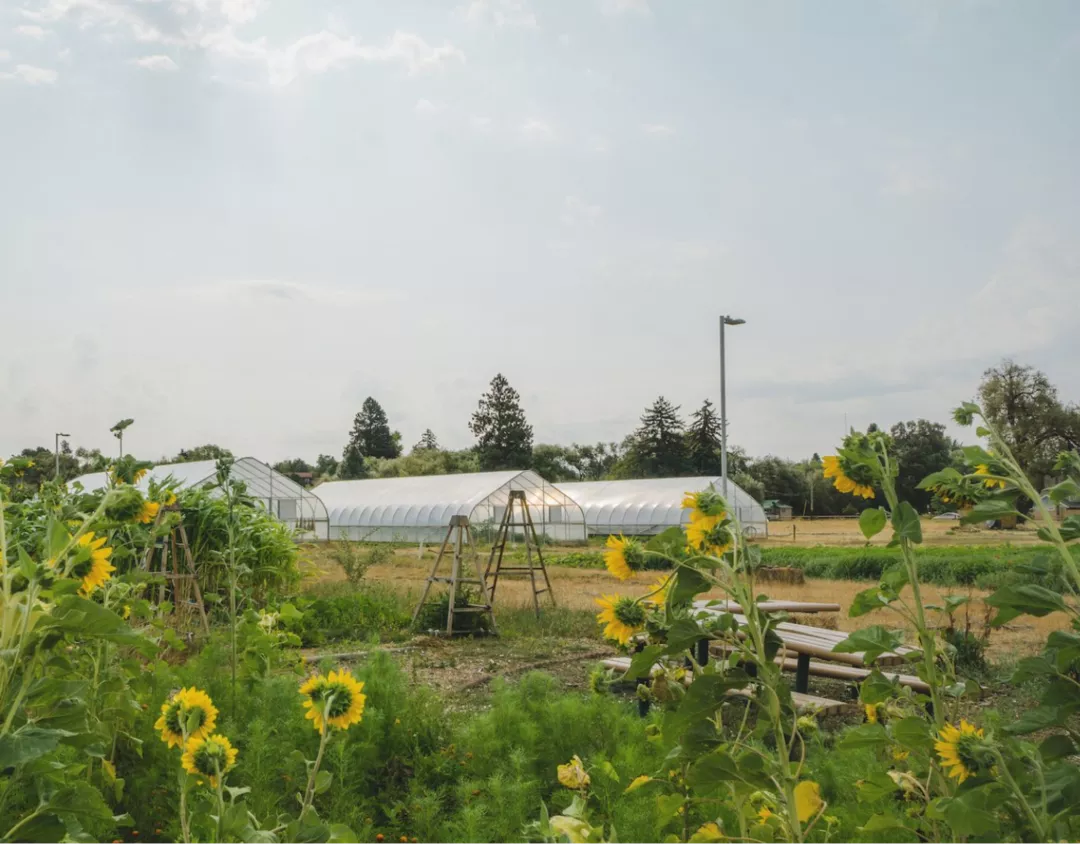
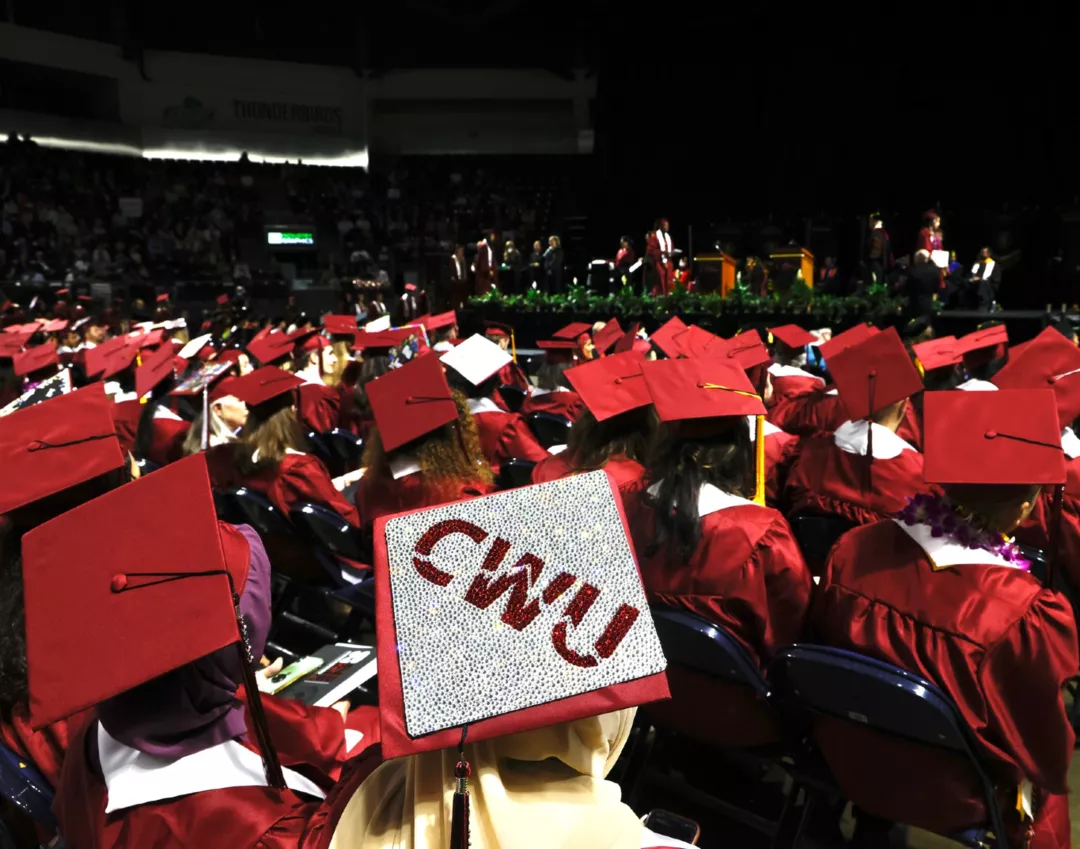
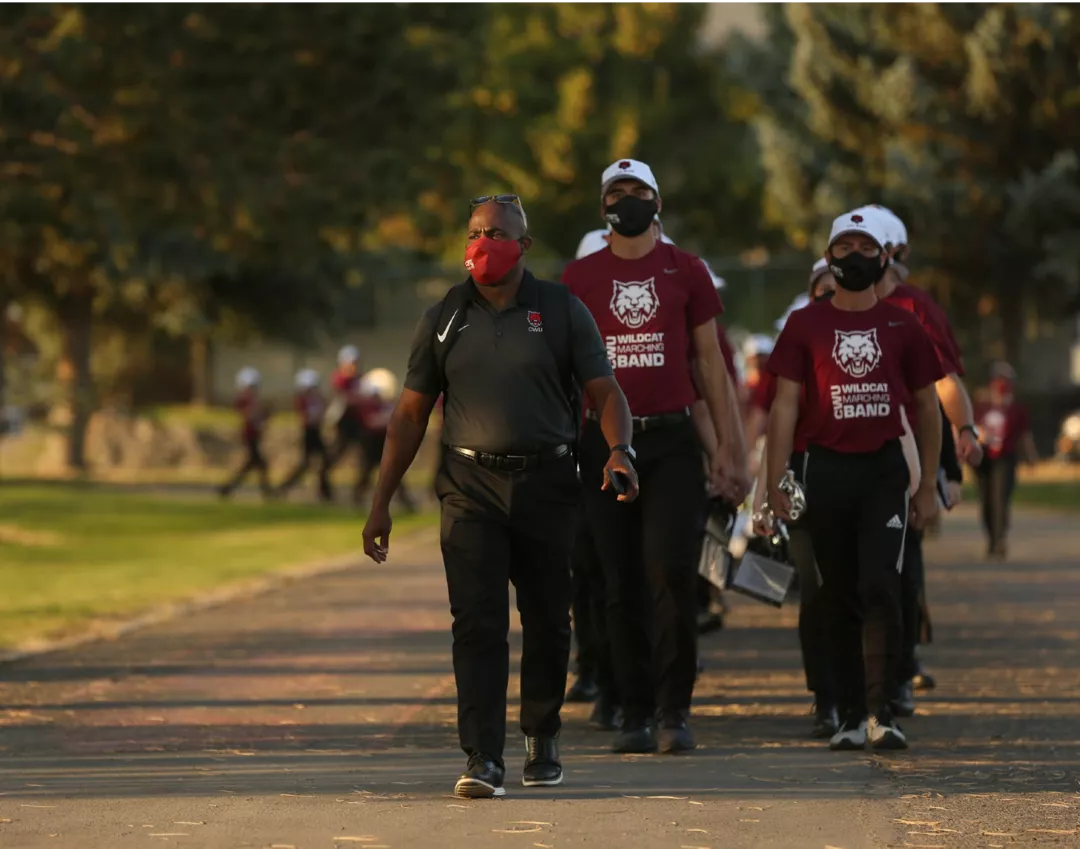
Programs
Courses at Central Washington University
Bachelor's · Computing & IT
Bachelor of Applied Science – Information Technology and Administrative Management – Cybersecurity (Co-op)
4 years
Next intake: Jan 2027
Apply by 30 Nov 2026
Bachelor's · Computing & IT
Bachelor of Applied Science – Information Technology and Administrative Management – Cybersecurity (Co-op)
4 years Next intake: Jan 2027 Apply by 30 Nov 2026
The cybersecurity specialization provides an opportunity for IT professionals to gain knowledge specific to the detection, protection, and recovery from attacks to an organization’s information assets. When combined with the leadership/management skills classes in the BAS core, this specialization will provide a thorough knowledge base for managers and technology leaders concerned with the operation and management of cybersecurity systems. This baccalaureate degree requires significant study in general education at the upper-division level. A professional/technical degree in a computer-related discipline is required for admission. Students not meeting the requirement of the degree in a computer-related discipline would need department permission.
Upon successful completion of this program, students will be able to:
- Demonstrate knowledge in core IT Management foundation areas.
- Demonstrate the ability to understand the significance of information technology management on individuals, organizations, and society.
- Have the ability to apply basic quantitative tools.
- Have the ability to communicate effectively.
- Demonstrate the ability to manage and lead.
- Apply advance use of current techniques, skills and tools necessary for information technology management.
Learn to detect, protect, and recover from attacks to an organization’s information assets. Public utility companies, national security agencies, food and water suppliers, financial services, and companies with intellectual property to protect are now hiring experts in this area. The skills to detect and recover from cyber-attacks, coupled with the team leadership, effective communication, and project management skills of the BAS core, will provide a thorough knowledge base for managers and technology leaders concerned with the operation and management of cybersecurity systems. Because of the technical IT skills classes involved in this specialization, a computer-related associate degree is suggested for admission.
Upcoming intakes: Jan 2027 · Apr 2027 · Sep 2027
Bachelor's · Computing & IT
Bachelor of Applied Science – Information Technology and Administrative Management – Information Technology (Co-op)
4 years
Next intake: Jan 2027
Apply by 30 Nov 2026
Bachelor's · Computing & IT
Bachelor of Applied Science – Information Technology and Administrative Management – Information Technology (Co-op)
4 years Next intake: Jan 2027 Apply by 30 Nov 2026
The Information Technology Specialization is designed to provide an opportunity for citizens who are information technology professionals with specific technical education to gain a baccalaureate degree in a timely fashion. This baccalaureate degree requires significant study in general education at the upper-division level. This specialization combines human-centered, management skills with IT technical skills - a requirement for those seeking management positions in the IT field.
Upon successful completion of this program, students will be able to:
- Demonstrate knowledge in core IT Management foundation areas.
- Demonstrate the ability to understand the significance of information technology management on individuals, organizations, and society.
- Have the ability to apply basic quantitative tools.
- Have the ability to communicate effectively.
- Demonstrate the ability to manage and lead.
- Apply advance use of current techniques, skills and tools necessary for information technology management.
Managing in an IT department or organization requires team leadership, project management, effective communication, and critical thinking skills. Those soft-skills when combined with the hard skills from an associate degree in network security, computer support technology, wireless technology, server support, CAD technology, etc. give students the best opportunity for advancement in their field. With specialization classes directed specifically to management in the IT environment, students have the best opportunity for furthering their careers. Requires a professional/technical associate degree with at least 40 credits in computer-related classes for admission.
Upcoming intakes: Jan 2027 · Apr 2027 · Sep 2027
Bachelor's · Engineering & Construction
Bachelor of Science – Aviation Management – Aviation Management (Optional Co-op)
4 years
Next intake: Jan 2027
Apply by 30 Nov 2026
Bachelor's · Engineering & Construction
Bachelor of Science – Aviation Management – Aviation Management (Optional Co-op)
4 years Next intake: Jan 2027 Apply by 30 Nov 2026
The Bachelor of Science (B.S.) in Aviation Management degree program provides a comprehensive understanding of aviation management. Students who complete this degree are prepared for a variety of careers in the aviation industry, such as airline, aircraft manufacturer, government agency, airport management, administration, operations, security, planning, aviation business management, terminal management, fixed base operations manager, and airport consulting. Students can concentrate on Aviation Management or Aviation Maintenance Management within the curriculum.
This specialization prepares graduates for a variety of administrative and management positions in aviation. Credit for flight training under 14CFR Part 61 or 141 as elective courses for this specialization must be approved by an aviation department advisor. Total college of business courses applied to this degree must not exceed 22 credits.
Upcoming intakes: Jan 2027 · Apr 2027 · Sep 2027
Bachelor's · Business & Management
Bachelor of Science – Business Administration – Business Analytics
4 years
Next intake: Jan 2027
Apply by 30 Nov 2026
Bachelor's · Business & Management
Bachelor of Science – Business Administration – Business Analytics
4 years Next intake: Jan 2027 Apply by 30 Nov 2026
Businesses are collecting massive amounts of data daily and need professionals to help them make sense of that data. This data is critical in helping companies maintain a competitive advantage by producing data-driven insights for decision-makers. The Business Administration: Business Analytics program prepares graduates to apply statistical, computing, and economics methods to help corporate managers make better business decisions. Students work with real-world business data from marketing, economics, finance, human resource management, supply chain management, etc., and analyze it using descriptive, predictive, and prescriptive business analytics methods. The program utilizes the latest business analytics software to manage data, develop visualization, and perform statistical and machine learning analyses. This program provides great preparation for business analytics, data science, and MBA graduate programs.
Upcoming intakes: Jan 2027 · Apr 2027 · Sep 2027
Bachelor's · Computing & IT
Bachelor of Science – Computer Science
4 years
Next intake: Jan 2027
Apply by 30 Nov 2026
Bachelor's · Computing & IT
Bachelor of Science – Computer Science
4 years Next intake: Jan 2027 Apply by 30 Nov 2026
In order to expose computer science majors to a broad theoretical base while emphasizing the laboratory experience, students will complete the CS core courses. To add depth and flexibility to their academic programs, with a faculty major advisor, students will work out a focus area and choose the elective courses approved by the department. A specific focus may be developed in many areas of computer science; examples include: software engineering, intelligent systems, computational science, computer graphics, visualization and computer vision, human-computer interaction, big data analytics, and cybersecurity.
Upon successful completion of this program, students will be able to:
- Demonstrate an understanding of each of the subject areas that define the discipline as well as the interrelationships that exist among them.
- Demonstrate the ability to utilize appropriate theoretical constructs for problem solving: definitions, and axioms, theorems, proofs, and interpretation of results.
- Have the ability to apply basic research methods in computer science.
- Have the ability to apply appropriate design constructs: requirements analysis and specification, design, implementation, and testing.
- Demonstrate knowledge of ethical codes and societal issues associated with the computing field.
- Demonstrate knowledge of recent technological and theoretical developments, general professional standards, and have an awareness of their own strengths and limitations as well as those of the discipline itself.
- Be aware of the history of computing, including those major developments and trends - economic, scientific, legal, political, and cultural - that have combined to shape the discipline.
- Have the necessary background for entry into graduate study.
- Have the ability to communicate effectively.
Upcoming intakes: Jan 2027 · Apr 2027 · Sep 2027
Master's · Education & Teaching
Master of Arts – English – Literary Studies and Teaching
2 years
Next intake: Apr 2027
Apply by 1 Jan 2027
Master's · Education & Teaching
Master of Arts – English – Literary Studies and Teaching
2 years Next intake: Apr 2027 Apply by 1 Jan 2027
The Literary Studies and Teaching specialization offers a rigorous, individualized program of advanced study of literature in English, while preparing graduates for careers in secondary school and college-level teaching, professional training and research, and writing in a range of disciplines and modalities. Students work closely with a faculty mentor and gain practical experience in teaching composition or literature. Students choose from an array of courses and select a thesis, exam, or portfolio option. Although allowed flexibility in their course of study, students are required to complete courses in transnational literary studies, literary and critical theory, literary genre, and teaching practice. Students may also select from approved elective courses in literary studies, linguistics, and writing. Students enter the program to further their understanding of literature, to strengthen their teaching qualifications, to broaden their writing experiences, and to prepare for doctoral work.
Upon successful completion of this program, students will be able to:
- Read and interpret diverse global literature’s in English.
- Describe and apply various literary critical theories and strategies.
- Demonstrate their knowledge of pedagogical strategies and methods appropriate to the teaching of English.
Upcoming intakes: Apr 2027 · Sep 2027 · Jan 2028
Master's · Arts, Media & Design
Master of Arts – English – Professional and Creative Writing
2 years
Next intake: Apr 2027
Apply by 1 Jan 2027
Master's · Arts, Media & Design
Master of Arts – English – Professional and Creative Writing
2 years Next intake: Apr 2027 Apply by 1 Jan 2027
The Professional and Creative Writing specialization provides students with the opportunity to practice writing in a wide variety of professional and creative genres. The program provides mentorship from award-winning writers working in poetry, fiction, and creative nonfiction; it also provides opportunities for students to hone their professional, rhetorical, and technical writing skills, using advanced research methods. Students develop individual courses of study, which culminate in a graduate-level portfolio of student writing. The program prepares students to begin writing-intensive careers, advance in the workplace, or prepare for further graduate programs; students awarded a teaching assistantship will also be prepared to teach at the college level. This specialization may be fully completed online.
Upon successful completion of this program, students will be able to:
- Employ inclusive and anti-racist practices in the disciplines of professional and creative writing, including collaborative feedback strategies for improving creative work.
- Incorporate critical mentoring and peer feedback in the development of professional-level final projects.
- Apply professional-level skills in writing and visual rhetoric through the creation of a web-presence for self-marketing.
Upcoming intakes: Apr 2027 · Sep 2027 · Jan 2028
Master's · Social Sciences & Psychology
Master of Arts – History
2 years
Next intake: Apr 2027
Apply by 1 Jan 2027
Master's · Social Sciences & Psychology
Master of Arts – History
2 years Next intake: Apr 2027 Apply by 1 Jan 2027
Master of arts students may choose from among three different options: thesis, project, or written examination. Please note that the thesis option, but not the project and written exam options, requires students to fulfill the department’s foreign language requirement.
Thesis: This option is appropriate for those who wish to pursue a PhD, either immediately after receiving the MA or at some point in the future. A thesis is a lengthy monographic work (usually 50 to 150 pages long) that addresses a topic of importance to historians in an original way.
Project: Occasionally, when student background or experience allows, and when faculty availability and expertise exists, students may complete a project in lieu of the traditional thesis. A project may take the form of a narrative history, a documentary film, or website, or some other effort approved by the committee.
Written examination: This option consists of an eight-hour written exam given at the end of one’s graduate career. It is designed for students who do not plan to pursue a PhD in history. It is especially useful for secondary school teachers who want to attain the MA in a timely manner.
Graduate Fields of Study
Whether pursuing the thesis, a project, or the exam option, students must choose a primary field of study from a list of fields approved by the faculty. Currently, the Department of History offers the following primary fields. Fields other than those listed need prior approval from the student’s advisor.
- Colonial/Revolutionary North America
- 19th Century U.S.
- 20th Century U.S.
- U.S. Foreign Relations
- U.S. West
- U.S. Environmental History
- U.S. Social History
- U.S. Cultural History
- Native American History
- Pacific Northwest History
- Modern Britain and the Empire
- Modern Ireland
- Modern France
- Modern East Asia
- Latin American cultural history
- Latin American religious history
- Latin American state formation
- Modern Mexico
- Colonial Mexico
- Pre-Imperial Russia
- Imperial Russia
- Russian Empire
- The Soviet Union
- African Health and Healing
- African Childhood and Education
- African Gender
- Urban Africa
- Pre-colonial Africa
- Colonial Africa
- Imperialism
- Environmental History
- Urban History
- Comparative Colonialism
- Comparative Gender
- Comparative Revolutions
- Comparative Borderlands
- Comparative Nationalism
Thesis Requirements and Timeline
Before starting research on a thesis, students must choose an advisor and submit to her/him a short research prospectus. The prospectus is a proposal of about 8-10 pages, including the following:
- The topic and scope of the thesis or project
- A tentative thesis statement
- The primary sources intending to be used
- Historiographical review, including a statement of a the work’s place within it
- Preliminary chapter outline.
Once the advisor approves the prospectus, they will assist in assembling a thesis committee composed of three historians or, in rare cases, two historians and one academic specialist from outside the department (as approved by the advisor). The prospectus must be approved by the student’s advisor and defended before the student’s assembled thesis committee before the end of the third quarter or before the completion of 30 credits, whichever comes last. By the end of the fourth full quarter, the student must submit at least one completed chapter of the thesis to the thesis director/advisor for approval. Students who do not meet the above deadlines for submission/approval of a prospectus and chapter may not be permitted to continue to pursue the thesis option. After the thesis is complete, the student will defend their findings before the committee. The final draft of the thesis (the draft to be defended) must be given to both secondary advisors at least three weeks in advance of the defense date.
Project Requirement and Timeline
As with the thesis, students who choose the project option must enlist an advisor and submit a short research prospectus (see thesis requirements, above, for prospectus guidelines). Once the advisor approves the prospectus, they will assist in assembling a thesis committee composed of three historians or, in rare cases, two historians and one academic specialist from outside the department (as approved by the advisor). The prospectus must be approved by the student’s advisor and defended before the student’s assembled committee before the end of the third quarter or before the completion of 30 credits, whichever comes last. By the end of the fourth full quarter, the student must submit a significant part of the project to their director/advisor for approval. Students who do not meet the above deadlines may not be permitted to further pursue the project option. After the project is completed, the student will defend their work before the committee.
Exam Requirements and Timeline
Students who choose the exam option must select an advisor by the beginning of the third quarter or before completion of 20 credits, whichever comes last. In advance of the exam, the exam director/advisor will work with the student to choose a committee and to delineate a major field (see list of fields above). In consultation with the advisor, the student will then develop a major field bibliography consisting of at least 30 books that must be read in preparation for the exam. The eight-hour exam will consist of three (3) written questions. After the exam is completed, the student must defend their answers before the committee.
Foreign Language Requirement
Upcoming intakes: Apr 2027 · Sep 2027 · Jan 2028
Master's · Arts, Media & Design
Master of Arts – Theatre – Theatre Production
2 years
Next intake: Apr 2027
Apply by 1 Jan 2027
Master's · Arts, Media & Design
Master of Arts – Theatre – Theatre Production
2 years Next intake: Apr 2027 Apply by 1 Jan 2027
The theatre production specialization is specifically designed for the working teacher who produces plays and would like to obtain an advanced degree through hands-on courses.
This program is specifically designed around the students work schedule with courses offered annually in July and a culminating project at the home school. The option of completing part of the course work during the academic year to complete the degree in a more expedited manner is also an option of qualified students. Since it was established in 1996, teachers representing 27 states and 12 nations have attended this unique limited-residency graduate program. Students join more than 45 other students each summer learning new skills to take back to the classroom and networking with other theatre artists and educators.
Most graduate courses supporting the theatre production specialization are offered over three summer sessions through the Summer Institute for Theatre Arts. Introductory courses are delivered online during the term prior to the summer session in which the student has been admitted.
Upon successful completion of this program, students will be able to:
- Demonstrate successful theatre practice and in meeting endorsement standards for Washington state, both in in theoretical discussion and as they produce their culminating project.
- Articulate the various theatre genres and apply each genre to specific works
- Critically analyze their own work and the work of their peers as it relates to individual students’ local situations.
- Critical thinkers with the ability to incorporate theatre practice into immediate productions and continue life-long learning.
Upcoming intakes: Apr 2027 · Sep 2027 · Jan 2028
No courses match your search.
Student life & support
Work while studying
International students can work part-time alongside their studies (subject to visa conditions).
Co-op & placements
Offers co-op or work-placement options in selected programs.
On-campus housing
On-campus residence is available.