
- Location
- Baltimore, Maryland
- Institution
- Private University
- Founded
- 1876
- Courses listed
- 3
Overview
About Johns Hopkins University
Johns Hopkins University opened in 1876 with the inauguration of its first president, Daniel Coit Gilman. Gilman believed that teaching and research go hand in hand—that success in one depends on success in the other—and that a modern university must do both well. In 145 years, Johns Hopkins University has not strayed from that vision. It is still a destination for excellent, ambitious scholars and a world leader in teaching and research. Distinguished professors mentor students in the arts and music, humanities, social and natural sciences, engineering, international studies, education, business, and the health professions.
Ranked No. 17 in the U.S., Johns Hopkins University’s acclaimed engineering program prepares international students for strong STEM futures in an array of growing careers across the globe, as well as career advancement opportunities for working professionals. As the first research university in the U.S., Johns Hopkins University provides international students with a collaborative and engaging learning environment. Guided by acclaimed faculty, Johns Hopkins University is committed to providing a rich student experience filled with inquiry, rigor, discovery, and expertise. Ground-breaking research from Hopkins Engineers includes the development of a water chlorination system, the creation of speech recognition technology, pioneering work on NASA’s Parker Solar Probe, and the creation of the ubiquitous global COVID tracking map.
When international students come to Johns Hopkins School of Engineering, they join a celebrated community of achievers: Alumni include businessman and philanthropist Michael Bloomberg. Former Homeland Security Chief Cyber Official Phyllis Schneck, NASA astronaut Reid Wiseman, and dozens of members of the National Academy of Sciences.
Why Johns Hopkins University
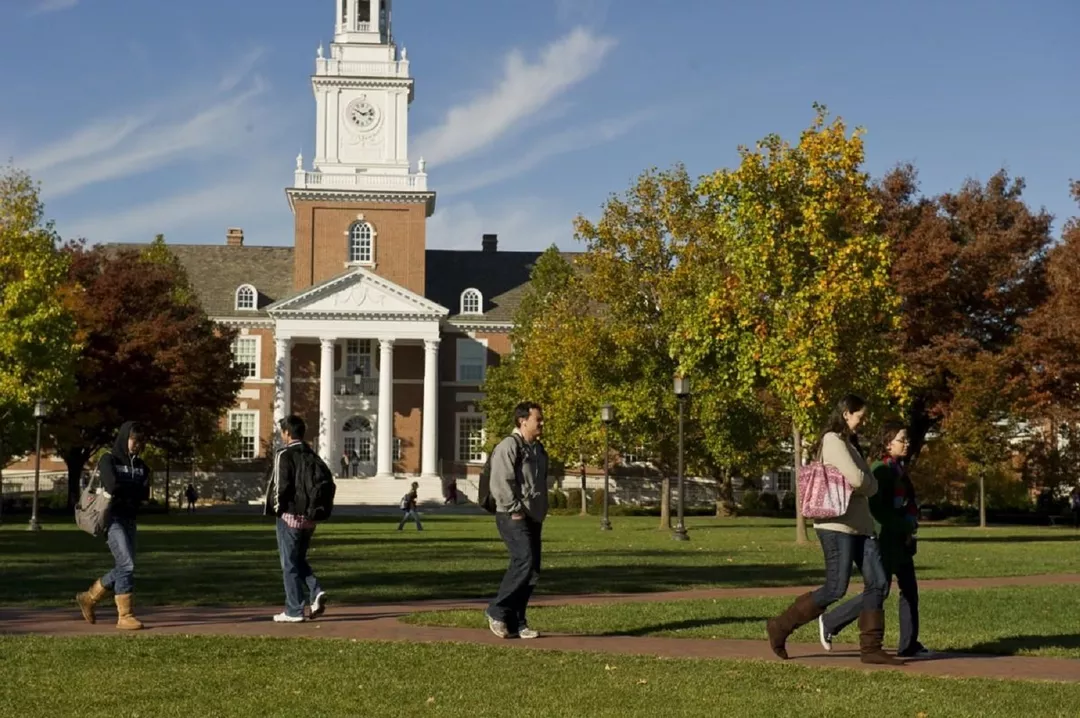
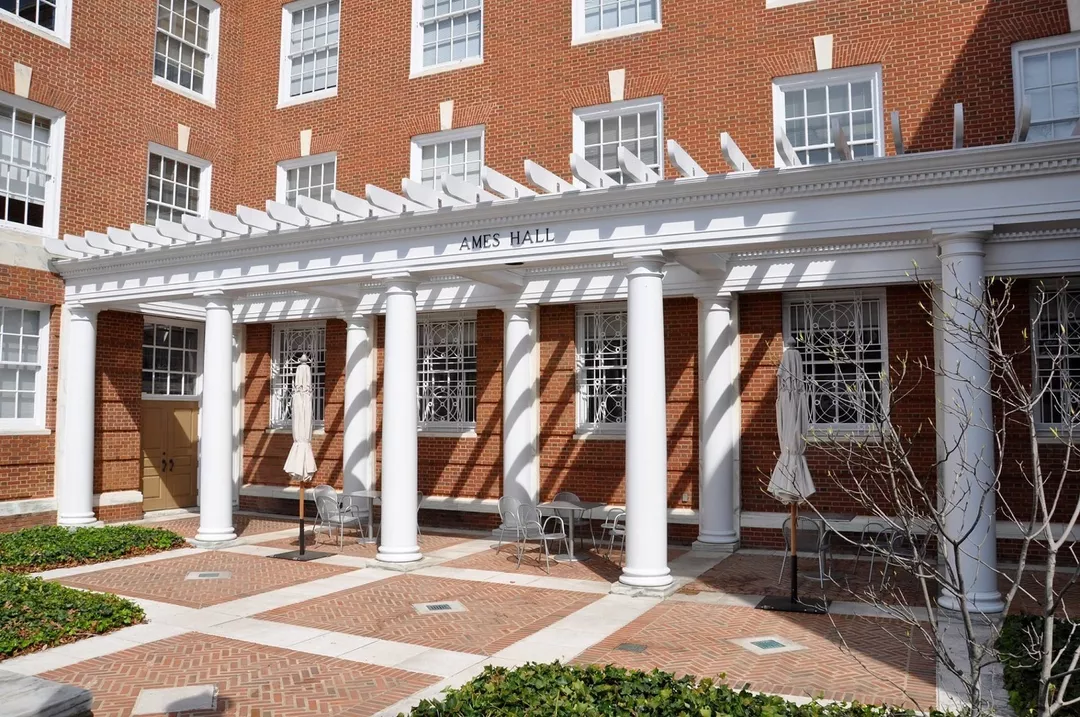
- Campus: Homewood is a traditional college setting in the heart of a big city: Think red-brick buildings and tree-lined pathways, an iconic clock tower, and expansive green quads in a city with a rich history that has blossomed into a hub of social, cultural, and economic activity. The campus is spacious and wooded, like a park.
- Arts & Culture: The Peabody Institute, the nation’s first conservatory, is home to some of the world’s most gifted musicians and puts on more than 50 events each year that are open to the public—orchestral and jazz concerts, operas and symphonic performances, Renaissance music and modern arrangements that defy description. Students can also choose from a handful of theater groups that perform everything from Shakespeare to improv comedy; or learn about acting, directing, and playwriting by pursuing an undergraduate minor in theatre arts. For the more visually inclined, Hopkins Center for Visual Arts gives students a studio environment to hone their painting, drawing, cartooning, design, and photography skills.
- Athletics: Johns Hopkins fields 24 varsity teams, 22 of which compete at the NCAA Division III level. The other two, men’s and women’s lacrosse, both compete in Division I. Beyond varsity sports, many students take part in one or more of the university’s 10 intramural sports, which include 3-on-3 basketball, flag football, innertube water polo, and wallyball. There are also approximately 40 club sports, including badminton, Brazilian jujitsu, cricket, ice hockey, ultimate frisbee, water polo, and—for aspiring wizards—Quidditch.
- Dining: Johns Hopkins takes pride in having one of the nation’s best campus dining programs. In fact, the university was recently ranked No. 6 on the list of “Best Colleges for Food” by Daily Meal, receiving praise for their menu and commitment to social responsibility. The university’s dining program includes gluten-free, nut-free, trans-fat-free, vegan- and vegetarian-friendly, and kosher-friendly options. Johns Hopkins is also serious about their responsibility to their community and the world. They use cage-free eggs, hormone-free milk, locally grown produce, biodegradable paper products, and will phase out the use of plastic straws at their Homewood eateries by September 2019.
Campus life



Programs
Courses at Johns Hopkins University
Master's · Engineering & Construction
Master of Science – Engineering Management
16 months
Next intake: Jan 2027
Apply by 1 Dec 2026
Master's · Engineering & Construction
Master of Science – Engineering Management
16 months Next intake: Jan 2027 Apply by 1 Dec 2026
The Master of Science in Engineering Management (MSEM) program at Johns Hopkins Whiting School of Engineering bridges the gap between technology and business by equipping students with the technical expertise and leadership skills they need to advance their career in the fast-paced world of technology.
The program offers a balanced number of engineering technical tracks and management courses, positioning students to innovate technically while building their professional acumen.
The Master of Science in Engineering Management (MSEM) degree program combines advanced course work in highly-specialized technical fields with a professional education in innovation, entrepreneurship, and management practices. Graduates of the program will be provided with the educational background to pursue professional management roles in industry.
Upcoming intakes: Jan 2027 · Aug 2027 · Aug 2028
Master's · Computing & IT
Master of Science in Engineering – Data Science
2 years
Next intake: Jan 2027
Apply by 1 Dec 2026
Master's · Computing & IT
Master of Science in Engineering – Data Science
2 years Next intake: Jan 2027 Apply by 1 Dec 2026
The Data Science Master’s degree at the Johns Hopkins University will provide the training in applied mathematics, statistics and computer science to serve as the basis for an understanding, and appreciation, of existing data science tools. The program aims to produce the next generation of leaders in data science by emphasizing mastery of the skills needed to translate real-world data-driven problems in mathematical ones, and then solving these problems by using a diverse collection of scientific tools
The final Capstone Experience in Data Science (EN.553.806) is a research-oriented project which must be approved by the research supervisor, academic advisor and the Internal Oversight Committee. The Capstone Experience can be taken in multiple semesters, but the total number of credits required for successful completion is six (6). The goal of the final course and written paper is to allow the student to apply data analysis techniques learned in the program, and possibly to extend those ideas to more general settings or to new application areas. Lastly, the paper will be summarized in a poster session organized at the end of each semester.
Upcoming intakes: Jan 2027 · Aug 2027 · Jan 2028
Master's · Science & Environment
Master of Science in Engineering – Financial Mathematics
16 months
Next intake: Aug 2027
Apply by 12 Jul 2027
Master's · Science & Environment
Master of Science in Engineering – Financial Mathematics
16 months Next intake: Aug 2027 Apply by 12 Jul 2027
The financial mathematics master’s program at Johns Hopkins is offered through the Department of Applied Mathematics and Statistics as a Master’s of Science in Engineering (MSE) degree. Students with a strong quantitative undergraduate background are encouraged to apply for admission to the program.
The Master’s program in Financial Mathematics will provide a solid foundation in applied mathematics, providing the basis for an understanding and appreciation of existing models commonly used in financial applications and inferential and computational tools for developing their solution. The program will also furnish the appropriate insights in Finance where quantitative skills are most germane. The combination of these elements will create a springboard for addressing today’s quantitative challenges in finance as well as provide the preparation to meet the challenges of the future.
Learning Objectives for Financial Mathematics Master’s students:
- Gain knowledge of financial markets and asset classes, how markets are regulated, how they are structured and operate
- Gain knowledge of investments, portfolios, asset allocation, risk management
- Gain knowledge of how financial derivatives are modeled and valued
- Gain an ability for areas of applied mathematics that are most useful in real financial application (statistical analysis, time series analysis, optimization, Monte-Carlo methods, stochastic processes)
- Develop communications skills
- Develop computational skills
- Gain insight as to how this knowledge and these skills integrate in the workplace environment
Upcoming intakes: Aug 2027 · Aug 2028
No courses match your search.
Student life & support
Work while studying
International students can work part-time alongside their studies (subject to visa conditions).
Co-op & placements
Offers co-op or work-placement options in selected programs.
On-campus housing
Students typically arrange off-campus or homestay accommodation.
Accommodation options
Students need to plan their accommodations well in advance of their arrival as all accommodation options fill up quickly, well before the start of the semester.
On-Campus Residence Accommodations
On-Campus residence accommodations are provided per discretion by the school.
Off-Campus Accommodations
The local area has a variety of off-campus rental housing options including single homes, duplexes, apartments and rooms for rent. Students wishing to live off-campus need to research availability on their own and should arrive well before the start of term to do so.
Homestay
There are a wide variety of homestay options available, and our partners do their best to match students and hosts according to their interests and preferences. Homestay hosts include single people, young couples with children and pets, and older couples. All homestay accommodations have been inspected, and all adults in the home have completed a required criminal reference check.