

- Location
- Bozeman, Montana
- Institution
- Public University
- Founded
- 1893
- Courses listed
- 6
Overview
About Montana State University
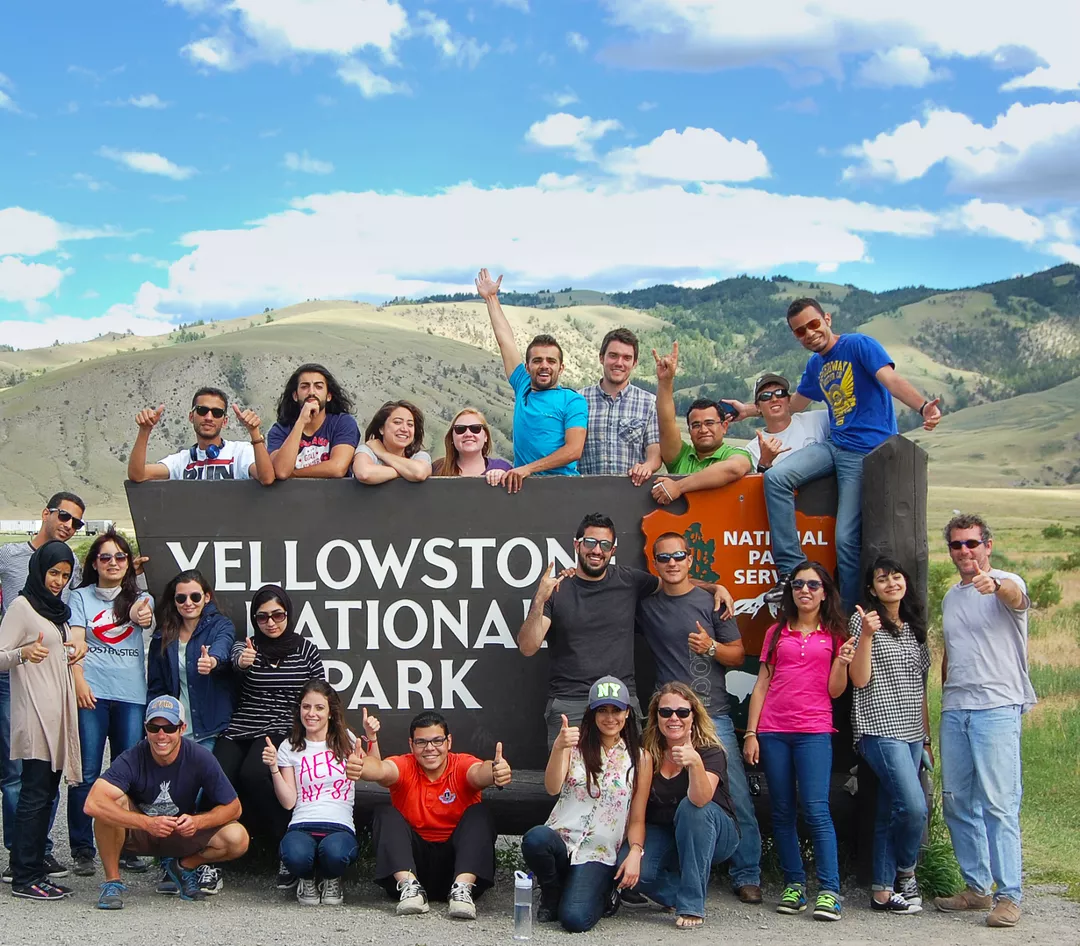
MSU is a public university of more than 16,000 students including over 500 international students from 70+ countries. MSU is especially known for its top-quality, fully accredited programs. In a class of its own, MSU is among the top 3% of colleges and universities for research expenditures, and is also classified by the Carnegie Foundation as an institution with a high undergraduate profile.
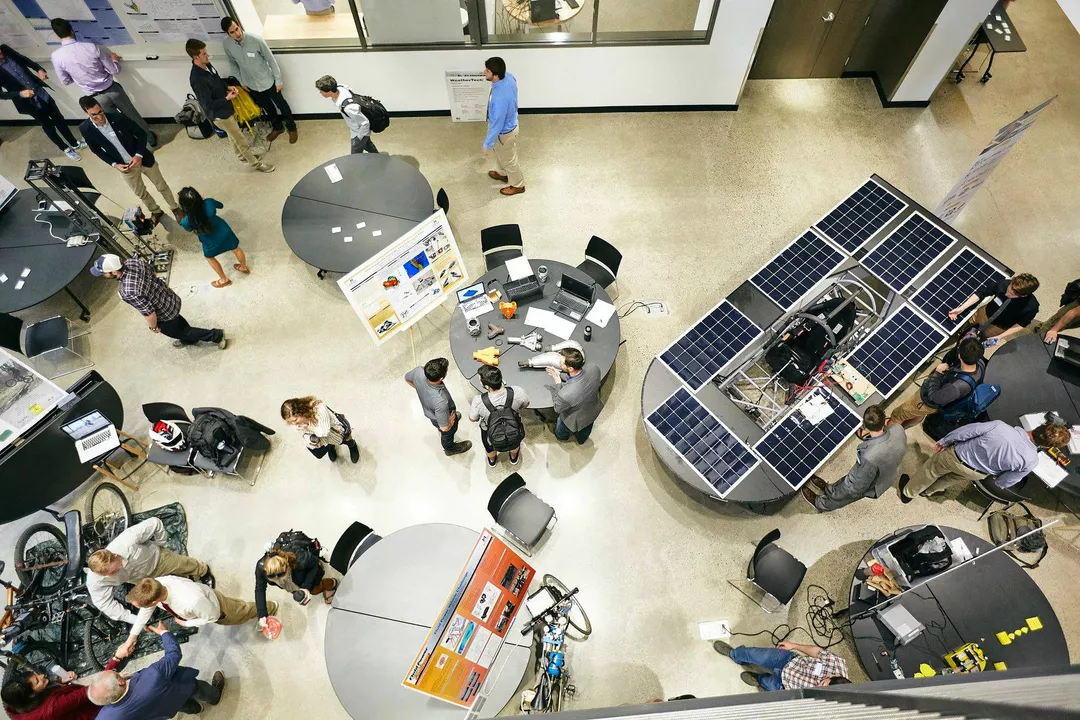
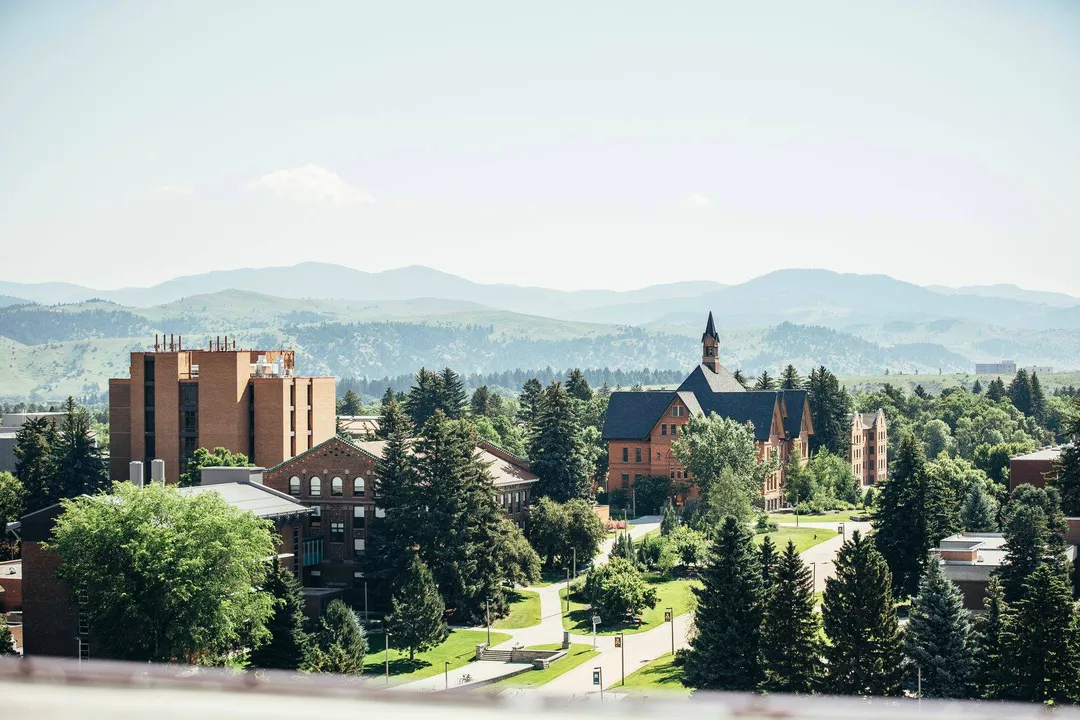
This means that undergraduates at MSU get research opportunities typically reserved for graduate students at other institutions. Plus, MSU’s location at the crossroads between Yellowstone National Park and some of the best skiing in America offers students a classroom, laboratory, and playground unlike any other in the world. Personal attention, scholarships, academic and career counselling, easy transfer credits make MSU a great place to study in the safe and friendly college town of Bozeman.
Montana State University offers the following International Student Scholarships:
- Up to $5,000 - Freshman Scholarship - No SAT/ACT
- Up to $8,000 - Transfer Scholarship - No SAT/ACT
- Up to $15,000 - Merit-Based Scholarship with SAT/ACT
- Up to $25,000 - Presidential Scholarship
- International Bobcat Alumni Scholarship (Freshman and Transfer) - $2,000
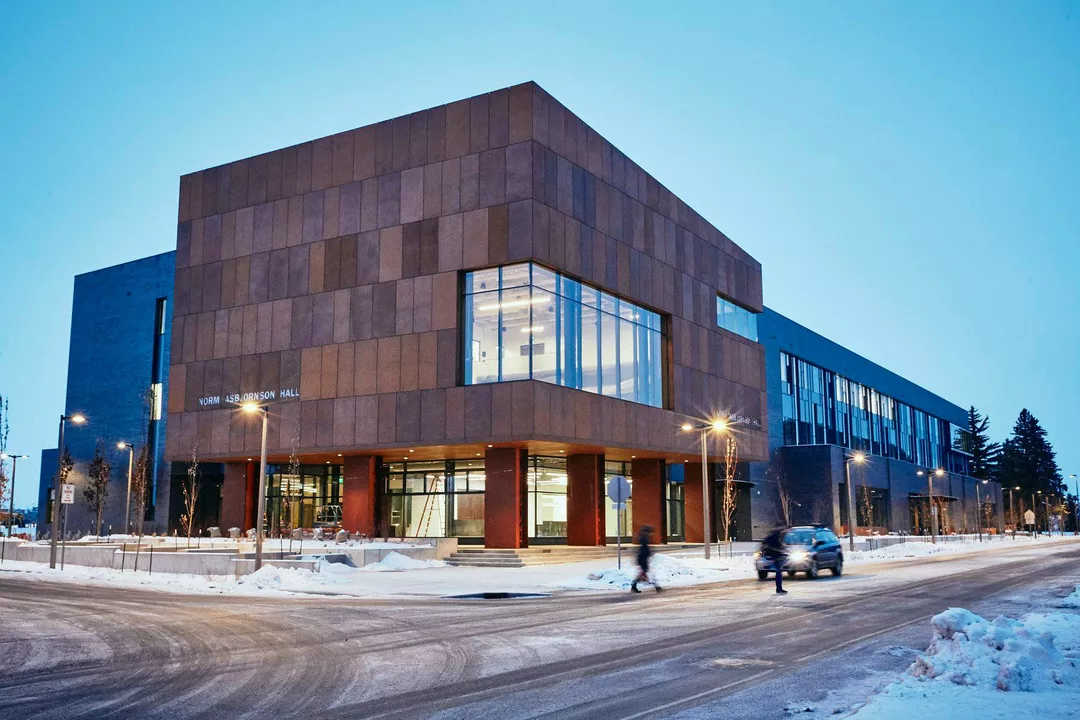
Campus life

Programs
Courses at Montana State University
Bachelor's · Computing & IT
Bachelor of Science – Computer Engineering
4 years
Next intake: Aug 2027
Apply by 1 Jul 2027
Bachelor's · Computing & IT
Bachelor of Science – Computer Engineering
4 years Next intake: Aug 2027 Apply by 1 Jul 2027
Program Description
The Electrical and Computer Engineering Department offers an accredited program for the Bachelor of Science Degree in Computer Engineering (BSCpE).
In the fast-paced field of computers, the computer engineering graduate will be prepared for careers in exciting innovative technologies including embedded systems, programmable logic, hardware/software co-design, and digital signal processing. With increased processor capacity and processing speeds, re-programmable logic devices offer far-reaching opportunities for the computer engineer to create new applications unheard of today. The computer engineer uses knowledge of both electronics hardware and software to achieve state-of-the-art solutions, often involving programmable logic devices and microprocessors. The computer engineering curriculum is designed to prepare students for engineering careers where programming and software skills are blended with the understanding of hardware design.
The computer engineering program at MSU is interdisciplinary and incorporates substantial coursework from both the Electrical and Computer Engineering Department and the Computer Science Department. All students in the Electrical and Computer Engineering Department develop common skills in basic science, mathematics, basic electronics and circuits; however, the computer engineering student diverges from the electrical engineering student by taking more computer science and computer architecture courses, as well as a full complement of courses in microprocessors and programmable devices.
In the senior year each computer engineering student takes part in a capstone design project. This project allows the student to function as part of a team on a real world problem, and the student, in addition to accomplishing the design, must also communicate his or her work in both a written paper and an oral presentation. All projects are intended to bring the student's academic training to a logical conclusion and further develop the problem-solving skills and the communication skills of the computer engineering graduate.
The computer engineering program educational outcomes are:
- An ability to identify, formulate, and solve complex engineering problems by applying principles of engineering, science and mathematics
- An ability to apply engineering design to produce solutions that meet specified needs with consideration of public health, safety, and welfare, as well as global, cultural, social, environmental, and economic factors.
- An ability to communicate effectively with a range of audiences.
- An ability to recognize ethical and professional responsibilities in engineering situations and make informed judgments, which must consider the impact of engineering solutions in global, economic, environmental, and societal contexts.
- An ability to function effectively on a team whose members together provide leadership, create a collaborative and inclusive environment, establish goals, plan tasks, and meet objectives.
- An ability to develop and conduct appropriate experimentation, analyze and interpret data, and use engineering judgment to draw conclusions.
- An ability to acquire and apply new knowledge as needed, using appropriate learning strategies.
Upcoming intakes: Aug 2027 · Jan 2028 · Aug 2028
Bachelor's · Computing & IT
Bachelor of Science – Computer Science – Interdisciplinary Option
4 years
Next intake: Aug 2027
Apply by 1 Jul 2027
Bachelor's · Computing & IT
Bachelor of Science – Computer Science – Interdisciplinary Option
4 years Next intake: Aug 2027 Apply by 1 Jul 2027
Program Description
A computer science degree is highly marketable. Between 2010 and 2020, one study projects that there will be a shortfall of 32 million technically specialized professionals in the U.S., Europe, Japan, China and India. Consequently, students who graduate with a bachelor's degree in CS are in high demand. The average starting salary is $65,000.
Our curriculum is designed with considerable flexibility, due to the numerous types of computer science jobs that exist. The bachelor's degree provides every student with a strong fundamental understanding of the field. Students may then select from exciting computer science electives such as artificial intelligence, computational biology, computer networks, databases, machine learning, robotics, operating systems, software engineering, web design and special topics courses. Students who complete a bachelor's degree will find themselves both highly marketable and well-prepared for graduate school.
Interdisciplinary Option
Many opportunities and challenges lie at the intersection of technology and other fields. The interdisciplinary option allows a student to pursue a minor of choice such as Entrepreneurship or Japanese Studies.
Upcoming intakes: Aug 2027 · Jan 2028 · Aug 2028
Bachelor's · Computing & IT
Bachelor of Science – Computer Science – Professional Option
4 years
Next intake: Aug 2027
Apply by 1 Jul 2027
Bachelor's · Computing & IT
Bachelor of Science – Computer Science – Professional Option
4 years Next intake: Aug 2027 Apply by 1 Jul 2027
Program Description
A computer science degree is highly marketable. Between 2010 and 2020, one study projects that there will be a shortfall of 32 million technically specialized professionals in the U.S., Europe, Japan, China and India. Consequently, students who graduate with a bachelor's degree in CS are in high demand. The average starting salary is $65,000.
Our curriculum is designed with considerable flexibility, due to the numerous types of computer science jobs that exist. The bachelor's degree provides every student with a strong fundamental understanding of the field. Students may then select from exciting computer science electives such as artificial intelligence, computational biology, computer networks, databases, machine learning, robotics, operating systems, software engineering, web design and special topics courses. Students who complete a bachelor's degree will find themselves both highly marketable and well-prepared for graduate school.
Professional Option
The professional option allows a student to delve more deeply into both computer science and related technical areas.
Upcoming intakes: Aug 2027 · Jan 2028 · Aug 2028
Bachelor's · Engineering & Construction
Bachelor of Science – Financial Engineering
4 years
Next intake: Aug 2027
Apply by 1 Jul 2027
Bachelor's · Engineering & Construction
Bachelor of Science – Financial Engineering
4 years Next intake: Aug 2027 Apply by 1 Jul 2027
Program Description
The Bachelor of Science in Financial Engineering (FE) is a multidisciplinary major that emphasizes the creation of new financial economic instruments as well as the combining of existing instruments to manage risk, create strategic business opportunities, lower costs, and access new markets. Risk management is essential in today’s highly leveraged domestic markets as well as the global business environment. Successful market, credit, and production risk management requires complex financial economic modeling and analysis.
The objective of the program is to provide students with the necessary tools to help manage a business’s financial risks. In keeping with this objective, financial engineering majors undertake rigorous training in financial economics, engineering mathematics, and actuarial methods:
- Mathematics similar to engineering but expanded to include more statistics and probability theory
- Financial economics with a solid background in classical economic theory and markets (capital, commodity, and derivative)
- Software engineering and modeling
Financial engineers are commonly employed in banking, corporate finance, securities, insurance, manufacturing, agricultural businesses, and other industries that require sophisticated financial analysis skills. To remain competitive, regional industries as well as national and international firms will employ financial engineers because of the increased complexity and sophistication of business risk management. Due to their rigorous training, the demand for financial engineering graduates is high with a forecasted growth rate of 18 to 20% annually over the next seven years, according to the Occupational Outlook Handbook. The financial engineering major is a joint program of the Department of Mechanical and Industrial Engineering and the Department of Agricultural Economics and Economics.
Upcoming intakes: Aug 2027 · Jan 2028 · Aug 2028
Master's · Computing & IT
Master of Science – Data Science
2 years
Next intake: Jan 2027
Apply by 1 Jan 2027
Master's · Computing & IT
Master of Science – Data Science
2 years Next intake: Jan 2027 Apply by 1 Jan 2027
The Master's of Science in Data Science degree at Montana State University is interdisciplinary program that draws on courses in three programs: Computer Science, Mathematics, and Statistics. The broad goal is to provide students with foundational training in data analysis, with equal emphasis on the principles of computer science, mathematics, and statistics, and the ability to apply these principles to a range of data-driven problems. More specifically, the learning outcomes for graduates of the program are:
- Demonstrate knowledge of essential deterministic, randomized and approximation algorithms for data classification and clustering, dimensionality reduction, regression, and optimization.
- Demonstrate knowledge in the principles and practice of statistical experimental design, statistical inference, and decision theory.
- Demonstrate the ability to take a real-world data analysis problem, formulate a conceptual approach to the problem, match aspects of the problem to previously learned theoretical and methodological tools, break down the solution into a step-by-step approach, and implement a working solution in a modern software language.
- Communicate data science problems, analyses, and solutions effectively to both specialists and non-specialists through the use of effective technical writing, presentations, and data visualizations, and teamwork and collaboration.
Upcoming intakes: Jan 2027 · May 2027 · Aug 2027
Master's · Science & Environment
Master of Science – Physics
2 years
Next intake: Aug 2027
Apply by 10 Jan 2027
Master's · Science & Environment
Master of Science – Physics
2 years Next intake: Aug 2027 Apply by 10 Jan 2027
Program Description
Stimulating instruction and research are hallmarks of the Department of Physics at Montana State University which has been educating creative and productive scientists since 1964. The MSU physics program offers Master of Science and Doctor of Philosophy degrees. The physics faculty, with over 30 members, is committed to maintaining close contact with its more than 60 graduate students and postdoctoral scientists. As you read our literature, explore our web site, and talk to our students you will discover a faculty recognized worldwide for its research and teaching.
The Department of Physics grants the Master of Science Degree under two options: thesis option (plan A) or course work option (plan B). The thesis option requires course work in addition to a thesis defense. The requirement for a course work option is only course work. The course work Master’s is the Master’s degree that you receive en route to your Ph.D. You can find more information about the Master's program here.
Upcoming intakes: Aug 2027 · Aug 2028
No courses match your search.
Student life & support
Work while studying
International students can work part-time alongside their studies (subject to visa conditions).
Co-op & placements
Offers co-op or work-placement options in selected programs.
On-campus housing
Students typically arrange off-campus or homestay accommodation.
Accommodation options
Students need to plan their accommodations well in advance of their arrival as all accommodation options fill up quickly, well before the start of the semester.
On-Campus Residence Accommodations
On-Campus residence accommodations are provided per discretion by the school.
Off-Campus Accommodations
The local area has a variety of off-campus rental housing options including single homes, duplexes, apartments and rooms for rent. Students wishing to live off-campus need to research availability on their own and should arrive well before the start of term to do so.
Homestay
There are a wide variety of homestay options available, and our partners do their best to match students and hosts according to their interests and preferences. Homestay hosts include single people, young couples with children and pets, and older couples. All homestay accommodations have been inspected, and all adults in the home have completed a required criminal reference check.