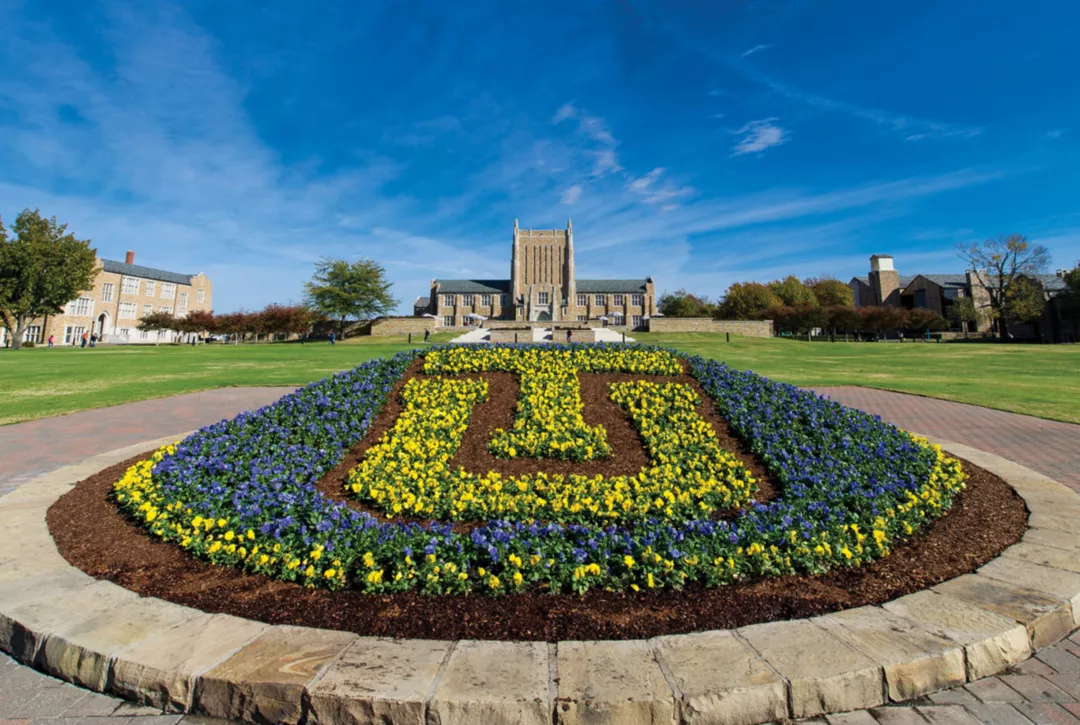

- Location
- Tulsa, Oklahoma
- Institution
- Private University
- Founded
- 1894
- Courses listed
- 5
Overview
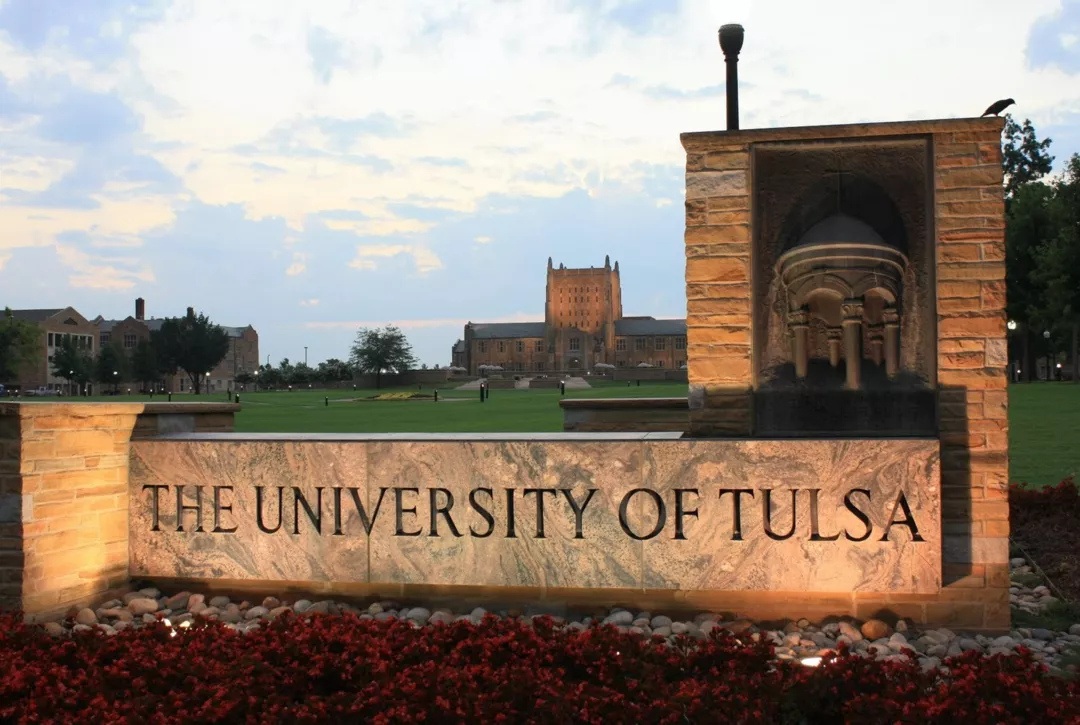
About The University of Tulsa (TU)
The University of Tulsa (TU) traces its roots to the Presbyterian School for Indian Girls, a small boarding school in Muskogee, Indian Territory, which was founded in 1882. In 1894, the Board of Home Missions of the Presbyterian Church elevated the academy’s status and chartered it as Henry Kendall College, a name that honored the first general secretary of the Home Missions Board. The first classes in the new college were held on Sept. 12, 1894.
Today, TU operates as an independent, nondenominational university. A top-rated research institution, TU welcomes students from many different faiths and countries. The TU campus fosters a rich, diverse experience for students and faculty regardless of religious or cultural background through a strong belief in mutual respect and understanding. TU students are divided among programs in five colleges: Engineering & Natural Sciences, 39%; Arts & Sciences, 21%; Business, 19%; Health Sciences, 12%; and Law, 9%. The most popular undergraduate majors are Mechanical Engineering, Computer Science, Biology, Nursing, Exercise & Sport Science, Psychology, Finance and Business Management.
Facing a higher education landscape with fewer students, tighter budgets and stiffer competition—during a global pandemic—The University of Tulsa in January 2021 adopted a new five-year strategic plan that sets the university on a clear path to an exciting future. The plan builds on TU’s strengths as a highly regarded, small, private research institution with deep roots in the energy industry and a hunger for innovation. It recognizes the global need for cyber leaders and charts a course for growing the talent to supply the next generation of researchers and entrepreneurs in critical fields. It proposes a level of student support that few institutions can offer. And it depends upon the recognition that all degrees—particularly those in STEM and professional disciplines—are exponentially more valuable with a firm foundation in the liberal arts.
As TU enters into implementation of this plan, they also celebrate the shared values it brings forward, including their commitment to diversity, equity and inclusion—in word and deed—and continuing to bind the future of the university to the city that shares its name. As TU succeeds, so does Tulsa.
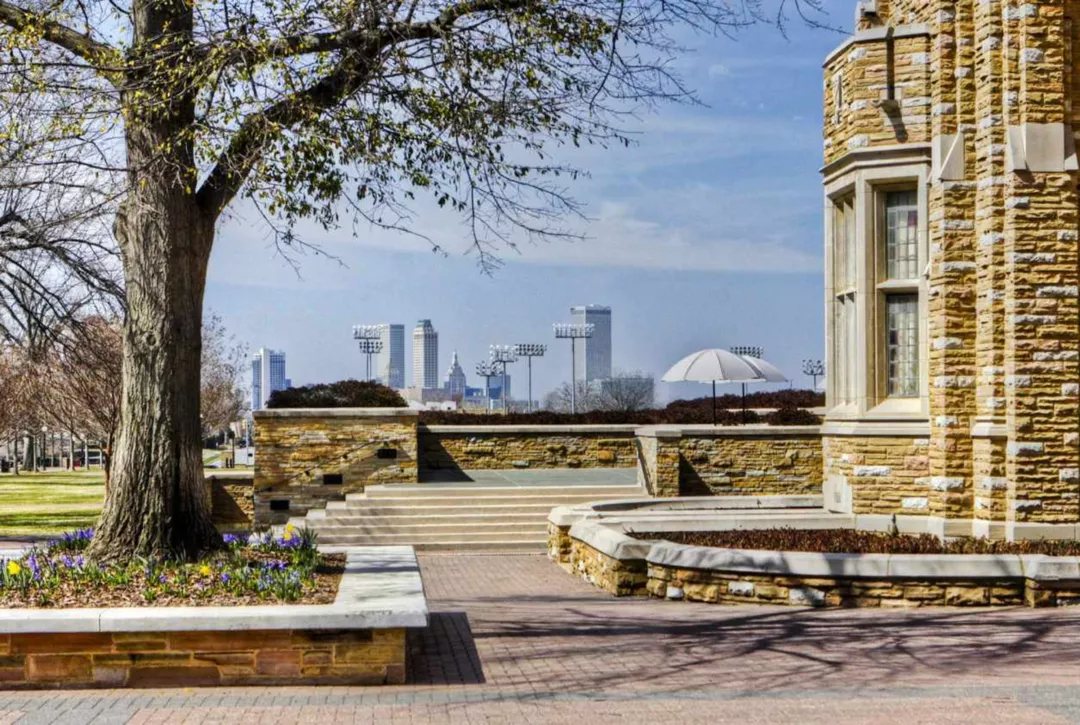
With a population of 400,000, Tulsa, Oklahoma is an important center of commerce and industry with a thriving arts community. Tulsa’s entertainment options include professional sports, fine and performing arts, festivals, zoos, a water park, bike and hiking trails, rivers and lakes.
Tulsa boasts one of the nation’s most extensive collections of Art Deco architecture. Beyond Tulsa’s Deco District, downtown offers several other micro-districts — each with its own sense of place and things to do. From homegrown barbecue and Tex-Mex to fine French and Italian cuisine, Tulsa has restaurants to fit every taste and budget. Fresh sushi, independent coffee shops and vegan delicacies line Brookside while food trucks are a staple around Guthrie Green. From food to fashion, Tulsa offers a multitude of shopping experiences. Explore eclectic boutiques and pop-up shops near campus and downtown. Woodland Hills Mall is more than 1 million square feet of retail heaven with 165-plus stores. Tulsa also has a rich local music history, literally pioneering genres from western swing in the 1930s to the ‘Tulsa Sound’ in the 1970s to pop and alternative music today. Today, Tulsa has outstanding venues to hear live music.
Why the University of Tulsa?
- Research Opportunities: Tulsa Undergraduate Research Challenge involves the University of Tulsa’s youngest students in advanced research opportunities and faculty mentorship.
- Renowned for STEM: The University of Tulsa’s College of Engineering and Natural Sciences has been ranked among the top 25 STEM Colleges by Forbes America’s Best Colleges.
- Challenge Conventions: Oklahoma Center for the Humanities at the University of Tulsa promotes critical thought, ethical inquiry, bold imagination and respect for the diversity of human experience.
- Education for the Digital Age: The University of Tulsa’s Tandy School of Computer Science is recognized as a designated Center of Academic Excellence in Information Assurance, Cyber Defense Education, AI Research and Cyber Operations.
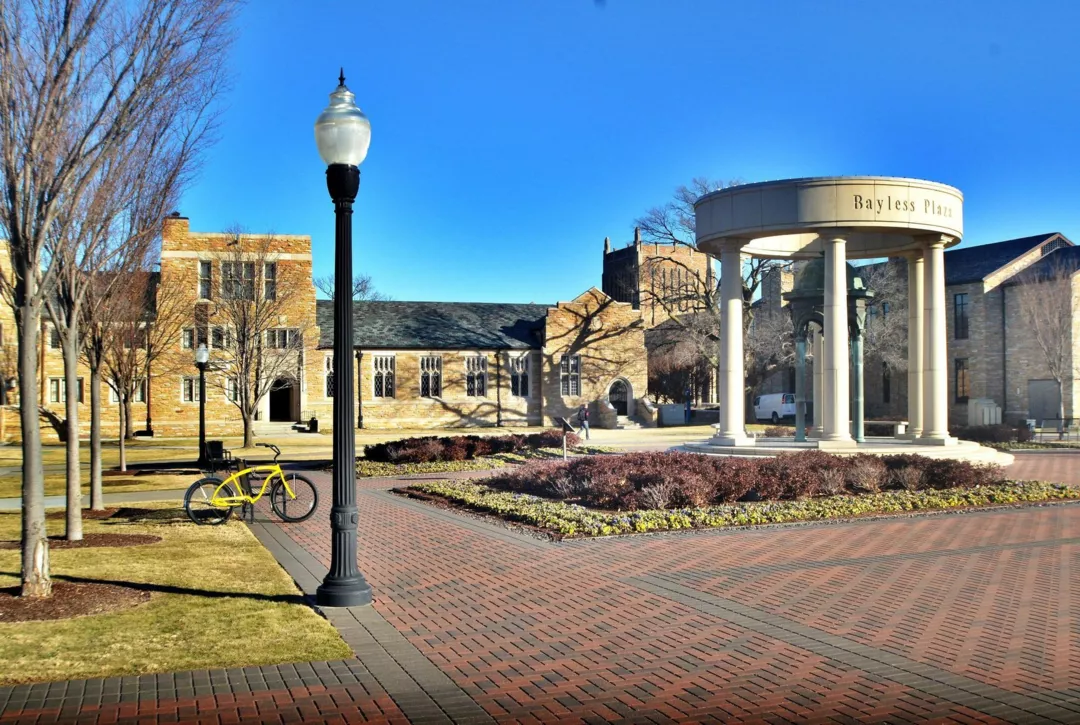
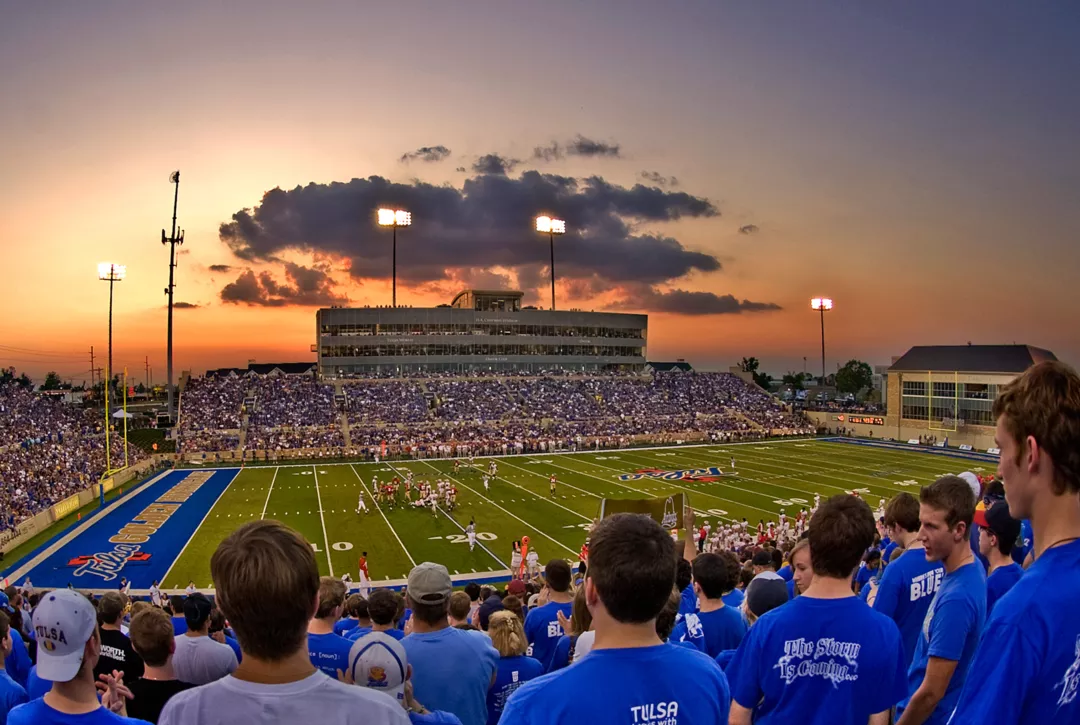
- Recreation and Exercise: The University of Tulsa’s 200+ acre campus offers ample green spaces for autumn strolls, winter snowmen or springtime soccer; students can also exercise and play sports in the Collins Fitness Center, or cheer for 17 Golden Hurricane Division One intercollegiate teams.
Campus life
Programs
Courses at The University of Tulsa (TU)
Bachelor's · Computing & IT
Bachelor of Science – Computer Science
4 years
Next intake: Jan 2027
Apply by 30 Nov 2026
Bachelor's · Computing & IT
Bachelor of Science – Computer Science
4 years Next intake: Jan 2027 Apply by 30 Nov 2026
A dynamic combination of creativity and technical knowledge, computer science is a highly valued commodity in today’s job market. The University of Tulsa’s Bachelor of Science - Computer Science is accredited by the Computing Accreditation Commission of ABET, Inc.
All students in computer science are introduced to the fundamental areas of computer science in the first two years of their degree: programming skills, computing ethics, data structures, and comparative programming languages. Basic computer science is completed in the final two years and may include topics such as hardware and computer logic, computer graphics, theory of computation, compiler construction, operating systems, computer architecture, the design and implementation of databases, software engineering, networks, artificial intelligence, computer security, game programming, web design, systems administration, robotics, bioinformatics, and human web interfaces.
Class opportunities are also available for students interested in applying their skills through community outreach activities that share computer science and information technology with local elementary students.
Computer science skills are growing in demand throughout organizations in every sector of the global economy. A computer science minor can open up career opportunities in the growing digital landscape.
Students can gain a foundation in mathematics and the sciences with core computer science courses.
Upcoming intakes: Jan 2027 · Aug 2027 · Jan 2028
Bachelor's · Business & Management
Bachelor of Science in Business Administration – Accounting
4 years
Next intake: Jan 2027
Apply by 30 Nov 2026
Bachelor's · Business & Management
Bachelor of Science in Business Administration – Accounting
4 years Next intake: Jan 2027 Apply by 30 Nov 2026
Accountants are generally responsible for creating, analyzing and communicating financial information for companies, organizations, individual clients and government agencies. Accurate recording and reporting of financial data and business transactions comprise a major portion of an accountant’s workday.
With an increasingly global economy, greater scrutiny of financial data and an expected gap in the workforce due to retiring baby boomers, demand for accountants is on the rise. The Bureau of Labor Statistics forecasts employment of accountants and auditors to grow faster than the national average of all occupations.
The University of Tulsa’s accounting curriculum keeps pace with changes in the accounting industry, preparing students to excel in accounting roles for a wide range of organizations, from public accounting firms to government agencies. The accounting program is designed to educate students in all areas of business—
economics, finance, management, marketing, international business and computer information systems— because the accounting profession involves interaction with all these areas.
The Collins College of Business offers a B.S.B.A. degree with a major in accounting as well as a Master of Accountancy degree. Exceptional undergraduate accounting students can apply for the 4+1 MAcc program to begin graduate coursework while completing their bachelor’s degree.
Outside the classroom, accounting students have opportunities for networking and involvement in organizations such as Beta Alpha Psi.
Upcoming intakes: Jan 2027 · Aug 2027 · Jan 2028
Bachelor's · Computing & IT
Bachelor of Science in Business Administration – Business Information Systems
4 years
Next intake: Jan 2027
Apply by 30 Nov 2026
Bachelor's · Computing & IT
Bachelor of Science in Business Administration – Business Information Systems
4 years Next intake: Jan 2027 Apply by 30 Nov 2026
Organizations are constantly seeking individuals who understand how technology can be used to improve business. At the University of Tulsa, the Computer Information Systems (CIS) curriculum provides students with both business understanding and technical aptitude to allow them to successfully identify, leverage, and manage technology within a business environment.
The CIS curriculum combines the basic business core curriculum (with courses in Computer Information Systems areas such as marketing, accounting, management, finance and operations) with additional courses focusing on how technology can be used to improve business. CIS students learn how to analyze end-user needs, build business information systems and manage CIS projects. Students also learn the strategic value of information technology from an overall organizational perspective.
The Bachelor of Science in Business Administration with a major in CIS provides a basic understanding of the significant role of information technologies in the business world. Students develop the skills necessary to employ information technology resources with the objective of enhancing organization and user performance.
Upcoming intakes: Jan 2027 · Aug 2027 · Jan 2028
Bachelor's · Business & Management
Bachelor of Science in Business Administration – Management
4 years
Next intake: Jan 2027
Apply by 30 Nov 2026
Bachelor's · Business & Management
Bachelor of Science in Business Administration – Management
4 years Next intake: Jan 2027 Apply by 30 Nov 2026
Management professionals formulate the policies and direct the operations of corporations, nonprofit organizations and government agencies — or chart their own path by pursuing new ventures as entrepreneurs. Management majors develop communication, critical thinking and problem-solving skills while learning management concepts. Degree options include innovation and entrepreneurship, business law, human resource management or sport management.
The University of Tulsa's approach heavily emphasizes hands-on experience. To succeed in an increasingly competitive international arena, students must be able to apply the knowledge they gain in class to an organizational setting. This program focuses on the development of skills in managing people and facilitating effective organizational change.
The University of Tulsa’s Management program offers innovative courses in organizational behavior and human resource management as well as experiential learning opportunities, case studies and computer-based simulations.
Management students gain practical experience through internships that involve working in either for-profit or not-for-profit organizations for course credit. Internships are viewed as an integral part of a student’s education. The Management program is designed to educate them in all areas of business—accounting, economics, finance, marketing, international business and computer information systems—because the management profession involves interaction with all these areas.
International business programs complement the management major. Students meet with corporate leaders during spring break trips to cities such as Buenos Aires, Santiago, Brussels and London. The University of Tulsa has partnerships with a number of universities in various parts of the world and students can also participate in summer internships abroad.
The B.S.B.A. in Management emphasizes the development of skills and knowledge necessary for effectively managing people and facilitating organizational change.
Students can choose the general management degree or one of four specializations:
- Business Law – Emphasis on issues and practices that reduce the risks of operating in today’s litigious business climate.
- Human Resource Management – Focuses on the challenges facing managers related to the recruitment and selection of the most talented people to operate an organization, as well as the most effective approaches to leading, motivating and retraining people in an organization.
- Innovation and Entrepreneurship – Examines the process of creating and capturing value whether in a new or existing enterprise.
- Sport Management – Addresses a need in the sports industry for students trained in modern business practices.
Upcoming intakes: Jan 2027 · Aug 2027 · Jan 2028
MBA · Business & Management
Master of Business Administration
16 months
Next intake: Aug 2027
Apply by 30 Jul 2027
MBA · Business & Management
Master of Business Administration
16 months Next intake: Aug 2027 Apply by 30 Jul 2027
Program Description
Students enrolled in the University of Tulsa's (TU) full-time Master of Business Administration (MBA) program translate classroom concepts to real-world experiences through partnerships with area businesses. An in-depth curriculum emphasizes the right combination of theory, research and practical application, giving students a competitive edge as employers look for candidates who use strong project management skills to produce deliverable ideas. The cohort-style program groups students in teams of four to five members that rotate each semester, fostering a strong network and providing an opportunity to work with individuals who bring different backgrounds and experiences to classroom projects. Elective courses in finance, accounting, energy, marketing or management allow students to customize and focus the degree to suit individual career goals. The program concludes with a capstone course during which students participate in a consulting project for a Tulsa-area business or nonprofit.
Program Highlights
- Program completion in 16 months
- Entry point in fall only, with courses held during the day
- Multidisciplinary Business Applications capstone course gives student teams hands-on experience solving real issues for local businesses or nonprofits
- Business Career Center assists students with career placement
- No workplace experience requirement
- Students can hold undergraduate degrees from any field of study
Upcoming intakes: Aug 2027 · Aug 2028
No courses match your search.
Student life & support
Work while studying
International students can work part-time alongside their studies (subject to visa conditions).
Co-op & placements
Offers co-op or work-placement options in selected programs.
On-campus housing
Students typically arrange off-campus or homestay accommodation.
Accommodation options
Students need to plan their accommodations well in advance of their arrival as all accommodation options fill up quickly, well before the start of the semester.
On-Campus Residence Accommodations
On-Campus residence accommodations are provided per discretion by the school.
Off-Campus Accommodations
The local area has a variety of off-campus rental housing options including single homes, duplexes, apartments and rooms for rent. Students wishing to live off-campus need to research availability on their own and should arrive well before the start of term to do so.
Homestay
There are a wide variety of homestay options available, and our partners do their best to match students and hosts according to their interests and preferences. Homestay hosts include single people, young couples with children and pets, and older couples. All homestay accommodations have been inspected, and all adults in the home have completed a required criminal reference check.